-
by Resto Guy
- July 21, 2026
The East End of Long Island is a two-fork peninsula with a food culture shaped by the ocean, the bay, and the farms in between. The South Fork holds the Hamptons; the North Fork carries the vineyards and the working farms. What ties both together is the short distance from field to plate.
For visitors who want to eat well, the region rewards a little planning. Reservations fill quickly in summer, and some of the standout kitchens are tucked into small villages rather than main streets.
The Ocean’s Influence on the Menu
Local restaurants build their menus around what the boats bring in. Peconic Bay scallops arrive in fall, striped bass runs from spring through summer, and East End clams appear in chowders year-round.
Casual harbor spots in Montauk and Greenport serve the day’s catch grilled or fried, often with corn and tomatoes from a neighboring farm. Look for handwritten specials boards; those tend to be the freshest listings.
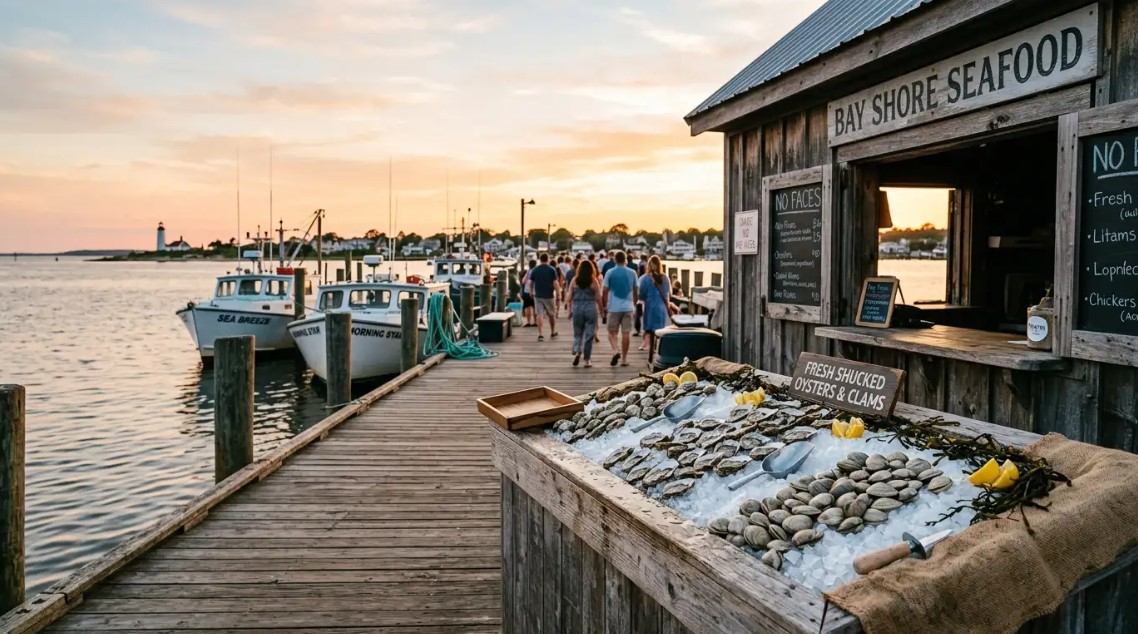
Oyster bars have grown quickly across both forks. Peconic Bay and Great South Bay oysters have distinct brininess, and many farmers now run tasting rooms attached to their beds.
Farm-to-Table Beyond the Buzzword
The East End’s soil supports one of the densest concentrations of small farms in the Northeast. Chefs work directly with growers, and menus can change weekly based on what is harvested that morning.
Farm stands along Sound Avenue on the North Fork and along Route 27 on the South Fork are worth building into a day’s route. Many double as casual lunch stops, with sandwiches made from bread baked next door and produce picked hours earlier.
Travelers looking to be closer to this rhythm often choose coastal rental homes across the East End, since staying in the villages puts the farm stands and restaurants within a short drive rather than a long day trip.
Wine Country Dining on the North Fork
The North Fork has grown into a working wine region, and its restaurants reflect that pace. Meals are longer, portions are simpler, and pairings lean toward the local bottles rather than imports.
Villages like Cutchogue, Southold, and Greenport each hold restaurants worth planning a night around. Many keep small dining rooms and encourage lingering over a bottle rather than turning tables.
Practical Notes for Tastings
Most vineyards offer flights alongside cheese and charcuterie boards. Reserving ahead is worth it on summer weekends. A designated driver or a hired car is the simpler route if a full tasting tour is on the calendar.
Casual Kitchens and Beach-Adjacent Meals
Not every meal on the East End needs a reservation. Lobster rolls at wooden picnic tables, wood-fired pizza a block from the beach, and diner breakfasts before a morning swim all remain part of the local rhythm.
Bakeries in Sag Harbor, East Hampton, and Southold serve strong coffee and pastries built for taking to the sand. A stop at one before the beach opens sets a good pace for the day.
Timing Around the Seasons
Summer is peak season for both crowds and menus. Late September through October brings scallops, apple harvests, and cooler evenings, with easier reservations and unchanged quality.
Building an East End Food Itinerary
A weekend of eating well here is less about hunting down famous names and more about following the season. Start with a morning at a farm stand, plan a lunch by the water, and hold the evening for a vineyard-adjacent dinner.
Distances between villages are short by East End standards. Most drives across the forks stay under twenty minutes, which makes it possible to eat breakfast in one town and dinner in another without a long day on the road.
Repeat visitors often build their itineraries around a single ingredient, following oysters one weekend, corn another, and duck the next. That kind of loose theme keeps a trip anchored without over-planning it.
What to Skip
The overhyped tourist strips in the busiest villages tend to disappoint. Walk one block off the main street and quality rises quickly, prices settle, and reservations become easier to land on short notice.
Menus that read too broadly are usually a sign the kitchen is playing to the crowd. Places that limit themselves to a dozen items, changing with the harvest, tend to cook with more care.
Bringing Some of the East End Home
Many restaurants keep small retail counters selling their kitchen staples, from house-