Cocktail bitters are concentrated infusions of herbs, spices, roots and peel in high-proof alcohol, used a few dashes at a time to season drinks. If you’re buying your first bottle, get an aromatic bitters for the Old Fashioned and Manhattan. Add an orange bitters next, then a Peychaud’s-style bottle when you want to make a Sazerac.
That three-bottle shelf covers most of the classic cocktail canon. Everything after that, from celery to chocolate, is for fun and experimenting.
This guide explains what bitters actually are, how the main styles differ, which classic drinks use which, and how to buy in sensible stages.
Key takeaways
- Bitters are high-alcohol botanical extracts used by the dash, not drunk on their own.
- In the US, bitters are sold as a non-potable product, a category that needs approval from the Alcohol and Tobacco Tax and Trade Bureau (TTB).
- Aromatic bitters season the Old Fashioned and Manhattan; Peychaud’s is the classic choice for the Sazerac.
- Start with one aromatic bottle, then add orange, then a Peychaud’s-style bitters.
- A small bottle lasts a long time, so buy for the drinks you actually make.
What cocktail bitters are
Bitters began as medicine. Angostura’s company history says Dr Johann Siegert, working as surgeon general in Angostura, Venezuela, had perfected his aromatic formula by 1824 as a medical elixir for soldiers. In New Orleans, Antoine Amédée Peychaud had set up an apothecary in the French Quarter by 1832, and Sazerac’s history of Peychaud’s says his recipe of distilled spirits infused with botanicals is still used today.
Strong, but not a drink
Bitters are strong. Angostura’s aromatic bitters, for example, is bottled at 44.7 percent alcohol by volume, and Peychaud’s at 35 percent, both in the range of many spirits. What stops them being a drink is flavour: they’re made so intensely bitter and concentrated that nobody would sip them.
That’s also how they’re regulated in the US. Bitters are sold as a non-potable product, and the Alcohol and Tobacco Tax and Trade Bureau explains that when a product made with taxpaid spirits is approved by its Nonbeverage Products Laboratory as unfit for beverage purposes, the maker can claim back most of the excise tax paid. The TTB’s unfitness guidance sets out how its lab judges whether a product is unfit to drink. For you, the practical result is that bitters often turn up in ordinary grocery stores, next to the mixers rather than the whiskey.
Bitters are the salt and pepper of the bar: a few drops you barely notice until they’re missing.
The main styles, compared
Here’s how the main styles compare. Brands vary, so taste before you commit to a big bottle of anything unusual.
| Style | Flavour | Classic drinks | Buy it |
|---|---|---|---|
| Aromatic | Warm spice, clove, cinnamon, bitter root | Old Fashioned, Manhattan | First |
| Orange | Bitter peel, citrus oil, light spice | Martini, gin and whiskey drinks | Second |
| Peychaud’s-style | Lighter and sweeter, anise and candied cherry, bright red | Sazerac | Third |
| Herbal and vegetal (celery, for example) | Savoury, green, fresh | Gin drinks, savoury cocktails | When you want to experiment |
| Dessert-leaning (chocolate, cocoa, coffee) | Rich, roasted, bittersweet | Rum and whiskey stirred drinks | When you want to experiment |
Aromatic bitters
Aromatic bitters are the workhorse. Angostura is the best known, and its maker describes its Original Aromatic Bitters as a bouquet of fruits, spices and herbs. Other brands make their own aromatic blends, usually with a similar warm, spiced profile and a bitter backbone from roots and bark.
Classic uses
- Old Fashioned: the International Bartenders Association recipe calls for a sugar cube saturated with a few dashes of Angostura bitters and a little water, muddled, then ice and 45 ml of bourbon or rye.
- Manhattan: the IBA Manhattan is 50 ml rye whiskey, 20 ml sweet red vermouth and a dash of Angostura bitters, stirred and strained.
- Beyond whiskey: a dash or two lifts a glass of soda water with lime, or a simple rum and ginger drink.
If you only buy one bottle of bitters, make it this one. It’s the style most classic recipes assume when they just say “bitters”.
Orange bitters
Orange bitters focus on bitter orange peel, with lighter spice than the aromatic style. Angostura describes its own as a warming array of citrus and spiced notes. They brighten clear spirits in a way aromatic bitters can overpower.
- A dash in a dry gin or vodka Martini adds a citrus edge without extra sweetness.
- They work in lighter whiskey drinks where you want brightness rather than spice.
- Try an Old Fashioned with one dash of aromatic and one of orange to see how the two combine.
Orange bitters recipes vary more between brands than aromatic ones do. Some lean sweet and zesty, others dry and peel-heavy, so it’s worth trying a couple over time.
Peychaud’s-style and other flavours
Peychaud’s-style bitters
Peychaud’s is lighter and sweeter than Angostura, with a cherry-red colour and notes of anise and candied cherry. Its natural home is the Sazerac. The IBA Sazerac rinses a chilled glass with absinthe, then stirs Cognac, a sugar cube and two dashes of Peychaud’s over ice before straining it into the glass and finishing with lemon zest. The IBA notes that rye whiskey replaced Cognac after the American Civil War because of availability, and both versions are made today.
Peychaud’s also makes a good second dash in an Old Fashioned or Manhattan, adding colour and a lighter, anise-tinged note.
Other flavours worth knowing
- Celery and other savoury bitters suit gin drinks and anything with tomato or cucumber.
- Chocolate and cocoa bitters round out aged rum and whiskey drinks. Angostura now makes a cocoa bitters.
- Grapefruit and other citrus bitters sharpen tequila and gin drinks.
- Spiced and chilli bitters add warmth to agave and whiskey cocktails.
Buy these one at a time, once you know the kind of drinks you make most. A drawer full of half-used novelty bottles is the most common bitters mistake.
How to build your collection
Think of buying bitters in stages rather than price. A single bottle lasts a long time at a few dashes per drink, so even a well-stocked shelf is a modest outlay.
Starter shelf
One aromatic bitters. That’s enough for the Old Fashioned, the Manhattan and most whiskey classics.
Home-bar shelf
Add an orange bitters and a Peychaud’s-style bitters. You can now make the Martini with a twist of character, the Sazerac and a dozen variations on each.
Enthusiast shelf
Add one or two specialty flavours chosen around your favourite spirits: savoury bitters for gin drinkers, chocolate or coffee for rum and whiskey fans, citrus or spice for tequila and mezcal. At this stage, small sample sizes are the smart buy.
What to check before buying
- Style and flavour notes on the label, so you know if it’s aromatic, orange or something else.
- Bottle size. Smaller bottles make sense for flavours you’re only testing.
- A dasher top. A proper dasher makes measuring consistent; a loose pour can ruin a drink.
- Ingredients, if you need to avoid particular foods. Botanical blends vary, so read the label.
Using and storing bitters
How much to use
Recipes measure bitters in dashes, a quick shake from the bottle. One to three dashes is typical for a single stirred drink. Add less than you think, taste, then add more. You can’t take bitters out.
Storage
- Keep the cap tight so the alcohol doesn’t evaporate and concentrate the flavour.
- Store bottles upright, away from heat and direct sunlight.
- Wipe the dasher now and then to stop sticky build-up.
- If a bottle smells flat or off, replace it.
For more home-bar ideas and a night out when you’d rather someone else did the mixing, see our bars and nightlife guides, our guide to what makes a speakeasy bar and our classic cocktails primer.
FAQ
Do cocktail bitters contain alcohol?
Yes, usually a lot, often around the strength of a spirit. Because you use a few dashes, the amount in a drink is small, but they aren’t alcohol-free.
Why can supermarkets sell bitters?
In the US, bitters are sold as a non-potable product approved through the TTB rather than as an alcoholic beverage.
Can I use aromatic bitters in a Sazerac?
You can, but it won’t taste like a classic Sazerac. The IBA recipe specifies Peychaud’s, which is lighter and sweeter, with an anise note.
Which bitters should I buy first?
An aromatic bitters. It covers the Old Fashioned, the Manhattan and most whiskey drinks.
Your first bottle, this week
Buy one aromatic bitters and make an Old Fashioned tonight with the IBA recipe. Next time, make it again with a dash of orange bitters and taste the difference. When you’re ready for the Sazerac, add a Peychaud’s-style bottle. Want to taste the classics made by a pro first? Find a good cocktail bar near you in our restaurant directory.
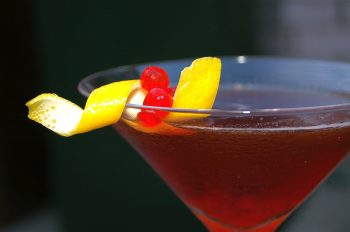
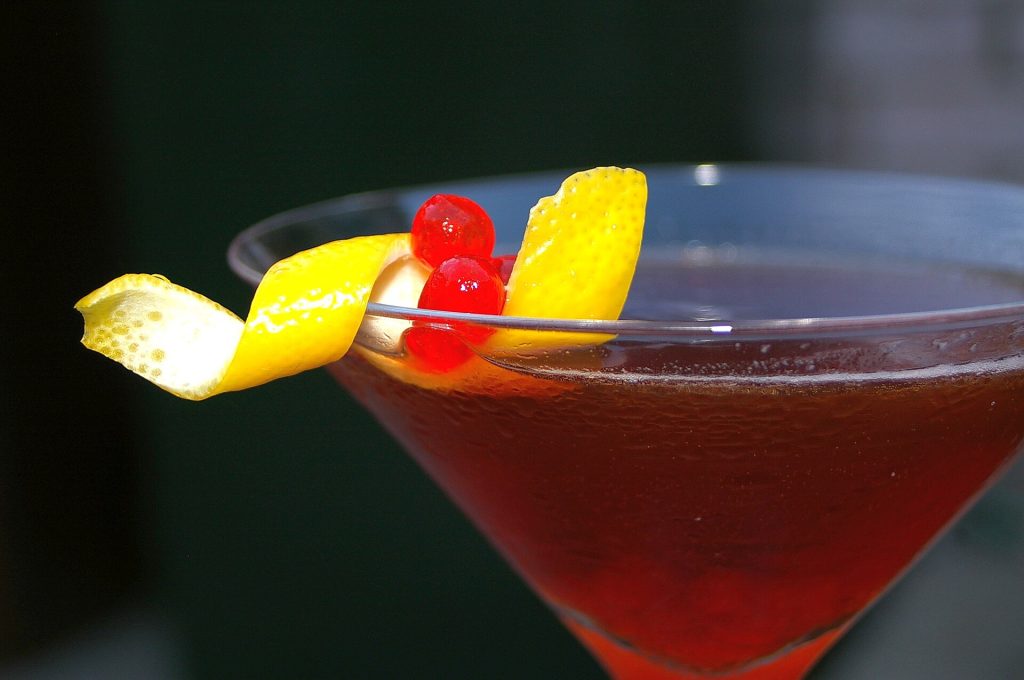
Featured photo: Rum Manhattan cocktail with Maraschino caviar by My Aching Head, BY-SA 2.0.