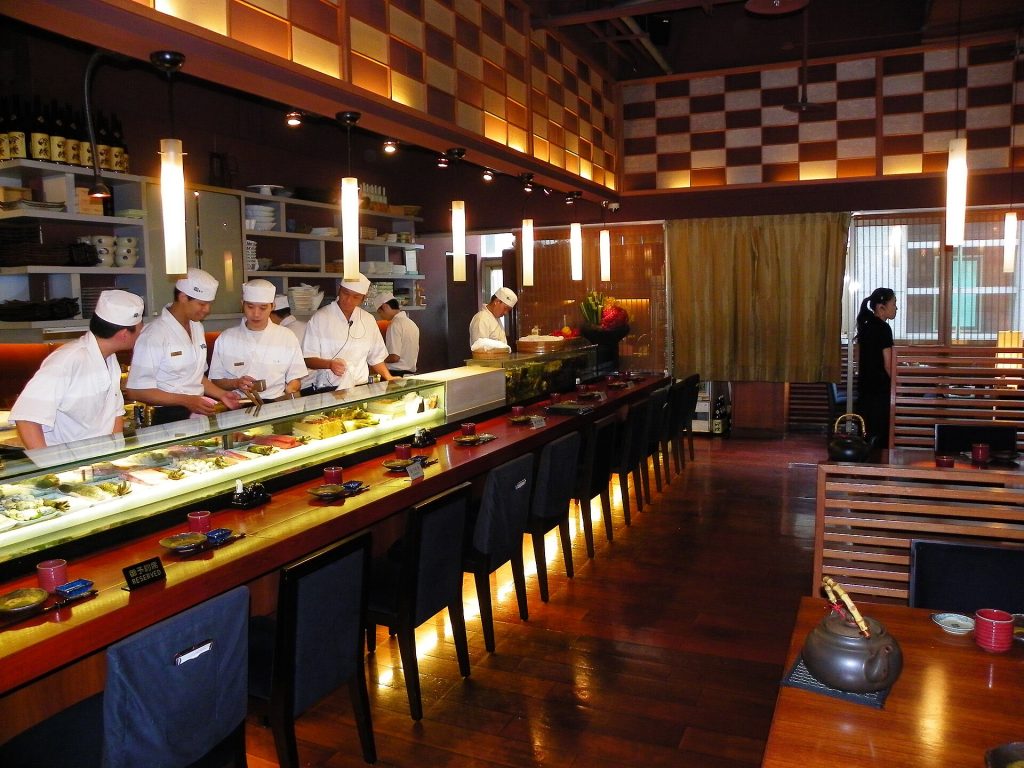
The difference in omakase vs kaiseki comes down to who shapes the meal and why. At an omakase counter you hand the chef full control, usually over sushi, and eat each piece the moment it is made. Kaiseki is a formal, multi-course dinner built around the season, served in a fixed sequence with as much thought given to the dishes as to the food. Teppanyaki is the most theatrical of the three: a chef grills meat, seafood and vegetables on an iron plate right in front of you.
All three sit at the upper end of Japanese dining, and all three reward a little preparation. Knowing the format tells you how long you’ll sit, how much say you get over the menu and which small courtesies matter.
This guide compares their origins, pacing, seating, etiquette and relative cost, drawing on the Japan National Tourism Organization and the restaurant that claims to have named teppanyaki.
Key takeaways
- Omakase means trusting the chef with the whole meal. It is usually the most expensive way to eat sushi, and bookings are a must.
- Kaiseki grew partly from the tea ceremony and runs to around ten seasonal courses in a set order.
- Teppanyaki is a postwar invention: a Kobe restaurant says it coined the name around 1945.
- Counter seating defines omakase and teppanyaki. Kaiseki is often served at a table or in a private room.
- Tipping is not customary in Japan. Book ahead, arrive on time and cancel early if plans change.
In this guide
- The short version: three meals, three philosophies
- Omakase: the chef decides
- Kaiseki: a meal built around the season
- Teppanyaki: cooking as a performance
- Side by side
- Manners that apply at all three
- FAQ
- Picking the right one for your night out
The short version: three meals, three philosophies
It helps to think of these as three different contracts between cook and guest. With omakase, the contract is trust: you sit, the chef reads the fish and your pace, and serves what they judge best. With kaiseki, the contract is ceremony: a composed sequence of small plates that tells you what time of year it is. With teppanyaki, the contract is spectacle: you watch your dinner being cooked a few feet away.
None of them is a single cuisine in the way that ramen or tempura is. They are formats, and the format shapes everything from how you book to when you should put your phone away.
Omakase: the chef decides
Omakase translates roughly as “I leave it to you”. The Japan National Tourism Organization’s guide to sushi in Japan puts it plainly: omakase means allowing the chef full control over your meal, it tends to be the most expensive style of sushi dining, and bookings are a must.
Format and pacing
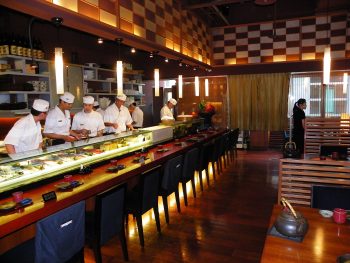
Most omakase meals happen at an Edomae-style sushi counter. JNTO notes that at these counters the chef forms the nigiri and slices the fish after you order, so in an omakase meal each piece is made for you and handed across the counter. The rhythm is one bite at a time. Eat each piece soon after it is served, while it is as the chef intended.
What to expect
- A small counter. Seats are few, which is why reservations matter so much.
- A sequence set by the chef. The order depends on the chef and the day’s fish.
- Hands or chopsticks. JNTO says chopsticks are the usual choice, but hands are perfectly acceptable, especially at higher-end restaurants.
- Soy sauce on the topping. Dip the fish side, not the rice, so the piece holds together.
Outside Japan the word has stretched to cover tasting menus of all kinds. At its core, though, omakase is still about the counter and the chef’s judgement.
Kaiseki: a meal built around the season
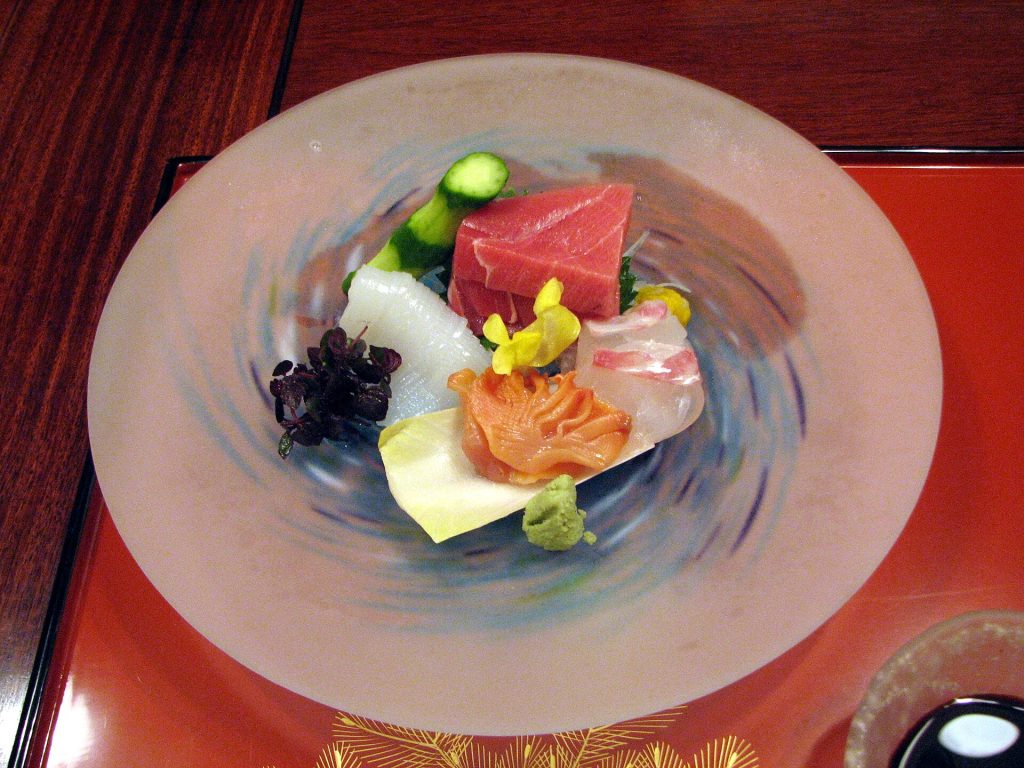
Kaiseki is Japan’s most formal dining tradition. JNTO’s master class in kaiseki ryori traces it to two roots. One is the tea ceremony, where the word first described a set of three small, simple dishes plus rice served before tea. The other is the formal banquet. Modern kaiseki blends the two: the restraint of tea cuisine with the sense of celebration of a feast.
The sequence
JNTO describes a meal of roughly ten courses, with local variations. A typical order runs:
- Sakizuke, a small opening appetiser
- Zensai, an arranged plate of seasonal starters
- Owan, a clear soup
- Otsukuri, sashimi
- Kawaribachi, a creative course that breaks the pattern
- Yakimono, grilled fish or seafood
- Hashiyasume, a light dish to reset the palate
- Shiizakana, a more substantial course, often meat
- Shokuji, rice with miso soup and pickles
- Mizugashi, fruit or a seasonal sweet
Why the season matters
Ingredients are chosen so that you can taste the place and the time of year. JNTO points out that even the dishes follow the calendar: glass in summer for a feeling of coolness, earthenware in winter for warmth. The chef also varies the temperature of each course so the palate is refreshed as the meal moves along. Expect a slow, deliberate evening, often in a private room or at a table rather than at a counter.
Omakase asks for your trust, kaiseki asks for your patience, and teppanyaki just asks you to watch.
Teppanyaki: cooking as a performance
Teppanyaki is the newest of the three by a wide margin. Misono, a restaurant group in Kobe, says its founder Shigeji Fujioka opened in the city in 1945, first grilling on an iron plate salvaged from a local dockyard. Regulars brought in occupation officers who took to his beef, and Misono says it was during an interview with an American reporter around that time that the cooking was named teppanyaki.
Format and pacing
You sit at a counter built around a polished steel griddle, and a chef cooks in front of you. Courses tend to move from seafood and vegetables to the main cut of beef, with the chef timing each one to your plate. It is the liveliest of these three meals and the easiest for a group that wants conversation as well as food.
What to expect
- Heat and sizzle. Sit comfortably but not too close. The plate is hot.
- A chance to steer. You can usually ask how you’d like your beef cooked, which is less common at an omakase counter.
- Beef takes centre stage. Misono’s own story centres on local beef, and the cut you choose is usually what moves the bill.
Side by side
Use this table to match the meal to the occasion. Price tiers are relative: all three can be expensive, and each has cheaper and dearer versions.
| Omakase | Kaiseki | Teppanyaki | |
|---|---|---|---|
| Roots | Edomae sushi counters | Tea ceremony and formal banquets | Postwar Kobe, around 1945 |
| Who decides the menu | The chef, entirely | The kitchen, in a set sequence | Set courses, with some choice on doneness |
| Typical seating | Small counter | Table or private room | Counter around an iron griddle |
| Pacing | One piece at a time, quick | Slow and ceremonial, around ten courses | Steady, cooked to order |
| Mood | Focused, intimate | Quiet, formal | Lively, social |
| Relative price | High; usually the top sushi tier | Wide range, lunch cheaper than dinner | Mid to high, driven by the beef |
| Best for | Food lovers, couples, solo diners | Special occasions, slow evenings | Groups, first-timers, celebrations |
Planning a night out around one of these? Check our restaurant directory for Japanese restaurants near you, and browse more eat out guides for ideas.
Manners that apply at all three
Etiquette at a high-end Japanese restaurant is mostly about respect for the cook’s work and for other guests. JNTO’s guide to customs and etiquette covers the points visitors most often miss.
- Book and keep the booking. Small restaurants often buy ingredients based on reservations, so a late cancellation can mean wasted food.
- Skip strong fragrance. Perfume can interfere with delicate flavours, especially at a sushi counter.
- Use the oshibori for hands only. Wipe your hands with the wet towel, then fold it and set it aside.
- Don’t tip. Tipping is not customary in Japan and is often met with confusion. A sincere thank-you does the job.
- Handle chopsticks gently. JNTO’s kaiseki guide says chopsticks are for lifting food to your mouth, not pushing or poking it. Rest them on the holder between bites.
- Lift bowls, not plates. Soup and rice bowls come up to your mouth; other dishes stay on the table.
FAQ
Is omakase the same as kaiseki?
No. Omakase is a style of ordering in which the chef chooses everything, most often at a sushi counter. Kaiseki is a formal seasonal meal served in a fixed sequence of courses. A kaiseki kitchen also decides the menu, but the structure and mood are very different.
Which is best for a first visit to a Japanese restaurant?
Teppanyaki is the most relaxed. You can talk, watch the cooking and usually choose how your beef is done. Omakase suits diners who enjoy sushi and want to let the chef lead, while kaiseki rewards a slow evening.
Can I eat sushi with my hands at an omakase counter?
Yes. JNTO says hands are perfectly acceptable, especially at higher-end sushi restaurants, though chopsticks are the more common choice.
Do I need to book?
For omakase, almost always. JNTO says bookings are a must, and many kaiseki restaurants also recommend or require reservations.
Picking the right one for your night out
Choose omakase if you love sushi and want to see a chef at work up close. Choose kaiseki for a long, quiet celebration where every plate says something about the season. Choose teppanyaki when the group wants energy and a show. Whichever you pick, book early and arrive on time.
For more ideas, read our guide to sushi etiquette and our tips on booking a tasting menu.
Featured photo: Sushi Counter of Ton Sushi 20100808b by 玄史生, CC0.