To hire a food truck for an event, settle four things before you compare menus: how the truck will be paid (guests buy their own food, you pay a minimum, or you pay per person), who holds the permits, whether the venue allows the truck at all, and where it will physically park and plug in. Get those right and the menu is the easy, fun part.
Food trucks have become a favourite for weddings, office parties, school fundraisers and backyard milestones because they bring a kitchen with them. That same fact is what trips people up. A truck is a vehicle, a cooking operation and a food business all at once, and each of those comes with rules.
This buyer’s guide walks through the pricing models, the paperwork, the logistics and the questions worth asking, so you can compare quotes on equal terms.
Key takeaways
- Decide on the payment model first: guest-pay, a guaranteed minimum, or a host-paid per-person or flat package.
- The truck should hold its own health permit; cooking with propane or open flame may need a separate fire permit.
- Check the venue before you book a vendor. Many venues set their own rules on outside caterers, parking and insurance.
- Plan for clearance, level ground, power and a place for the queue, not just a parking spot.
- A short menu of a few dishes serves a crowd faster than a long one.
In this guide
- Start with the kind of event you’re hosting
- How food truck pricing works
- Permits, venue rules and insurance
- Space, power and the guest line
- Building a menu that moves
- Questions to ask before you sign
- FAQ
- Your first three calls
Start with the kind of event you’re hosting
The right truck and the right deal depend on the shape of your event. Three questions narrow the field quickly.
- Who is eating, and is it a meal or a snack? A dinner for 120 wedding guests is a different job from dessert at a street party.
- Is it private or open to the public? A closed event with a fixed guest list suits a host-paid package. A public fair suits guest-pay.
- How long is the service window? A tight 90-minute dinner rush needs a faster menu and possibly a second truck. An all-afternoon open house can run on one.
Write down your headcount, your service window and your budget ceiling before you call anyone. Every quote you get will be built on those three numbers, and having them ready makes quotes comparable.
How food truck pricing works
Operators set their own prices, and they vary with the cuisine, the city, the day of the week and the season. What is more consistent is the structure of the deal. Most quotes fall into one of the models below, and knowing which one you are being offered matters more than the headline figure.
| Pricing model | Who pays for the food | Best for | Watch for |
|---|---|---|---|
| Guest-pay (vendor sells) | Guests buy their own | Public events, fundraisers, markets | A booking or appearance fee, and whether turnout will make it worth the truck’s time |
| Guaranteed minimum | Guests buy; host covers any shortfall | Mid-size events with uncertain turnout | How the shortfall is calculated and when it is invoiced |
| Per-person package | Host pays for each guest | Weddings, corporate and private parties | The guaranteed headcount, what counts as a serving, and overage charges |
| Flat rental or buyout | Host pays one set fee for a time block | Private events with a known crowd | Serving limits within the block and overtime rates |
| Hybrid | Host covers a set amount, then guests pay | Office parties and open houses | A clear cut-off so staff know when to switch to charging |
Budget tiers, without the guesswork
Rather than chasing a single number, think in tiers.
- Lean: guest-pay, one truck, a short menu. Your cost may be little more than a booking fee, if any.
- Middle: a guaranteed minimum or hybrid model, so guests get something free and you cap your exposure.
- Full host: a per-person or flat package with extras such as drinks, dessert or a second truck.
Ask every vendor to quote the same headcount, the same hours and the same menu scope. Then compare the total, including travel, service charges and tax, not the per-plate line alone.
Permits, venue rules and insurance
This is the section people skip, and the one that causes cancelled bookings. Rules are local, so treat the examples below as a map of what to ask about, not the law where you live.
Health permits
The truck, not you, is normally responsible for its food permit. In Seattle, for example, the city’s special events guidance says food trucks and other mobile food vendors must hold an annual or temporary permit from Public Health – Seattle & King County. Ask to see the current permit, and check that it covers the county or city your event is in.
Bigger events can bring duties for the organiser too. King County requires an event coordinator for events lasting more than one day, or single-day events with six or more food vendors; the coordinator reviews food requirements with an inspector and names an on-site person in charge.
Fire and cooking permits
Cooking with propane or an open flame can need a separate fire permit. Seattle’s guidance says a Fire Department permit is required for cooking with propane or open flame, but not for electric cooking or Sterno canisters, and that fire extinguishers are required for all cooking operations. Your local fire department can tell you what applies where you are.
Venue rules and insurance
Before you fall for a truck, confirm with the venue that outside food vendors and vehicles are allowed, where a truck can park, and what paperwork it wants. Ask whether the venue wants proof of the vendor’s liability insurance, and whether the venue must be named on the certificate. Ask the vendor to send its certificate early rather than the week of the event.
Book the venue’s permission first and the truck second. A great menu can’t cook in a car park it isn’t allowed into.
Space, power and the guest line
A truck needs more room than its own footprint. The National Fire Protection Association’s food truck safety fact sheet calls for at least 10 feet of clearance from buildings, structures, vehicles and combustible materials, and says any engine-driven power source should be separated from the public by barriers such as guards, fencing or enclosures. It also notes there should be no public seating inside the truck.
- Measure the spot. Get the truck’s length, width and height from the vendor, then add the clearance and a service side facing your guests.
- Check the surface. A level, firm surface is easier for everyone. Soft lawn after rain is a common problem.
- Sort out power. Ask whether the truck runs on its own generator or needs a hookup, and what type of outlet. Generators are noisy, so place the exhaust side away from tables.
- Plan the queue. Mark where the line forms and where people collect food, away from doorways, stairs and the generator.
- Add bins and a hand-wash option. Ask who supplies trash cans and who removes the rubbish at the end.
Building a menu that moves
The menu decides how fast the line moves, and a slow line can sour an otherwise great party. Vendors know their own ticket times, so ask how many guests they can comfortably serve per hour with the menu you’re discussing.
- Keep it short. Three or four mains and a vegetarian option usually beat a full board.
- Cover dietary needs. Ask how the kitchen handles allergens and whether it can label dishes clearly.
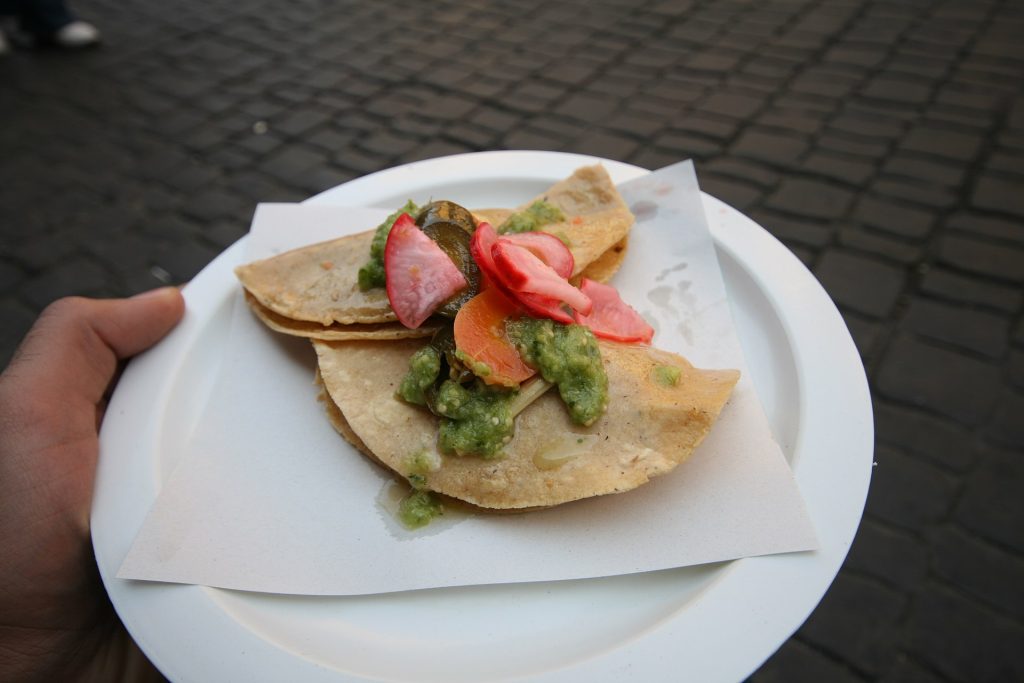
- Think about eating conditions. Tacos and bowls work standing up. Anything needing a knife needs tables.
- Ask about holding. If food will be pre-made and held, the FDA advises keeping hot food at 140°F or warmer and cold food at 40°F or colder.
For more on feeding a crowd, see our guide to planning event catering, or browse the events section for ideas by occasion.
Questions to ask before you sign
Send the same list to every truck on your shortlist. The answers make the differences between quotes obvious.
- Which pricing model are you quoting, and what exactly is included?
- What is the guaranteed headcount or minimum, and what happens if fewer or more guests come?
- Can I see your current health permit and, if you cook with propane, any fire permit you’ll need here?
- Can you send a certificate of insurance, and can the venue be named on it?
- How many guests can you serve per hour with this menu?
- What are the truck’s dimensions, and do you need power or bring a generator?
- When do you arrive to set up, and how long do you need to pack down?
- What deposit do you take, and what is your cancellation and bad-weather policy?
Get the answers in writing, ideally in the contract. A friendly phone call is a good start but a poor record if something goes wrong.
FAQ
How far ahead should I book a food truck?
As early as you can once the venue and date are fixed. Weekend and holiday dates are the ones most likely to be taken, and you’ll need time to sort out permits and parking.
Do I need a permit if the event is on private property?
Often the truck still needs its own health permit, and cooking with propane or open flame may need a fire permit. Rules vary, so check with your local health and fire departments.
Is a guest-pay truck really free for the host?
Sometimes, but many vendors charge a booking fee or ask for a sales minimum, especially for smaller crowds. Ask directly what you owe if sales are low.
How many trucks do I need?
Work backward from your service window. Ask each vendor how many people it can serve per hour, then divide your headcount by that number to see whether one truck can handle the rush.
Your first three calls
Start with the venue to confirm trucks are allowed and where they can park. Then call two or three local vendors, give them identical details, and send the question list above. If you want to see which local kitchens also cater, our restaurant directory is a good place to start, and our notes on party planning timelines will keep the rest of the day on track.
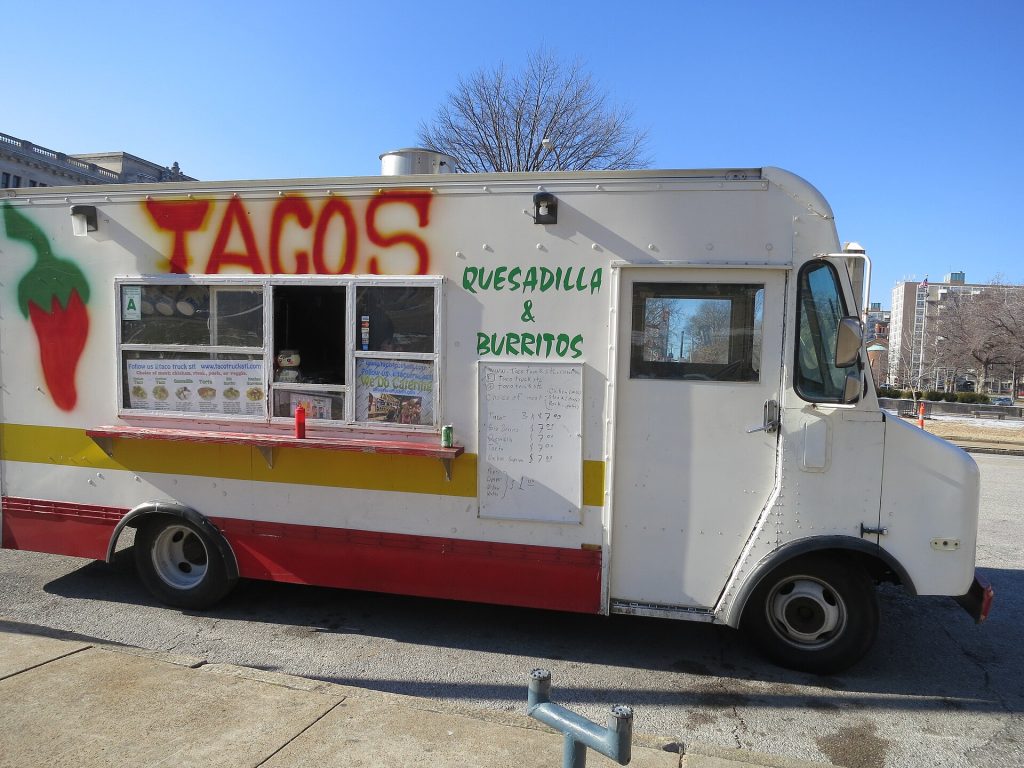
Featured photo: Taco Truck St Louis MO by Paul Sableman, BY 2.0.