If you’re working out how to choose a food tour, judge it on five things before price: group size, how much of the time is walking versus eating, whether it can handle your dietary needs, who the guide is, and what recent reviews say about the food itself. Get those right and almost any price tier can be a great day.
Food tours range from a two-hour market stroll to a full evening of bars and street stalls. The listings often look alike, with the same photos of dumplings and the same promise of hidden gems, which is why a checklist helps more than a star rating.
This buyer’s guide walks through each criterion, the budget tiers you’ll see, and the red flags that should make you keep scrolling.
Key takeaways
- Smaller groups mean more time talking to vendors and less time waiting at each stop.
- Ask how many stops there are, what’s served at each, and roughly how far you’ll walk.
- Tell the operator about allergies before booking, and get a clear yes or no on whether they can accommodate you.
- A good guide knows the neighbourhood and has real relationships with the vendors, not just a script.
- Read recent reviews for specifics about food and pace. The FTC’s 2024 rule bans fake and paid-for-sentiment reviews, but you should still look for detail.
Start with what you want from the day
Tours are built for different people. Before comparing operators, decide which of these you are after, because it changes what a good tour looks like.
- Orientation. You’ve just arrived and want a feel for the city and a list of places to return to.
- Depth. You care about one cuisine or one market, and want someone to explain it properly.
- Nightlife. Bars, late-night snacks and a sense of how locals spend an evening.
- Hands-on. A market visit that ends with cooking, or a tasting with a producer.
A first-day orientation tour can be broad and quick. A depth tour should be slower, smaller and more specific. Match the listing to the goal and half your shortlist disappears.
Group size and pace
Group size shapes almost everything about a food tour. A small group fits at a street stall, gets served quickly and can ask the vendor questions. A big group spends more time waiting and less time eating while the food is hot.
What to look for
- A stated maximum group size on the listing, not just an average.
- Private-tour options if you’re travelling as a family or with a friend group.
- Stops that make sense for the group size, such as sit-down counters for larger groups and street carts for small ones.
The best food tour is the one where you’re eating while it’s still hot, not waiting for the twelfth person to get served.
If a listing won’t say how many people join, ask before you pay. A straight answer is itself a good sign.
The walking-to-tasting balance
Some tours are really walking tours with snacks. Others are tasting sessions with a short stroll between them. Neither is wrong, but you should know which you’re buying.
- Count the stops. Ask how many there are and what is served at each.
- Ask about portions. Tasting-size bites across many stops can add up to a full meal, but some tours serve a single bite per stop.
- Check the route. Ask roughly how far you’ll walk and whether there are hills, stairs or long stretches without seating.
- Look at drinks. Find out whether drinks are included, and whether alcoholic stops have a non-alcoholic alternative.
- Check timing. A lunch tour should replace lunch. Book it on a day you don’t have a big dinner planned.
Dietary needs and allergies
Dietary needs are where the gap between good and poor operators is clearest. Vegetarian and gluten-free requests are common, and many tours can swap a dish. Serious allergies need more care, because street food and shared kitchens make cross-contact hard to rule out.
In the US, the FDA lists nine major food allergens: milk, eggs, fish, crustacean shellfish, tree nuts, peanuts, wheat, soybeans and sesame. If you react to any of them, tell the operator in writing before booking and ask whether each stop can be adapted, not just the tour as a whole.
If you’re travelling abroad
The CDC’s travel guidance on allergies recommends carrying cards that list all your food allergies, translated into the local language, and giving them to anyone preparing your food. It also advises packing allergy medicines such as epinephrine. The allergy charity FARE offers printable chef cards in several languages that work well for tours.
- Ask whether the guide will talk to each vendor for you.
- Ask what the substitute is if a dish can’t be adapted.
- Don’t book a tour whose answer is vague. A clear no is better than a hopeful maybe.
Guides, reviews and red flags
What makes a strong guide
The guide is the product. Look for someone who lives in or knows the neighbourhood, can explain why a dish is made the way it is, and is greeted by name at the stops. Many good operators name their guides on their site with a short bio; that is a useful signal.
Reading reviews properly
Reviews help, but read them for detail rather than stars. The Federal Trade Commission’s final rule, announced in August 2024, bans fake reviews, including AI-generated ones, and bans paying for reviews that express a particular sentiment. That makes blatant fakes riskier for businesses, but it doesn’t make every review useful.
- Favour recent reviews that mention specific dishes, stops or guides.
- Look for comments on pace, portion size and group size.
- Read the lower-rated reviews too. They tell you what goes wrong when it does.
Red flags
- No stated group size or itinerary, even on request.
- Every stop is a shop that sells you something.
- Vague answers about allergies or dietary swaps.
- Reviews that are all short, generic and posted in a burst.
- No clear cancellation or weather policy.
Budget tiers compared
Prices vary so much by city that exact figures are rarely useful. What’s more helpful is knowing what each tier usually buys you.
| Tier | What you typically get | Best for | Watch for |
|---|---|---|---|
| Budget | Larger groups, street food and snack-size stops, drinks often extra | Orientation on a first day | Short tastings that don’t add up to a meal |
| Mid-range | Smaller groups, a mix of sit-down and street stops, some drinks included | Most travellers | Stops chosen for convenience rather than quality |
| Premium or private | Very small or private groups, specialist guides, producer or chef access | Food-focused trips, special occasions, dietary needs | Paying extra for exclusivity with little extra food |
For most trips, mid-range is the sweet spot. Spend more when your dietary needs require a private tour or when the access is genuinely special. If you’re planning a food-focused holiday, our guide to planning a food trip and more food travel guides can help you shape the rest of it.
FAQ
How long should a food tour be?
Around three hours suits most people: enough stops to feel full without tiring out. Longer tours work best when they include seated stops.
Should I eat before a food tour?
Ask the operator how much food is served. If it’s meant to replace a meal, arrive hungry. If it’s snack-sized, have a light meal first.
Do I tip the guide?
Customs vary by country. Check the operator’s policy and local tipping norms before you go.
Can food tours handle severe allergies?
Some can, some can’t. Ask in writing before booking, bring translated allergy cards abroad, and skip any tour that can’t give a clear answer.
Book with a short list
Pick three tours that match your goal, then send each one the same short message: group size, number of stops, walking distance, and your dietary needs. Book the one that answers clearly and specifically. For meals beyond the tour, browse our restaurant directory and our list of food markets worth a detour.
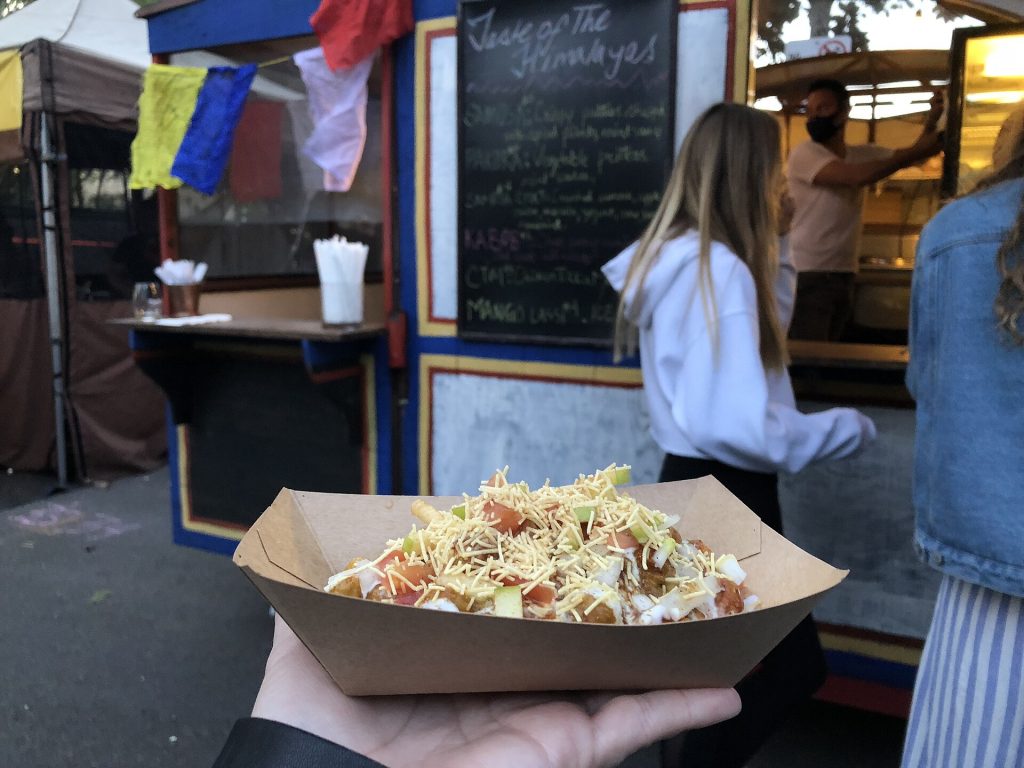
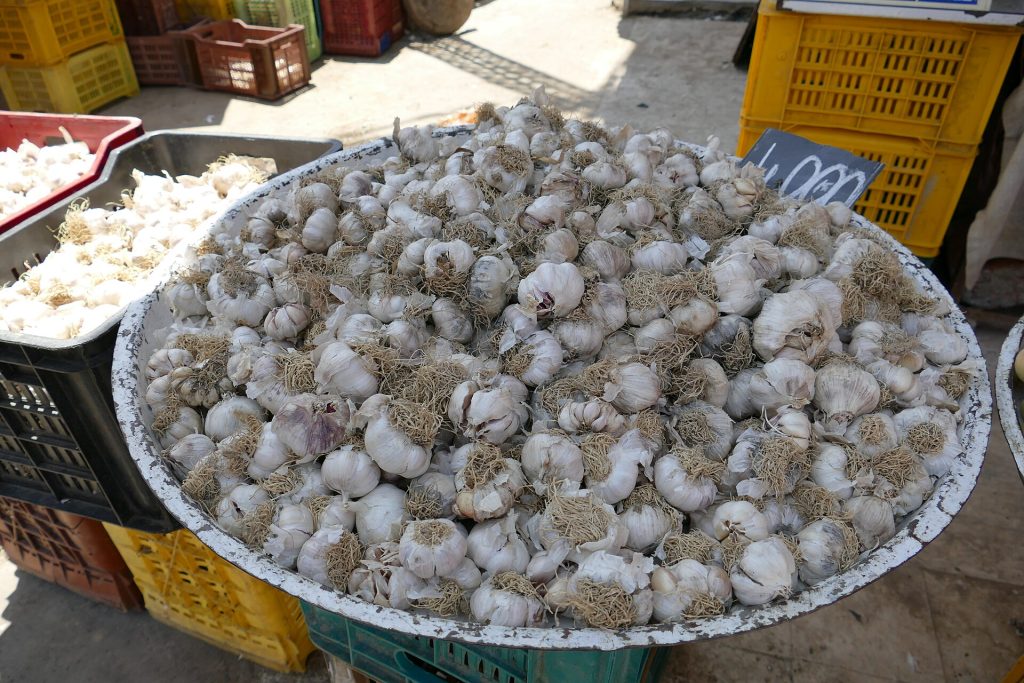
Featured photo: Taste of the Himalayas at farmers market – May 2018 – Stierch 08 by Missvain, BY 4.0.