When a company enters a phase of rapid expansion, leadership often celebrates the increase in headcount while ignoring the “Growth Tax”—the phenomenon where every new hire adds a layer of communication complexity that actually slows the organization down. Traditionally, as teams scale, they compensate for this complexity by adding more software: a tool for project tracking, another for global HR, a third for internal knowledge, and a fourth for specialized data collection.
However, this “App Silo” approach is exactly what creates chaos. True scalability isn’t about having more tools; it is about having a synchronized environment where the infrastructure grows at the same rate as the team. By adopting a unified digital workspace like Lark, organizations can seal the seams between global branches and maintain the agility of a startup even on a massive scale. This shift requires moving away from fragmented checklists and toward dynamic project management tools that automatically adjust as your global headcount increases.
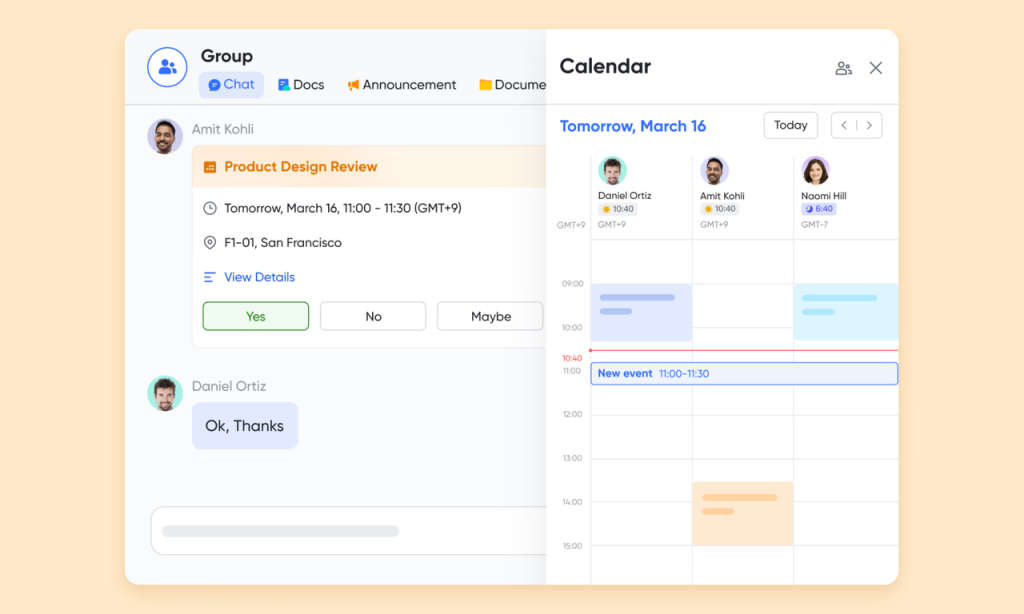
Global availability mapping with Lark Calendar
When expanding into new territories, the first casualty is often scheduling. Lark Calendar moves beyond basic invites by incorporating “Cross-Organizational Subscription” logic. Instead of manual coordination, teams can subscribe to “Departmental Timelines” that automatically adjust to global time zones and local public holidays. This ensures that a project lead in London never schedules a mission-critical sync during a public holiday in Singapore. By automating the visibility of global bandwidth within your project management tools, you prevent scheduling friction that typically slows down international expansion.
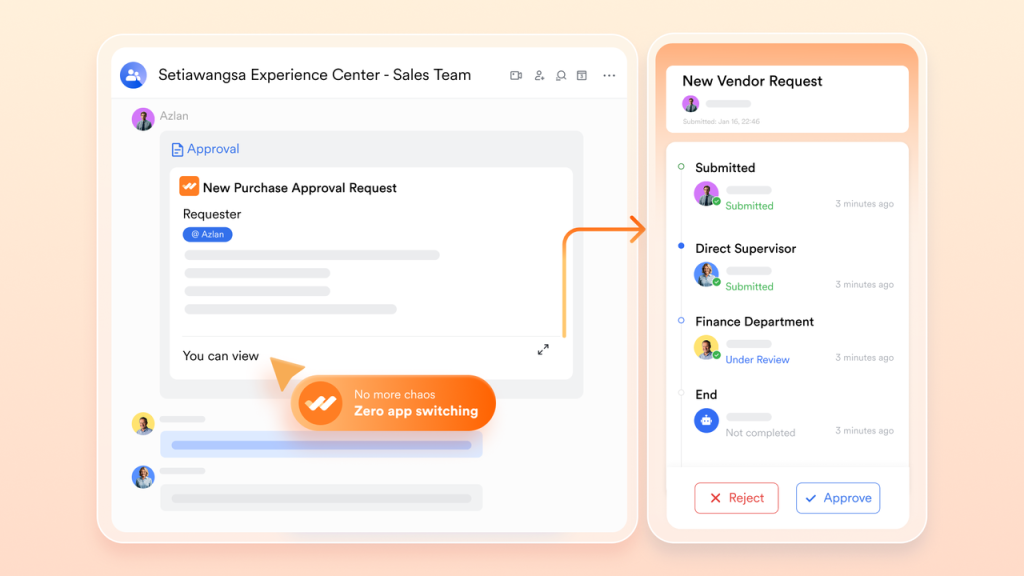
Regional compliance guardrails in Lark Approval
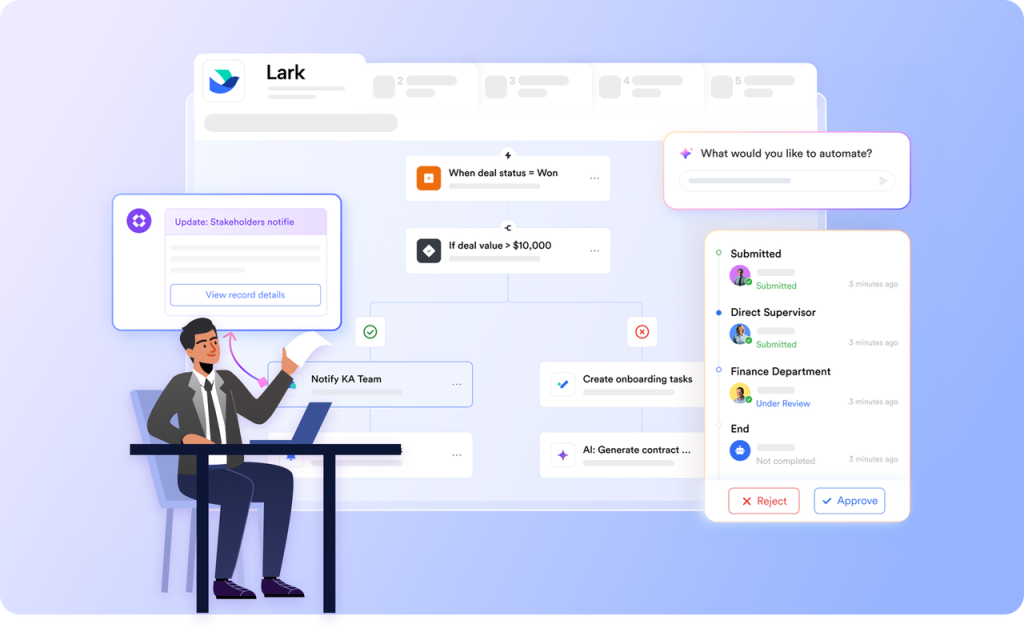
As you scale into different countries, financial and operational governance becomes a nightmare of local regulations and tax laws. Lark Approval handles this complexity through “Conditional Branching” and entity-specific nodes. For instance, a procurement request originating from the Brazilian branch can be automatically routed through a different compliance checklist and currency converter than one from the Singapore office. This allows headquarters to maintain global oversight while empowering regional leads to operate within their local legal frameworks—all without leaving the chat interface.
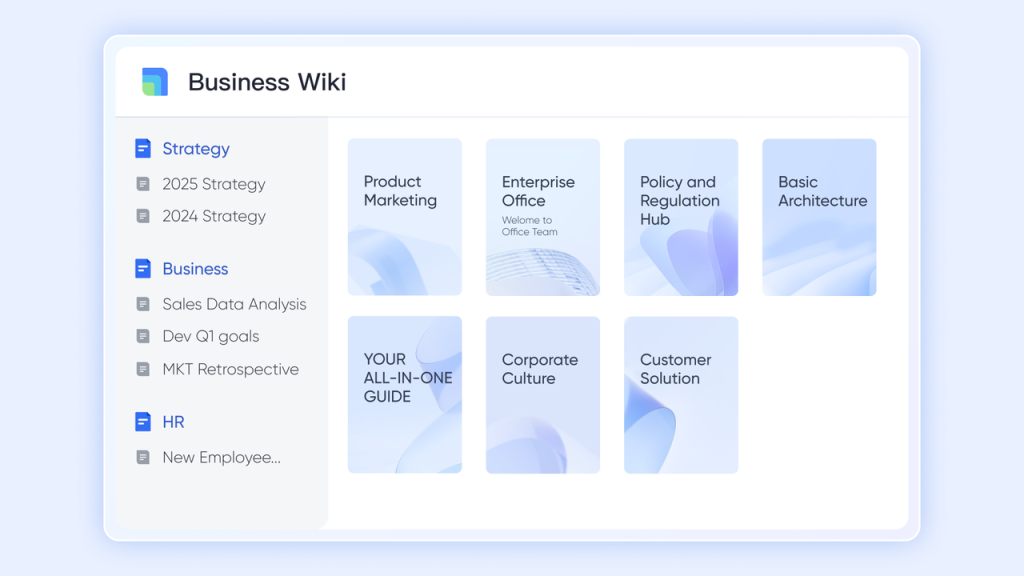
Intellectual property preservation via Lark Wiki
Expansion often leads to “Tribal Knowledge Loss,” where the expertise of early employees is not documented for the new wave of hires. Lark Wiki prevents this by serving as an active “Digital Brain.” Its “Template Inheritance” feature allows leadership to push standardized SOPs to every new department instantly. Firms often find that the reduction in “internal support tickets” and the preservation of best practices create a massive long-term gain that traditional suites cannot match.
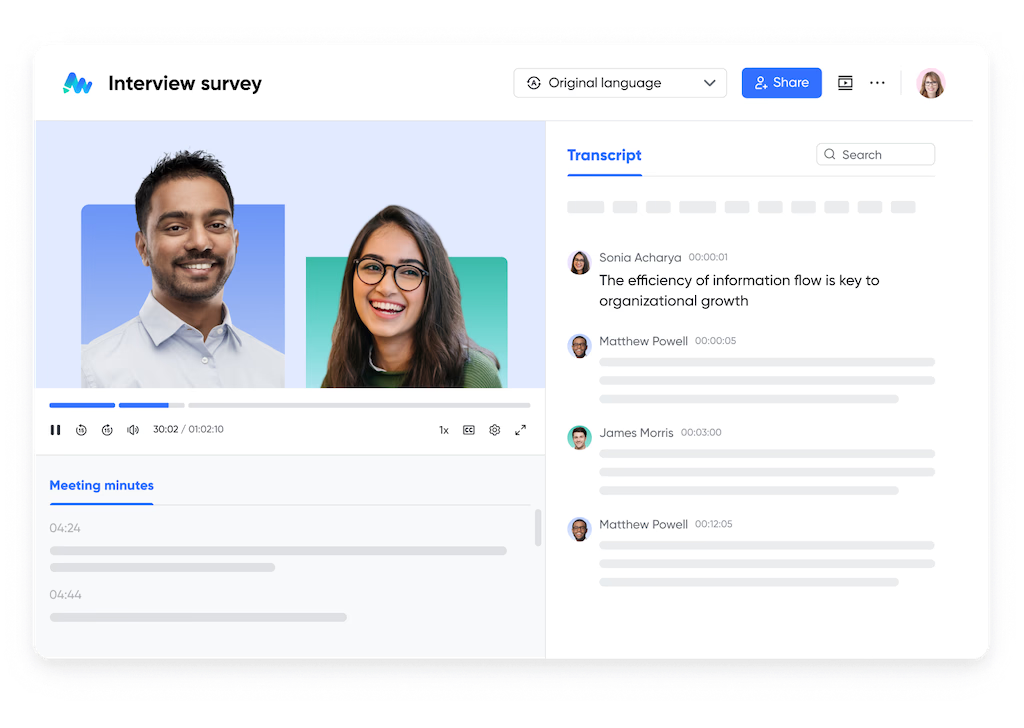
Semantic analysis of global syncs in Lark Minutes
In a global setup, “Meeting Fatigue” is a major risk, but so is “Information Exclusion.” If a team in New York makes a decision while the team in Tokyo is asleep, the project can drift. Lark Minutes solves this by turning every video call into a structured, searchable asset. The AI doesn’t just transcribe; it uses semantic analysis to extract “Global Action Items.” A regional manager can wake up and search for their name across all global transcripts, instantly seeing where their input is required without watching hours of recordings.
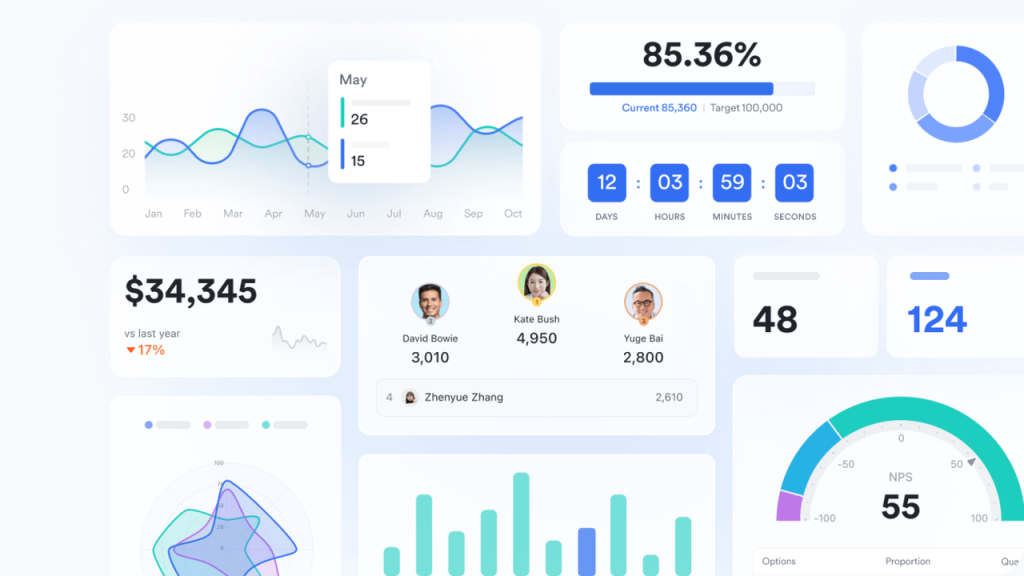
Dynamic data aggregation with Lark Base
Scaling requires moving from “manual reporting” to “automated synthesis.” Lark Base functions as a relational database where data entered by a store manager in Berlin automatically rolls up into a global “Executive Dashboard.” By utilizing “Multi-Table Linking,” headquarters can see real-time inventory levels or sales velocity across every entity simultaneously. This eliminates the need for regional managers to spend their Fridays compiling manual reports, freeing them to focus on local growth. This level of transparency makes it one of the most essential productivity tools for CEOs who need to maintain a “birds-eye view” of an expanding empire.
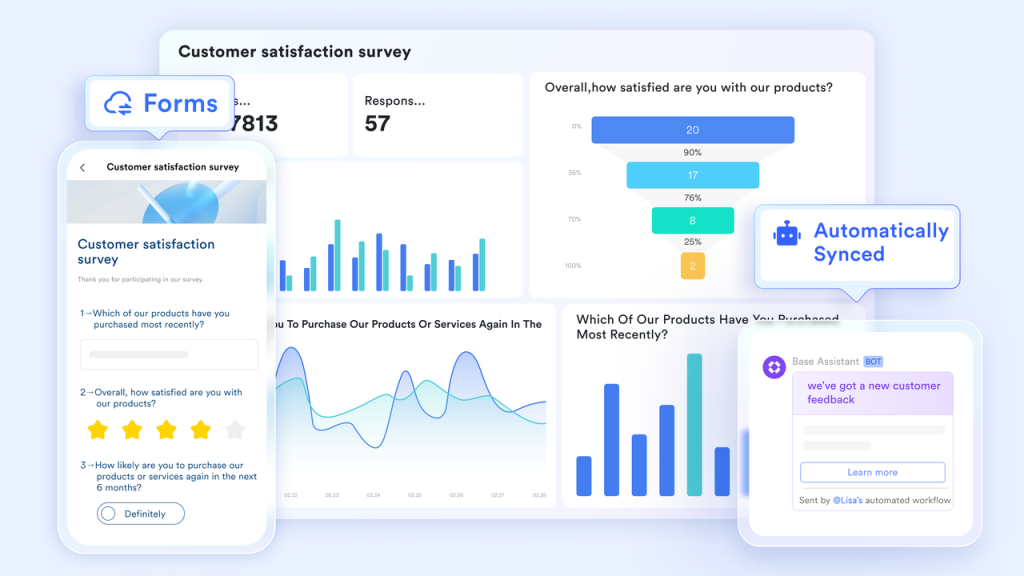
Structured data intake with Lark Forms
Expansion requires collecting consistent data from thousands of touchpoints—be it employee feedback, customer leads, or site inspections. Lark Forms allows teams to create logic-driven surveys that funnel data directly into a Base table. Because the forms are native to the workspace, you can trigger “Automated Workflows” based on the answers. For example, a “Safety Hazard” reported via a form in a remote warehouse can instantly trigger an urgent group chat with the safety team, ensuring that expansion into remote locations doesn’t lead to a lapse in oversight.
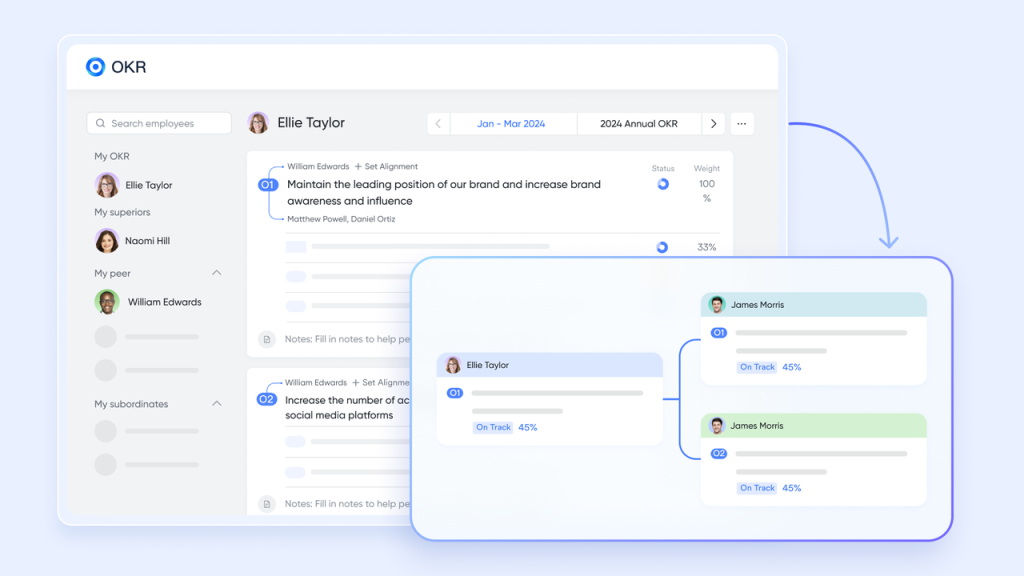
Strategic progress auditing with Lark OKR
Expansion is meaningless if the new teams are moving in a different direction than the headquarters. Lark OKR ensures that as you add hundreds of employees, their daily tasks remain mathematically linked to the company’s core objectives. The system provides automated progress roll-ups, allowing leaders to see at a glance if a specific region’s “Key Results” are lagging. By creating this high-visibility accountability loop, you prevent the dilution of focus that usually occurs when a company grows beyond its original headquarters.
Bonus: Breaking the chain of disconnected apps
Most expanding teams follow a predictable but expensive pattern: they start by checking Google Workspace pricing for the essentials, but quickly find that “basic” isn’t enough for global coordination. To bridge the gap, they start “stacking” specialized software, one subscription for chat, another for tasks, and a third for meetings. Before long, you aren’t just managing a team; you’re managing a fragmented ecosystem of Slack channels, Asana boards, and Zoom links.
This creates a “context-switching tax” that drains your team’s energy. When your data is trapped on different digital islands, your employees spend more time navigating between tabs than they do on actual work. Lark ends this fragmentation by merging these high-performance features into one interface. By replacing a chaotic patchwork of bills and browser tabs with a single, synchronized home, you remove the invisible friction that stalls business growth.
Conclusion
Expanding a business is a test of its digital architecture. The “Growth Tax” is not an inevitability; it is a symptom of fragmented tools. When you move into a synchronized environment and utilize a modern set of productivity tools, the seams between your departments are sealed by automation rather than manual labor.
Consolidating these seven functions into a single ecosystem allows your leadership team to stop being “information routers” and return to being “strategic architects.” You aren’t just buying software; you are installing an operational nervous system that ensures your business remains as lean and agile at 1,000 people as it was when you first started. This architectural clarity is the only way to scale with surgical precision and zero wasted effort.