To host a wine tasting party at home, pick one theme, choose four to six wines, pour small tasting measures of about 2 ounces, give everyone a glass, water and a simple scoring sheet, and serve real food alongside. Cover the labels if you want a blind round. That is the whole format; everything else is detail.
A tasting is different from a dinner party with wine. The wine is the entertainment, so the evening needs a shape: a question to answer, a running order, and a way for guests to compare notes without feeling they need a sommelier’s vocabulary.
The seven steps below cover the planning, the maths on bottles and pours, and how to keep the night relaxed and responsible from the first pour to the last ride home.
Key takeaways
- One clear theme, such as one grape from three countries, makes the tasting far more interesting than a random line-up.
- Four to six wines is plenty. A 750 ml bottle holds roughly twelve 2-ounce tasting pours.
- NIAAA counts 5 ounces of 12% wine as one standard drink and a full bottle as about five, so small pours matter.
- Brown-bag the bottles and number them for a blind round; reveal the labels at the end.
- Serve food all evening, keep water and alcohol-free drinks out, stop pouring well before the end and line up rides home.
In this guide
- Step 1: Pick a theme that gives the night a question
- Step 2: Work out bottles and pours
- Step 3: Set the table: glasses, water and spit cups
- Step 4: Make a tasting sheet
- Step 5: Plan the food
- Step 6: Run it blind
- Step 7: Serve responsibly
- FAQ
- Send the invite this week
Step 1: Pick a theme that gives the night a question
A theme turns a group of people drinking wine into a group of people comparing wine. It also makes shopping easier, because you know exactly what to look for. Choose one of these and stick to it.
- One grape, several places. Chardonnay or Pinot Noir from three or four regions shows how much climate and winemaking change a wine.
- One region, several grapes. Keep the place fixed and let the varieties do the talking.
- Price ladder. The same style at three or four price points. Guests often enjoy finding out whether they can taste the difference.
- Old World vs New World. Pair up similar wines from Europe and from elsewhere and see who can tell them apart.
- Bring a bottle to a brief. Give each guest a style or a budget and let them shop. It spreads the cost and adds a bit of theatre.
Put the theme in the invitation. It gives people something to look forward to, and it tells the guests who are bringing bottles what they are aiming for.
Step 2: Work out bottles and pours
This is where most home tastings go wrong: too many wines and pours that are far too generous. Keep the line-up to four to six wines and the pours small.
The National Institute on Alcohol Abuse and Alcoholism defines a US standard drink as 14 grams of pure alcohol, which is 5 ounces of table wine at 12% alcohol. It also notes that a regular 750 ml bottle of table wine at that strength holds about five standard drinks. A 2-ounce tasting pour is less than half a standard drink, which is exactly why tastings use small measures.
The quick maths
| Guests | Wines | Pour per wine | Wine per guest | Bottles of each wine |
|---|---|---|---|---|
| 6 | 5 | 2 oz | 10 oz (about 2 standard drinks) | 1 |
| 8 | 5 | 2 oz | 10 oz (about 2 standard drinks) | 1 |
| 10 | 6 | 2 oz | 12 oz (about 2.4 standard drinks) | 1, or 2 to allow seconds |
| 12 | 6 | 1.5 oz | 9 oz (about 1.8 standard drinks) | 1 to 2 |
A 750 ml bottle is about 25 ounces, so it gives roughly twelve 2-ounce pours. One bottle of each wine covers up to about ten people with a little left for seconds; buy two when the group is larger or you expect people to want a second taste of a favourite.
Measure the first pour with a jigger or a small measuring cup so you can see what 2 ounces looks like in your glass. After that you can pour by eye with reasonable accuracy.
Step 3: Set the table: glasses, water and spit cups
You don’t need a cabinet full of specialist stemware. You need the right number of glasses and a few practical extras.
- One all-purpose wine glass per guest, ideally clear, with a bowl that tapers slightly towards the rim so aromas collect. Two per guest is a luxury that lets people compare wines side by side.
- A water jug and a glass of water for everyone. Guests rinse between wines and pace themselves.
- Dump buckets or spit cups. Put one within reach of every two or three people and make it clear that pouring out the rest of a taste is normal.
- Plain crackers or bread as a palate reset between wines.
- A white tablecloth or sheet of paper so people can tilt a glass and see the colour.
- An ice bucket for whites and sparkling, plus a corkscrew and a spare.
Chill whites and sparkling wine ahead of time and take reds out of any warm cupboard an hour before guests arrive. Run the order from lighter to fuller, and sparkling or white before red.
Step 4: Make a tasting sheet
A tasting sheet keeps people focused and gives quieter guests a way to join in. Keep it to one page with a row for each numbered wine and these columns:
- Look: colour and depth. Pale straw, deep gold, ruby, garnet.
- Smell: two or three things the wine reminds you of. Fruit, flowers, spice, toast, earth.
- Taste: sweet or dry, how sharp or soft, how heavy it feels, how long the flavour lasts.
- Score: a simple 1 to 5, or a yes, maybe, no.
- Guess: for a blind round, the grape, country or price.
If guests are stuck for words, print a basic aroma list at the bottom of the sheet. The Wine Aroma Wheel created by Ann Noble at UC Davis is the best-known version of that idea and a handy prompt.
Nobody needs the right words for a wine. They only need to notice that two glasses taste different and say why.
Step 5: Plan the food
Food is not optional at a tasting. It slows the evening down and gives people something to do between pours. Aim for a spread rather than a sit-down meal.
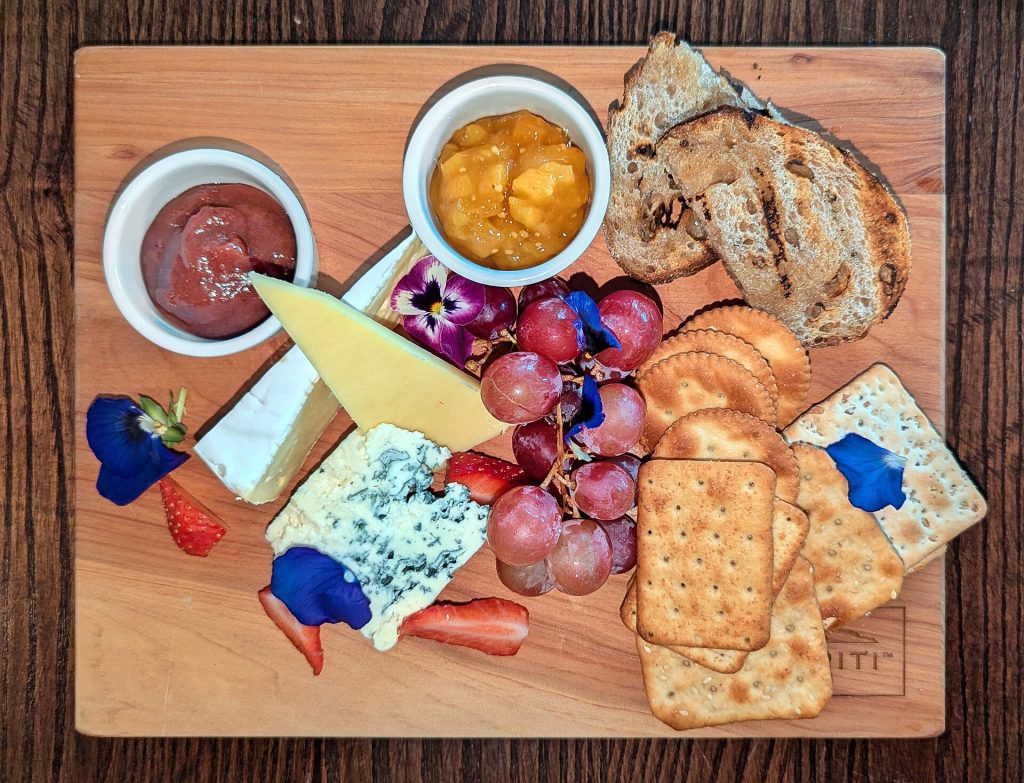
- Cheese: one soft, one firm and one blue covers most wines.
- Charcuterie and something salty: cured meats, olives, roasted nuts.
- Bread and plain crackers: for cleaning the palate as much as for eating.
- One warm dish later in the evening: meatballs, a tray bake or flatbreads arrive right when people need them.
- Something for non-drinkers and anyone avoiding meat or dairy.
For more ideas on matching bites to bottles, see our wine and food pairing tips, and browse more events and entertaining guides for your next gathering.
Step 6: Run it blind
A blind round is where a tasting stops being polite and starts being fun. It strips away the label and the price and leaves only the wine.
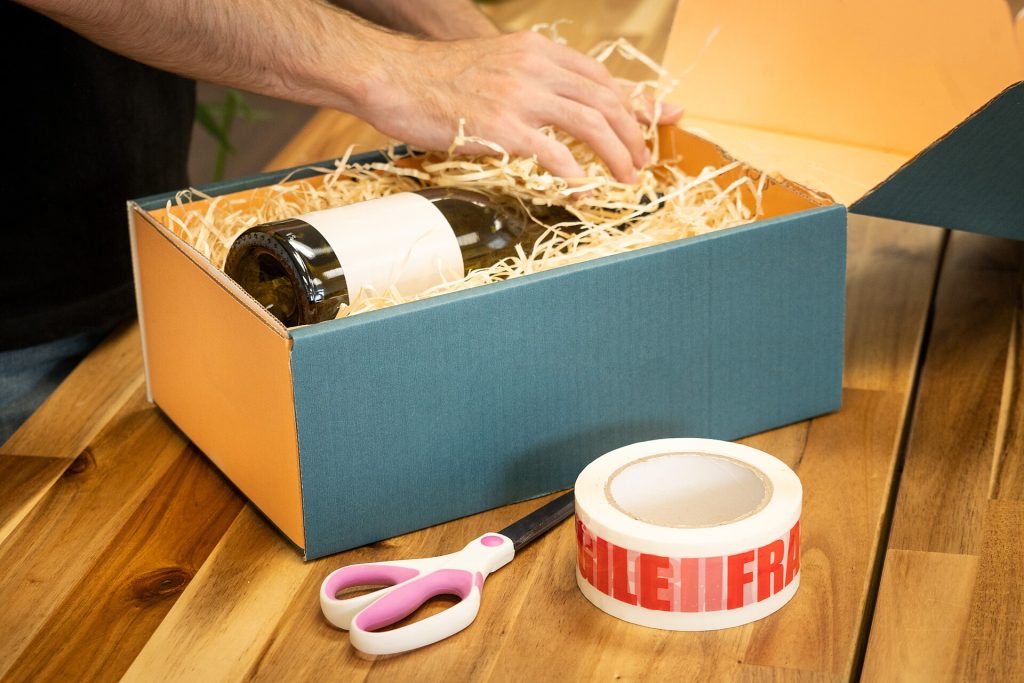
- Bag each bottle in a paper bag or wrap it in foil, and tape over any capsule that gives away the producer.
- Number the bags and write the key on a card that goes in your pocket.
- Ask someone else to shuffle if you want to play too.
- Pour, taste and score each wine before anyone guesses aloud.
- Reveal in reverse order of scores, finishing with the group’s favourite. The price reveal usually gets the biggest reaction.
Keep the stakes low. A small prize for the best guesser is plenty; the conversation is the point.
Step 7: Serve responsibly
A tasting spreads drinks over a long evening, so it’s easy to lose count. The Washington State Liquor and Cannabis Board’s party-hosting advice is a good checklist for any host:
- Serve food throughout, especially protein and healthy fats such as cheese, meats and nuts.
- Always have non-alcoholic drinks available.
- Stop serving alcohol one to two hours before the event ends, and keep serving food and alcohol-free drinks.
- Line up safe rides home through ride-share, taxis or a non-drinking designated driver.
- Never serve anyone under 21.
NIAAA also lists people who should not drink at all, including anyone who is pregnant or may be, anyone planning to drive, and anyone taking medication that interacts with alcohol. Having a good alcohol-free option on the table means those guests are part of the night rather than watching it.
FAQ
How many wines should a home tasting have?
Four to six. Fewer and there isn’t much to compare; more and palates, and attention, fade before the end.
How much wine is a tasting pour?
Around 1.5 to 2 ounces. That gives roughly twelve pours from a 750 ml bottle and keeps each taste below half a US standard drink.
How many bottles do I need for eight people?
One bottle of each wine covers eight people at 2-ounce pours with a little left over. Buy a second bottle of anything you expect to be popular.
Should guests spit at a wine tasting?
It’s their choice, but make it easy with spit cups and dump buckets, and say out loud that pouring out a taste is normal.
Send the invite this week
Pick your theme tonight, send an invite that names it, and put a measuring jigger on your shopping list next to the wine. If you’d rather taste with someone else doing the pouring, our restaurant directory and wine bar guides will point you somewhere good.
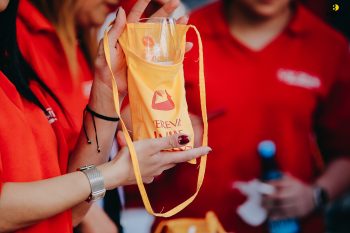
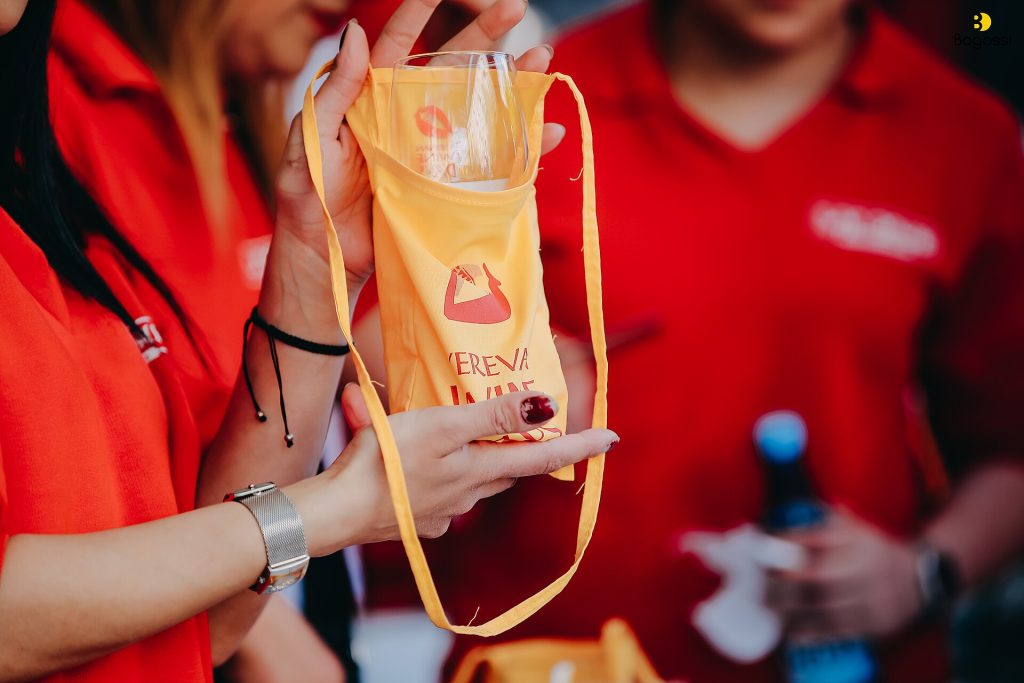
Featured photo: Yerevan Wine Days Tasting Package by Bogossi Production, BY-SA 4.0.