The real difference in mezcal vs tequila comes down to agave, place and process. Tequila must be made from one plant, blue agave, in a defined zone centred on Jalisco. Mezcal can be made from many agave species across a wider set of Mexican regions, and its traditional versions are cooked in earth pits, which is where the smoky reputation comes from.
So every tequila is a type of agave spirit, but it is not a mezcal under Mexican rules. Each has its own official standard, its own protected territory and its own label terms.
Here’s how they compare, drawn from the official Mexican standards and the tequila regulatory council, so you can order with confidence at the bar.
Key takeaways
- Tequila can only use blue agave (Agave tequilana Weber); mezcal may use any agave species grown in its protected territory.
- Tequila’s appellation covers 181 municipalities in Jalisco, Michoacán, Guanajuato, Nayarit and Tamaulipas.
- Mezcal’s standard defines three categories, Mezcal, Mezcal Artesanal and Mezcal Ancestral, largely by how the agave is cooked, crushed and distilled.
- Tequila labelled just “Tequila” needs at least 51% blue agave sugars; mezcal must say 100% agave.
- Reposado means at least two months in oak for tequila and two to twelve months in wood for mezcal.
The short version, side by side
| Tequila | Mezcal | |
|---|---|---|
| Agave | Blue agave only (Agave tequilana Weber) | Any agave species grown in the protected territory |
| Agave content | Tequila 100% agave, or Tequila with at least 51% agave sugars | 100% agave, stated on the label |
| Territory | 181 municipalities in five states, led by Jalisco | Its own appellation, covering Oaxaca and a number of other states |
| Cooking | Cooking or hydrolysis to convert agave sugars; method not fixed by the standard | Ranges from autoclaves to earth pit ovens, depending on category |
| Official standard | NOM-006-SCFI-2012 | NOM-070-SCFI-2016 |
| Aged classes | Reposado, Añejo, Extra Añejo | Reposado, Añejo, Madurado en Vidrio |
| Typical flavour | Cooked agave, pepper, citrus; oak in aged styles | Wider range, often roasted and smoky |
The last row is a generalisation, not a rule. There are clean, bright mezcals and there are tequilas with plenty of weight. But the table explains why the two tend to taste different.
Which agave goes in the bottle
The Consejo Regulador del Tequila is blunt about it: only blue agave, Agave tequilana Weber, may be used to make tequila. That single species is a big part of why tequila tastes relatively consistent from brand to brand.
Mexico’s mezcal standard, NOM-070-SCFI-2016, defines mezcal as a distilled Mexican spirit made from 100% agave, using agave harvested within the protected territory. It doesn’t restrict the spirit to one species, which is why mezcal bottles often name the agave on the label and why flavours vary so widely.
Tequila is one plant told many ways. Mezcal is many plants, each with its own accent.
Where each one can be made
Both spirits are protected by Mexican appellations of origin, much like Champagne or Cognac. The name on the bottle is only legal if the spirit comes from the right place.
Tequila’s territory
According to the CRT, the tequila appellation covers 181 municipalities in five states: Jalisco, Michoacán, Guanajuato, Nayarit and Tamaulipas. The declaration protecting it was published in Mexico’s official gazette on December 9, 1974.
Mezcal’s territory
Mezcal has its own separate appellation, first established in 1994 and extended several times since. NOM-070 requires mezcal to be produced within that protected territory. Oaxaca is the best-known mezcal state, but it is far from the only one, and the list has grown over the years.
How it’s made: steam versus pit
Production is where the two drift furthest apart, and where the smoke question gets answered.
Tequila
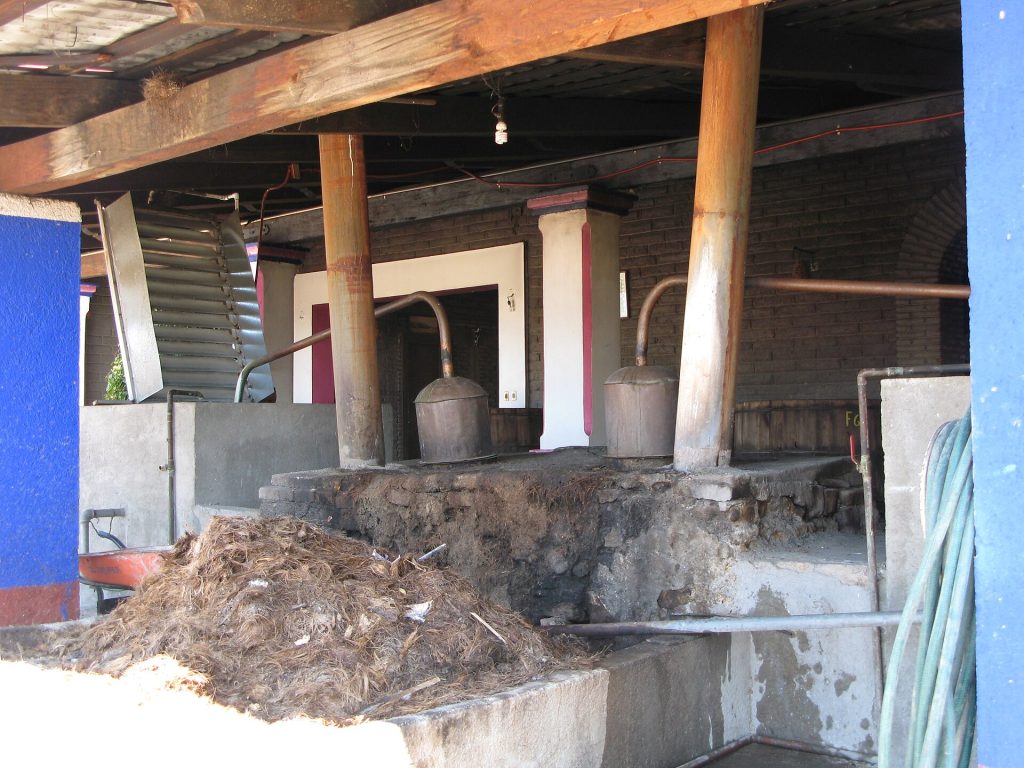
The CRT’s production overview describes harvesting the agave hearts, then converting their sugars through hydrolysis or cooking, a step that can take up to six hours at 120°C to 125°C. The juice is fermented and distilled in two phases, usually in stills, though distillation towers are also used. The official standard doesn’t prescribe one cooking method, so producers vary.
Mezcal’s three categories
NOM-070 splits mezcal into three categories based on how it’s made:
- Mezcal: may use modern equipment, including autoclaves for cooking, industrial mills and continuous stills.
- Mezcal Artesanal: agave cooked in pit ovens or raised masonry ovens, crushed with traditional tools such as a stone tahona, and distilled over direct fire in copper or clay pot stills.
- Mezcal Ancestral: pit ovens only, hand or traditional milling, fermentation in stone or wooden vessels, and distillation over direct fire in clay pots.
Cooking agave in an earth pit over wood and stones is what gives traditional mezcal its roasted, smoky edge. A mezcal cooked in an autoclave can taste much cleaner, so the category on the label is a useful flavour clue.
Reading the label
Tequila categories and classes
The tequila standard, NOM-006-SCFI-2012, sets two categories. “Tequila 100% agave” uses only blue agave sugars. Plain “Tequila” needs at least 51% of its sugars from blue agave, with up to 49% from other sugars. The classes are:
- Blanco or Silver: unaged, or rested in oak for less than two months.
- Joven or Gold: Blanco blended with ingredients permitted by the standard, or with aged tequila.
- Reposado: at least two months in oak.
- Añejo: at least one year in oak containers of no more than 600 litres.
- Extra Añejo: at least three years in oak containers of no more than 600 litres.
Mezcal classes
- Blanco or Joven: unaged.
- Reposado: between two and twelve months in wood.
- Añejo: more than twelve months in wooden containers under 1,000 litres.
- Madurado en Vidrio: rested in glass for more than twelve months.
- Abocado con / Destilado con: flavoured after distillation, or distilled with added ingredients.
NOM-070 also requires the word “Mezcal” on the label to be accompanied by “100% agave” or “100% maguey”. If you see a bottle calling itself tequila with no “100% agave” wording, it’s the 51% category.
How they taste and how to order
Tequila tends toward cooked agave, pepper and citrus when unaged, with vanilla and oak as it spends time in barrels. Mezcal covers a wider spectrum, from bright and herbal to earthy, fruity and smoky, depending on the agave and category.
- Start with the unaged versions. A tequila blanco and a mezcal joven show the difference most clearly.
- Sip it neat first. Both reward slow tasting at room temperature before you mix them.
- Ask about the agave and category. A good bartender can tell you whether a mezcal is artesanal or ancestral and which species it uses.
- Try a swap in a familiar cocktail. Replace tequila with mezcal in a margarita or paloma to taste the smoke in context.
Looking for a bar that takes agave seriously? Browse more bars and nightlife guides, read our cocktail bar picks, or find a spot in our restaurant directory.
FAQ
Is all mezcal smoky?
No. Smoke comes mainly from cooking agave in pit ovens. Mezcal cooked in autoclaves, allowed in the plain Mezcal category, can taste much cleaner.
Is tequila a type of mezcal?
Not under Mexican law. Tequila and mezcal are separate products, each with its own appellation of origin and its own official standard.
Does mezcal always have a worm?
Not necessarily. A worm is an added ingredient, which the “Abocado con” class allows after distillation. It isn’t a mark of quality or authenticity.
Which is stronger?
Neither is automatically stronger. Strength varies by brand and style, so check the alcohol content on the bottle.
Your next round
Next time you’re at the bar, order a tequila blanco and a mezcal joven side by side, ask which agave and category each one is, and taste them neat. That one comparison teaches more than any chart. For more on agave drinks, see our guide to making a better margarita.
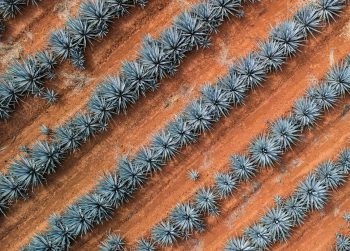
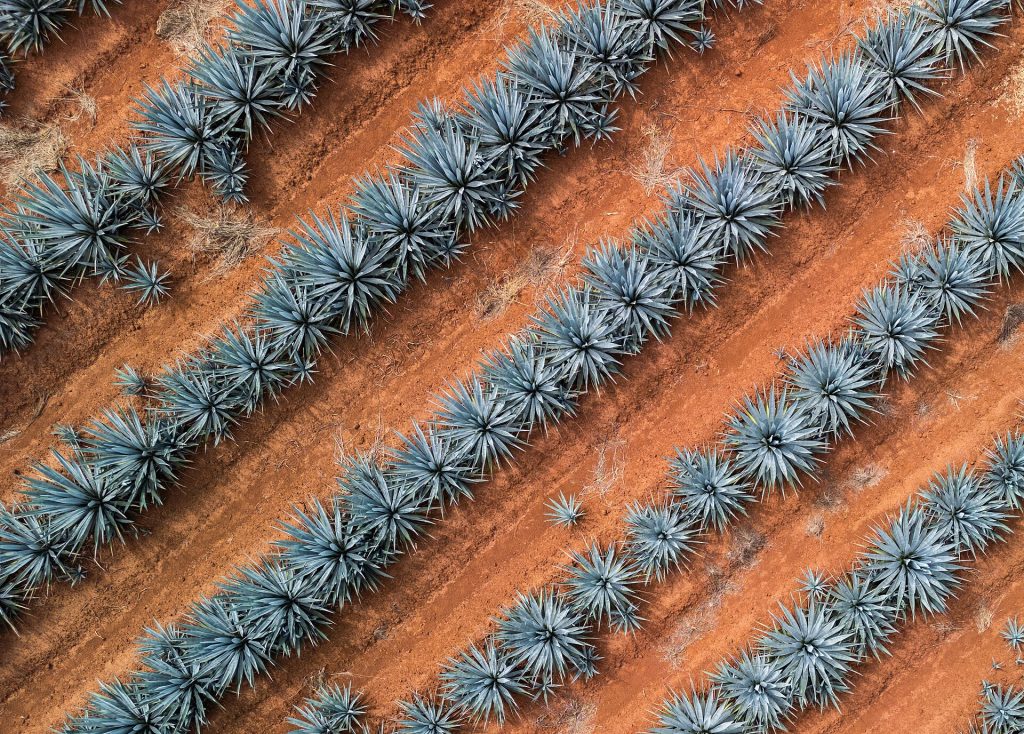
Featured photo: Agave field in Jalisco, Mexico by Tomascastelazo, BY-SA 4.0.