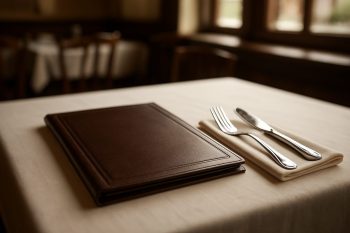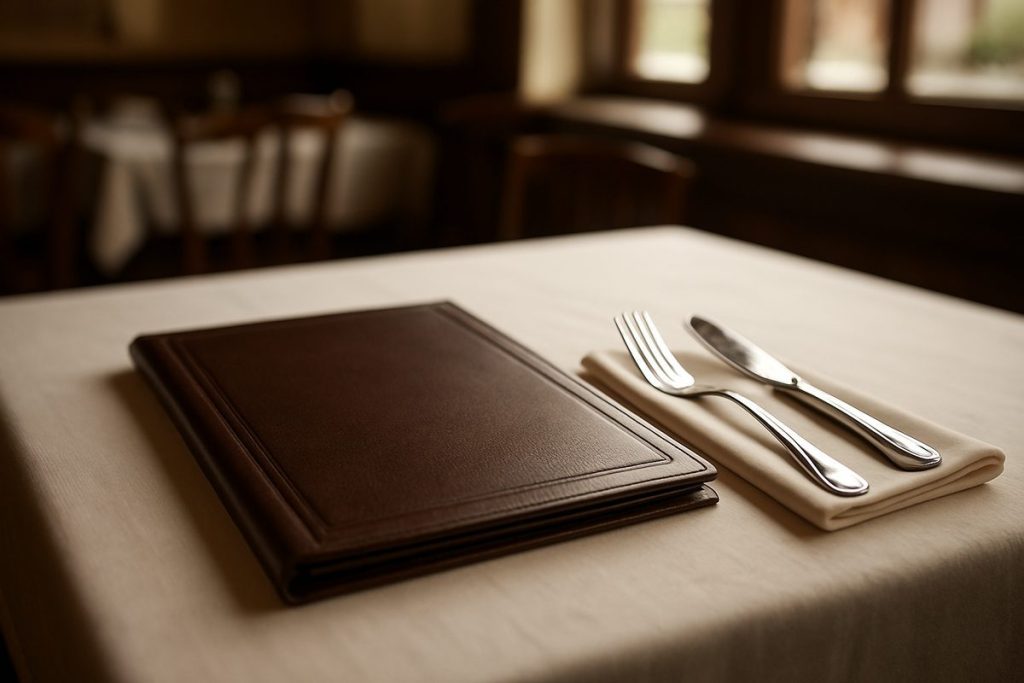
You sit down, adjust your chair and glance around the room. Before a server says much, an object lands in your hands. It might be heavy and soft, thin and slick, cracked at the corners or warm from a previous table. These details are rarely accidental, and the people who make custom menu covers for restaurants weigh every one of them. The menu cover is your first physical contact with a restaurant, and it tells you a lot about the meal ahead.
Most people open the menu ready to read dishes. But the cover itself signals service, upkeep, formality and hygiene. Materials, weight, stitching and page fit all amount to a quiet preview of how the dining room is run. Once you know what to look for, you can read a restaurant before you take a single bite.
The menu arrives before the server does
In many sit-down restaurants, the menu reaches the table before any formal greeting. A heavy cover in your palm usually means table service and a longer meal. A flimsy single sheet points toward a counter or a fast casual spot with a frequently changing menu. The object itself tells you how the restaurant thinks about time and formality.
That first impression also sets a pace. A stiff leather cover suggests deliberate ordering, courses and attention to presentation. A laminated page feels quicker and more transactional. Neither is automatically better, but the state of the cover can hint at how carefully the staff maintains the dining room when no one is watching.
Leather covers and the patina of a cared-for room
Leather is the classic choice for steakhouses, old-school Italian dining rooms, hotel bars and fine dining. A good cover is often about two millimeters thick, stiff enough to hold its shape but soft enough to open flat. The best versions use a pull-up leather that darkens where fingers touch it. Over months and years, that wear builds a patina instead of looking damaged.
A leather cover with softened edges but clean pages and a tight binding is usually a good sign. Deep cracking, peeling bonded leather, stickiness or a greasy feel tells a different story. A debossed logo on the front is another cue. That kind of custom work often sits on tables where the kitchen and wine program get the same level of care.
Most dinner menus fit an 8.5 by 11 inch cover, while lunch and bar menus often use a 5.5 by 8.5 inch format. The material still matters more than the size.
Wood, linen and the bistro middle ground
Wood covers have become common at wine bars, farm-to-table rooms and modern bistros. Birch plywood, walnut veneer and ash feel warm and natural. Wood is heavier than leather and can warp if it sits in water or gets wiped too aggressively. A cover that is still flat after heavy use means someone is drying it properly.
Linen and cloth covers sit in a softer category. They often appear at neighborhood bistros, brunch spots and French-inspired restaurants. Cloth can hide small stains for a while, but a heavily marked cover is hard to excuse. Many cloth and wood covers use elastic bands, leather laces or small screw posts to hold folded sheets. A well-fitted cover with removable pages suggests the menu changes often, which is usually a good sign.
Laminated cards, clipboards and the casual counter
Not every meal needs a leather folder. Laminated pages, clipboards and single printed sheets work well for diners, barbecue joints, taquerias and fast casual counters. A clean, current laminate is perfectly fine. The menu is a working tool, and in a busy casual spot it should be easy to wipe and replace.
The trouble starts when laminate peels at the edges, prices are taped over, marker corrections cover old dishes or the print has faded under too many passes of a sanitizing cloth. Those are signs of neglect, not informality. A single printed sheet may be a daily special or a seasonal menu. If it is crisp and clean, the kitchen updates frequently. If it is dog-eared and splattered, the same turnover is not being handled well.
Why restaurants invest in custom covers
Loose paper menus get torn, stained and dog-eared quickly. A structured cover protects pages and makes the whole table feel more considered. Custom covers also make updates easier. A restaurant can swap in a new sheet for a seasonal dish, a price change or a revised wine list without replacing the entire book.
A quick look at any workshop that makes custom covers shows why so many dining rooms stop fighting loose paper. The options include ring mechanisms, Chicago screws, elastic bands and clear protective sleeves. A consistent cover with a debossed logo gives a restaurant a visual anchor. It also signals to guests that the menu, like the plate, is part of the design rather than an afterthought.
Wear, tear and the hygiene check
Before you order, give the cover a quick once-over. Sticky laminate, peeling plastic or a greasy shine are immediate red flags. If the front feels unclean, think about what the kitchen’s cutting boards might feel like. Look for crossed-out prices, taped-over items or torn inserts. A wine list that no longer matches the by-the-glass board is another sign the room has stopped updating its paperwork.
Cleanliness has changed how menus are handled. Many restaurants now sanitize covers between turns, use disposable paper or place a QR code card on the table. There is nothing wrong with a physical cover if it is wiped properly. The problem is the cover that sits sticky under your fingers long after the previous guest left. A clean cover with a bit of leather patina is fine. A dirty one is not.
Separate covers for wine, cocktails, desserts and kids
Many restaurants use separate covers for different parts of the meal. Wine lists often come in their own book to signal a serious program. Cocktail menus may be clipped to a small board or printed on card stock because they change often. Dessert menus tend to be smaller, often in a narrow 4.25 by 11 inch format. Kids menus are usually disposable paper for obvious reasons.
When the food menu and wine list have matching covers, the room feels cohesive. When the wine list is loose while the food menu sits in leather, the wine program may be an afterthought. Separate covers also reduce wear on the main book and let a restaurant update one section without reprinting everything.
Etiquette cues most diners miss
The menu cover can double as a signaling tool. Closing the menu and placing it flat on the table is a common sign that you are ready to order. Keeping the menu open, or holding the wine list, tells the server you are still deciding. If the daily specials are not inside, ask for a separate sheet before you close the book too early.
Pay attention to where the cover goes after you order. If it stays on the table, it can creep into your water glass or crowd the bread plate. Placing it at the edge of the table, or handing it to the server when plates arrive, keeps the table clear. If a cover feels sticky, avoid touching your bread or glass until you have wiped your fingers on a napkin.
What to notice next time
Keep a short mental list the next time a menu lands in your hands.
- Notice the weight and material before you open it.
- Check the corners, binding and whether pages sit flat inside the cover.
- Look for taped-over prices, crossed-out dishes or faded print.
- Run a fingertip along the edge to test for stickiness or grease.
- Compare the wine list with the by-the-glass board if both are present.
- See whether the cover uses removable pages or permanent binding.
- Watch how the server collects menus after the order.
- Use closing the menu as a quiet signal that you are ready.