A corporate cafeteria can be one of the most visible workplace amenities a company offers, but simply having food available is not enough to make the program successful.
Employees are more likely to use an onsite dining program when it fits naturally into their workday, offers reliable quality, provides enough variety, and makes lunch easier rather than more complicated. A cafeteria that is poorly planned may struggle with low participation, food waste, long lines, or inconsistent service even when the employer has invested heavily in the space.
The most effective corporate dining programs are designed around the needs of the workforce rather than around a generic food-service model.
Start With Employee Habits
Before designing menus or selecting equipment, employers should understand how employees actually use the workplace.
A traditional office where most employees arrive at the same time and work a fixed schedule may have very different dining needs from a hybrid workplace where attendance changes throughout the week.
Important questions include:
- How many employees are onsite on an average day?
- What time do most employees take lunch?
- Are there multiple shifts?
- How long are typical lunch breaks?
- Do employees usually eat alone, in groups, or at their desks?
- How often are guests, clients, or contractors onsite?
Understanding these patterns makes it easier to determine appropriate staffing, service hours, seating capacity, and menu volume.
A cafeteria should be built around real demand rather than the maximum possible number of employees in the building.
Menu Variety Should Be Practical
Employees appreciate variety, but offering too many options can create unnecessary complexity and waste.
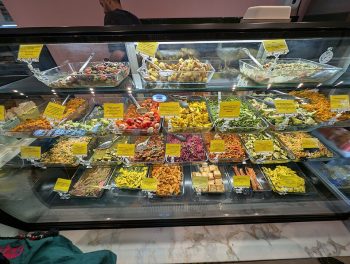
A successful cafeteria usually balances familiar staples with rotating choices. That might include a combination of prepared entrées, sandwiches, salads, soups, grab-and-go items, and seasonal specials.
The menu should also account for common dietary needs.
Vegetarian options, allergen awareness, healthier selections, and lighter meals can make the cafeteria useful to a larger percentage of the workforce.
Variety does not necessarily mean creating an entirely different menu every day. Consistency can be valuable as long as employees still have enough choice to avoid feeling limited.
Choose a Food-Service Partner Based on Operations, Not Just Menu
Selecting the right operator is one of the most important decisions in a corporate dining program.
Companies evaluating Maryland corporate cafeteria services should look beyond sample menus and consider how well the provider can manage staffing, food safety, inventory, peak-hour demand, dietary requirements, and ongoing communication with the employer.
The operator should also understand the workplace itself.
A cafeteria serving a manufacturing facility with multiple shifts may require a different service model from one serving a professional office where most demand occurs during a narrow lunch period.
Reliable execution often matters more than elaborate menu concepts. Employees quickly lose confidence in a cafeteria if service is inconsistent, popular items frequently run out, or lines become too long.
Design for Speed and Convenience
Convenience is one of the biggest reasons employees use an onsite cafeteria.
If employees have only 30 or 45 minutes for lunch, spending a large portion of that time waiting in line makes the cafeteria less attractive.
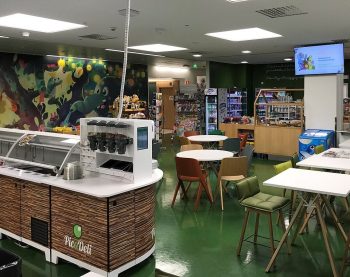
Service flow should be designed to move people efficiently through ordering, food pickup, payment, and seating.
Depending on the workplace, this could include:
- Multiple checkout points
- Self-service stations
- Grab-and-go refrigerators
- Mobile ordering
- Prepackaged meals
- Separate beverage or snack stations
Even small operational changes can significantly improve the lunch experience.
The goal is to make eating onsite easier than leaving the property or ordering delivery.
Consider Pricing and Employer Subsidies
Price strongly influences cafeteria participation.
If employees believe the onsite cafeteria is significantly more expensive than nearby alternatives, usage may remain low regardless of convenience.
Some employers subsidize part of the meal cost to encourage participation. Others provide occasional meal credits or discounted menu items.
There is no single pricing model that works for every workplace.
The right structure depends on employee demographics, nearby dining options, company culture, and the employer’s overall goals for the program.
The important point is that pricing should be considered as part of the cafeteria strategy rather than treated as an afterthought.
Use Employee Feedback Carefully
Employees should have a way to provide feedback about the cafeteria, but successful programs also need to distinguish between individual preferences and broader patterns.
One employee may want more vegetarian meals while another wants more traditional comfort food. A small number of complaints should not automatically trigger a complete menu overhaul.
Instead, employers can look for recurring themes.
Feedback may reveal that employees consistently want:
- Faster service
- More fresh options
- Better breakfast availability
- More affordable meals
- Improved portion sizes
- Additional dietary choices
When feedback is combined with actual sales and participation data, cafeteria operators can make better decisions.
Measure Participation, Not Just Revenue
Revenue is useful, but it should not be the only measure of cafeteria performance.
A company that provides onsite dining primarily as an employee benefit may care more about participation, satisfaction, convenience, and workplace engagement than direct profitability.
Useful measures can include:
- Percentage of onsite employees using the cafeteria
- Average transactions per day
- Most and least popular menu items
- Food waste
- Peak service times
- Employee satisfaction
- Repeat usage
Tracking these trends over time makes it easier to identify whether changes to menus, pricing, staffing, or service hours are improving the program.
Build a Program That Can Adapt
Workplaces change.
Employee headcount may increase or decrease. Hybrid schedules may shift. New dietary preferences may emerge. Office layouts may change, and companies may introduce new benefits or employee programs.
A corporate cafeteria should be flexible enough to adapt.
The most successful dining programs are not designed once and then left unchanged. They evolve based on employee behavior, operating data, and workplace needs.
When employers focus on convenience, consistency, appropriate variety, and strong operational management, the cafeteria becomes more than a place to buy lunch. It becomes a practical workplace amenity that employees actually use and value.
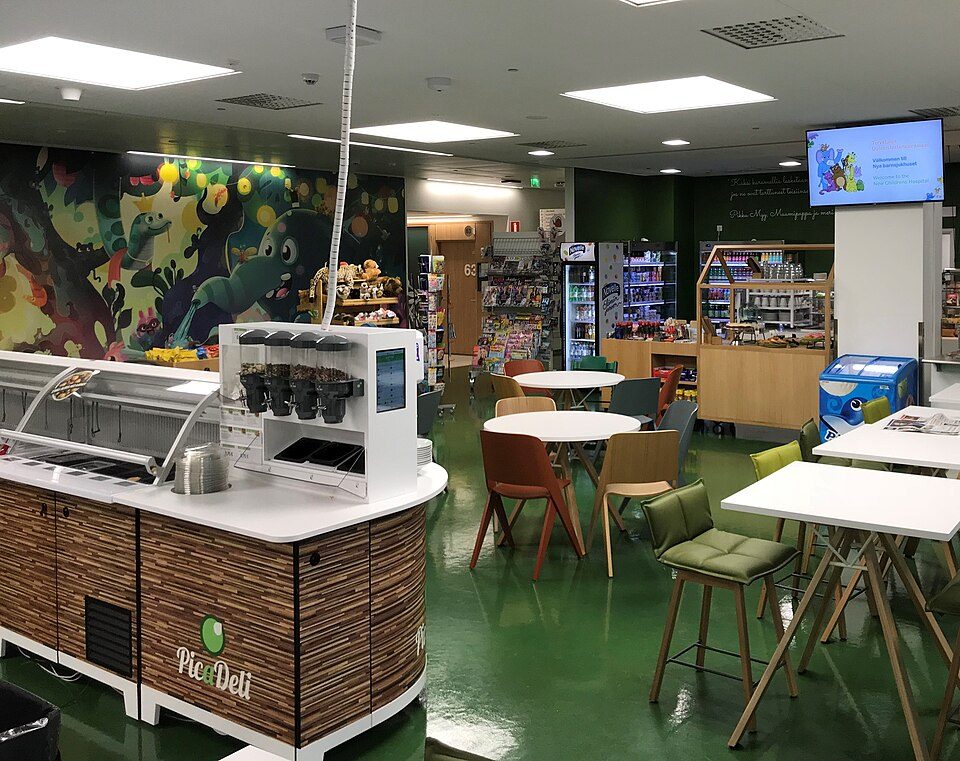
Featured photo: Cafeteria, New Children’s Hospital, Helsinki by Sinikka Halme, CC BY-SA 4.0.