Plenty of restaurant etiquette you grew up with can be relaxed, as long as you keep the principle behind it. You can send back a dish that isn’t what the menu promised, order the least expensive bottle without shame, ask for separate checks, and stay for coffee in a quiet dining room. What hasn’t changed: calls from the table are still out, and some restaurants still enforce a real dress code.
Most dining rules exist to make the meal pleasant for your companions and the people serving you. When a rule stops doing that, it’s a habit, not manners.
Below are six common beliefs, taken one at a time, with what etiquette authorities such as the Emily Post Institute actually say.
Key takeaways
- Emily Post’s guidance is still to silence your phone and put it away, but stepping outside to deal with something urgent is fine.
- Sending back a dish that doesn’t match its menu description is acceptable. Sending it back because you ordered the wrong thing is a different matter.
- There’s no shame in the cheapest bottle, and the second-cheapest wine trap is more folklore than fact.
- Separate checks are fine if you ask at the start of the meal, not when the bill lands.
- Some dining rooms still require jackets. Galatoire’s in New Orleans is one, and it keeps loaner jackets on hand.
In this guide
- The six myths at a glance
- Myth 1: A phone anywhere near the table is a crime
- Myth 2: Sending food back makes you a difficult guest
- Myth 3: Ordering the cheapest wine looks cheap
- Myth 4: The bill must always be split evenly
- Myth 5: You should leave the minute you finish
- Myth 6: Dress codes are a thing of the past
- FAQ
- Before your next dinner out
The six myths at a glance
| Myth | Fact | What to do |
|---|---|---|
| A phone anywhere near the table is a crime | Keep it silenced and away; step out if something is urgent | Warn your companions, then excuse yourself |
| Sending food back makes you difficult | It’s fine when the dish isn’t what was described | Tell the server quietly and specifically |
| Ordering the cheapest wine looks cheap | Price is your business; the list exists to give you options | Point to a price on the list when you ask for advice |
| The bill must always be split evenly | Separate checks are reasonable if arranged early | Ask the server when you order |
| You should leave the minute you finish | Lingering depends on how busy the room is | Read the room and offer the table back if people are waiting |
| Dress codes are a thing of the past | Some restaurants still enforce them | Check the restaurant’s website before you go |
Myth 1: A phone anywhere near the table is a crime
The myth: having a phone within sight of the table is a hanging offence, and there are no exceptions.
The fact: the core rule holds, but it comes with a sensible exit. The Emily Post Institute’s table manners guidance says your phone should be silenced and put away during the meal, and its cell phone manners list specifically says not to make calls from your table in a restaurant. Where the rule relaxes is the emergency. On texting at the table, the Institute’s advice is that if you absolutely must communicate with someone who isn’t there, you excuse yourself, send the message and come back as soon as you can.
How to handle it well
- If you’re waiting on a call from a babysitter or a work crisis, say so when you sit down.
- Keep the phone on silent and out of sight, not face down beside the bread basket.
- When it buzzes, step away from the table rather than answering in your seat.
Myth 2: Sending food back makes you a difficult guest
The myth: a polite guest eats whatever arrives and never complains.
The fact: a restaurant would rather fix a problem than lose a customer. In a CNN restaurant etiquette guide, Peggy Post, author of Emily Post’s Etiquette, warned that there is a fine line between speaking up and being a prima donna. The line sits in a sensible place: it’s acceptable to return a dish that doesn’t match its description, such as a steak cooked well past what you asked for, but not because you simply don’t like a dish you chose.
The Emily Post Institute’s dining advice takes the same calm approach to smaller problems. If you find something that shouldn’t be in your food, or a glass or fork isn’t clean, you quietly let your server know and let them replace it, without making a scene.
Speaking up about a wrong dish isn’t rude. Making the whole table watch you do it is.
A good send-back, step by step
- Flag it early, after the first bite, not when the plate is half gone.
- Catch your server’s eye and keep your voice low.
- Be specific: “I asked for medium-rare and this is well done.”
- Say what you’d like instead, a replacement or something else from the menu.
- Tell your companions to carry on so their food doesn’t go cold.
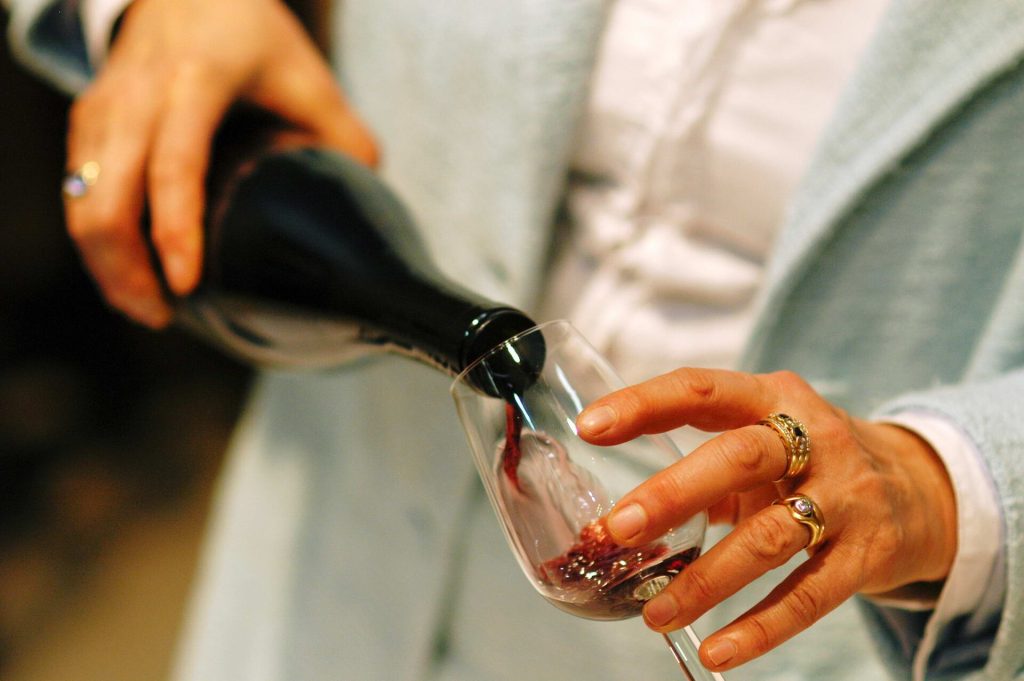
Myth 3: Ordering the cheapest wine looks cheap
The myth: ordering the cheapest bottle marks you as a tightwad, so everyone orders the second-cheapest instead.
The fact: that second-cheapest move is so common that it has become its own piece of folklore. When Atlas Obscura surveyed 304 of its readers, more than half said they had picked a wine that way, and about one in five said it was their regular strategy. The same piece records a sommelier saying restaurants occasionally reprice a wine to sit in that slot, while other industry voices, including a San Francisco restaurant owner, called the idea a myth at sommelier-driven restaurants. It isn’t a reliable trap or a reliable bargain.
What actually helps is being direct about budget. Nobody at the next table sees your bill, and a good sommelier wants you to enjoy what you drink at the price you’re comfortable with.
- Point to a price on the list and say, “Something around here, please.” It’s a discreet, well-understood signal.
- Describe what you like, such as dry, fruity or light-bodied, rather than naming a grape you’re unsure about.
- Ordering by the glass is perfectly fine, especially if people at the table want different things.
- If you’re the host, you set the price range. Guests shouldn’t order above it.
Myth 4: The bill must always be split evenly
The myth: a group bill must be split down the middle, and asking for anything else is petty.
The fact: an even split is the easy default, not an obligation. Peggy Post told CBS News that splitting equally is easier and in the spirit of companionship, but that anyone who isn’t comfortable with it should ask for separate checks right up front. She added a fair caveat: some restaurants don’t like to do it.
Who pays also depends on how the dinner came about. The Emily Post Institute’s advice on group restaurant invitations is blunt: once you issue an invitation, you are the host, which means you’re paying, even at a restaurant. If you want everyone to cover their own share, a casual “Want to meet us at…” makes that clear in a way “We’re hosting a dinner” does not.
Splitting without the awkward bit
- Ask for separate checks when you order, not when the bill arrives.
- If one person had three cocktails and another had water, itemise. That isn’t petty; it’s fair.
- Tip on the full amount. Emily Post’s tipping guide suggests 15 to 20 percent of the pre-tax bill for sit-down service.
Myth 5: You should leave the minute you finish
The myth: the moment the plates are cleared, you owe the restaurant your table.
The fact: this one depends almost entirely on the room. On a quiet Tuesday, staying for coffee and a second round is exactly what a restaurant hopes for. On a Saturday with a line out the door and a booking due in 15 minutes, hanging on for an hour after paying puts pressure on staff and on the guests waiting.
- Look at the door. If people are waiting, settle up and move to the bar if you want to keep talking.
- If you booked a time slot, respect it. Many busy restaurants plan the whole night around turn times.
- Keep ordering if you’re staying. A dessert or a coffee turns lingering into part of the meal.
Myth 6: Dress codes are a thing of the past
The myth: nobody cares what you wear to dinner any more.
The fact: most restaurants are relaxed, but some still enforce a code, and they mean it. Galatoire’s in New Orleans lists its rules on its FAQ and dress code page: collared shirts and long pants are required for men, and in the main and second-floor dining rooms men must wear jackets after 5pm and all day on Sunday. Tank tops, flip-flops and athletic wear aren’t allowed in either dining room. The restaurant keeps complimentary loaner jackets, and a separate room accommodates guests without jackets.
A code protects the feel of a room, and a good restaurant gives you a way to meet it. Your job is to check before you go, especially for special-occasion and historic dining rooms. Browse more eat out guides for ideas on where to book.
FAQ
Is it rude to have your phone on the table at a restaurant?
The Emily Post Institute recommends keeping your phone silenced and put away during the meal. If you must reply to something, excuse yourself and step away.
When is it acceptable to send food back?
When the dish doesn’t match what the menu described, for example wrongly cooked, cold or containing something it shouldn’t. Tell your server quietly and early.
How much should I tip at a sit-down restaurant?
Emily Post’s tipping guide suggests 15 to 20 percent of the pre-tax bill for table service.
Can I ask for separate checks?
Yes, ideally when you order. Be aware that some restaurants prefer not to split bills, particularly for large groups.
Before your next dinner out
Pick the one rule you’ve been most anxious about and use the fix above at your next meal. If it’s a special night, check the restaurant’s website for a dress code and booking rules before you go. Find somewhere new in our restaurant directory, brush up on tipping etiquette, and read our tips on getting a table at a busy restaurant.
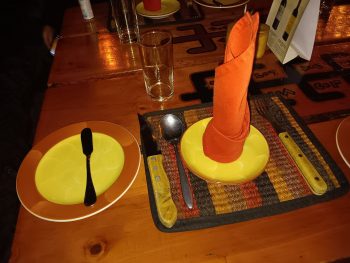
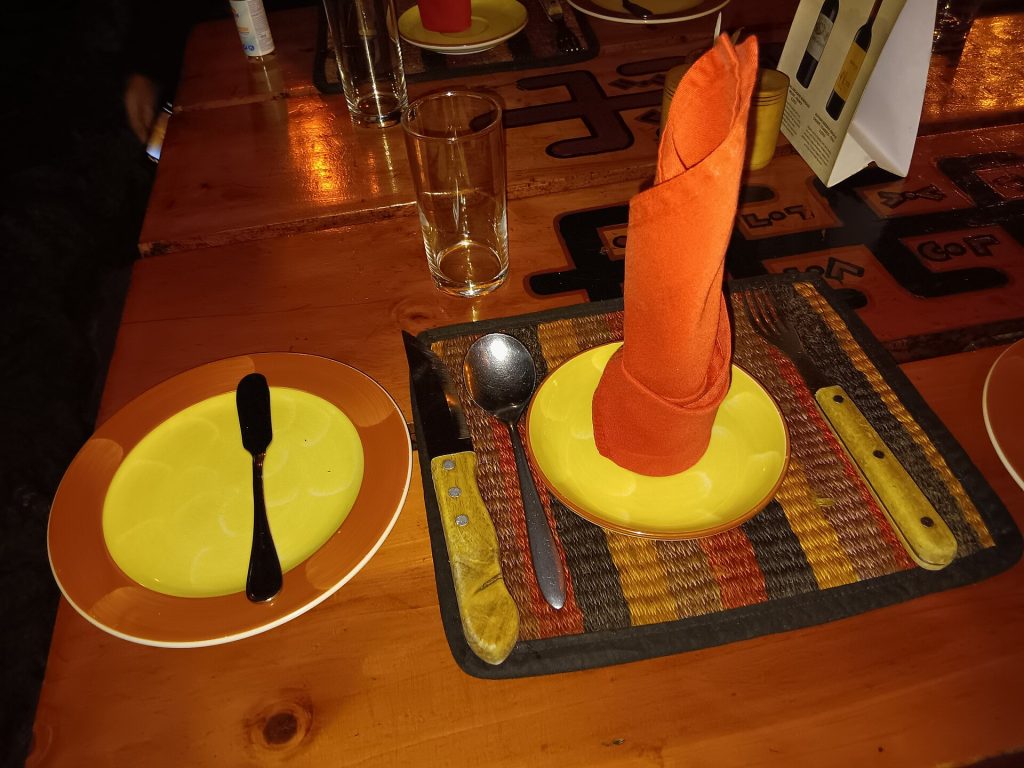
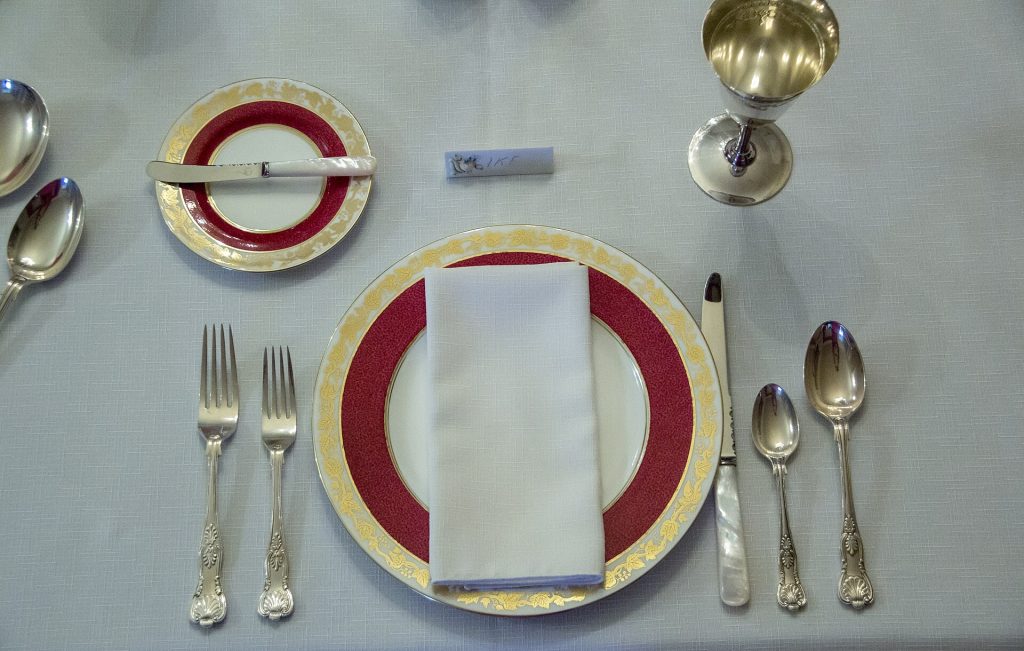
Featured photo: Table setting, Carnivore, 2025 (01) by Bahnfrend, BY-SA 4.0.