Running payroll for a restaurant is genuinely one of the more complicated things a business owner faces. The best payroll software needs to handle tipped wages, overtime rules under the FLSA, and shifting state tax rates, all without breaking down every pay cycle. Keeping up with constantly changing federal and local tax laws, managing workers across multiple locations, and correctly classifying tipped employees versus salaried managers adds real pressure. After reviewing five of the strongest options on the market, this guide covers what each platform actually does well and where it fits for restaurant operators.
The shortlist methodology
Each option was evaluated by pulling publicly available data across user reviews, feature documentation, ratings from established review platforms, and official company websites. Only platforms with a demonstrated track record of handling payroll software at a meaningful scale made the cut.
→ See the full research breakdown
- Hybrid Payroll – Best for small to mid-size restaurant and hospitality payroll with HR bundled in
- Gusto – Best for small to midmarket business payroll and HR management
- Paychex – Best for small to medium-sized business payroll and HR management
- Rippling – Best for mid-market to enterprise employee management and payroll automation
- BambooHR – Best for small and medium-sized businesses seeking HR and payroll solutions
Why Picking the Right Payroll Software Matters
Restaurant payroll is not standard office payroll. Tips, pooled wages, overtime thresholds, and tipped minimum wage credits create layers of detail that generic tools often struggle to handle cleanly. Add multi-state compliance for restaurant groups with locations in different states, and the margin for error shrinks fast.
Choosing software built with these scenarios in mind directly affects payroll processing accuracy, the time it takes to complete each pay cycle, and whether tax filings go out on time. A wrong tip allocation or a missed overtime calculation leads to IRS notices and unhappy staff.
The right platform keeps those risks low by automating the calculations that restaurants consistently get wrong manually. Better accuracy means fewer corrections, and fewer corrections mean more time focused on actually running the business.
Compare the Top 5 Payroll Software
Note: All data in this table is sourced from review platforms and the official websites of the listed companies.
| Company Name | Years Operating | Team Size | Headquartered In |
|---|---|---|---|
| Hybrid Payroll | Est. 2014 | 51-200 | Denver, Colorado |
| Gusto | Est. 2012 | 4,008 | San Francisco, CA |
| Paychex | Est. 1971 | ~19,000 | Rochester, New York |
| Rippling | Est. 2016 | 7,131 | San Francisco, CA |
| BambooHR | Est. 2008 | 1,627-1,734 | Draper, Utah |
Hybrid Payroll – Best for Small to Mid-Size Restaurant and Hospitality Payroll With HR Bundled In
What Role Does Hybrid Payroll Play?
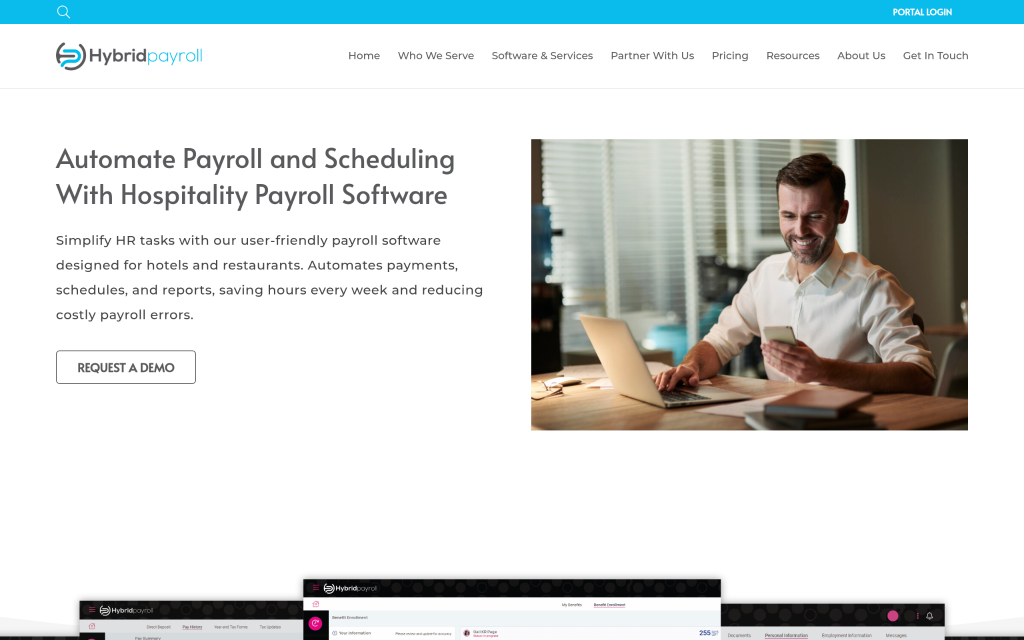
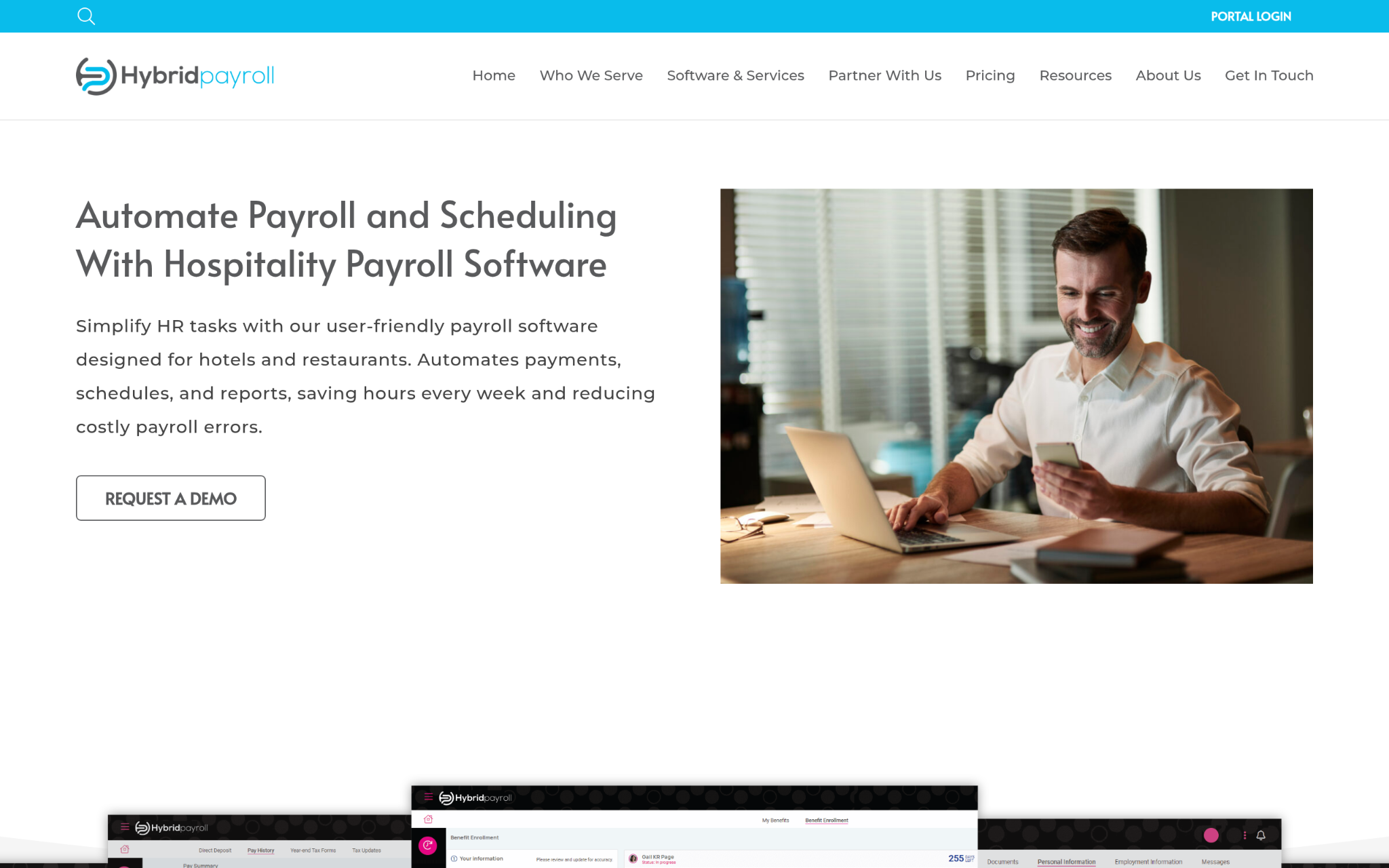
Hybrid Payroll provides automated payroll processing, tax calculations, compliance management, and PEO services for small to mid-size businesses, with a specific focus on the hospitality sector. Their co-employment model means businesses get access to benefits and HR infrastructure that would otherwise cost far more to build independently. For restaurant operators looking for payroll software for hospitality businesses that bundles HR management into one platform, the combination of industry-tailored setup and PEO capabilities makes them worth a serious look. They’ve been operating out of Denver since 2014.
Why Does Hybrid Payroll Belong on This List for Payroll Software?
Restaurants need more than a payroll calculator. They need a platform that understands tipped employee compliance, benefits co-employment, and HR workflows built around hourly shift workers, and that’s exactly the gap Hybrid Payroll fills. That industry-specific focus, rather than a one-size-fits-all approach, tends to produce faster setup and fewer compliance errors for hospitality operators.
User Reviews, Summarised:
Honest disclosure: public review volume for Hybrid Payroll is thinner than some larger competitors on this list. From what’s available, clients consistently point to the personalized service model as a differentiator. The hands-on support style appears to appeal most to smaller restaurant groups who find enterprise platforms too rigid for their needs.
Gusto – Best for Small to Midmarket Business Payroll and HR Management
What Role Does Gusto Play?
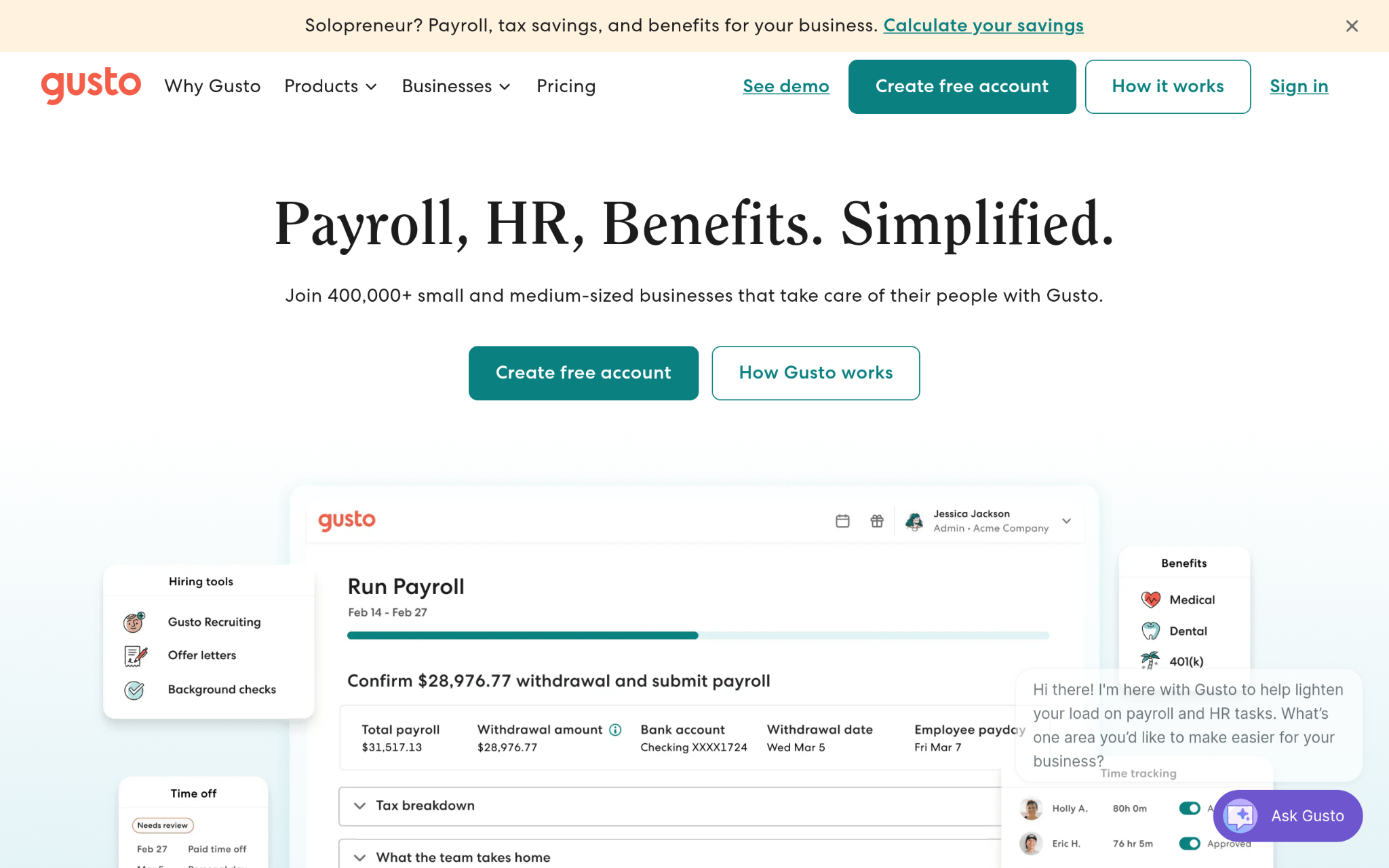
Gusto is a fully integrated online payroll and HR platform serving U.S.-based businesses across industries including retail, tech, and manufacturing. They automatically file payroll taxes with government agencies at no additional cost, which matters a lot to restaurant owners who don’t have a dedicated payroll team. The platform connects with nearly 150 third-party software products and covers payroll, benefits, employee setup, and compliance tracking in one place. With 400,000 active customers and $735.5M in 2024 revenue, Gusto is not a small bet.
Why Does Gusto Belong on This List for Payroll Software?
Gusto solves the problem of payroll tax filing by handling it automatically and including it in the base price rather than treating it as a billable add-on. That approach removes one of the biggest pain points for restaurant operators who run lean back-office teams and can’t afford to miss a tax deadline.
User Reviews, Summarised:
Reviewers consistently call out Gusto’s interface as one of the cleanest in the space. The most common praise is that non-technical users can figure out the platform without any training. TechRepublic named them Best Overall Payroll Processing Software, and G2 ranked them #1 for user satisfaction in 2026, which lines up with what real users are saying.
Paychex – Best for Small to Medium-Sized Business Payroll and HR Management
What Role Does Paychex Play?
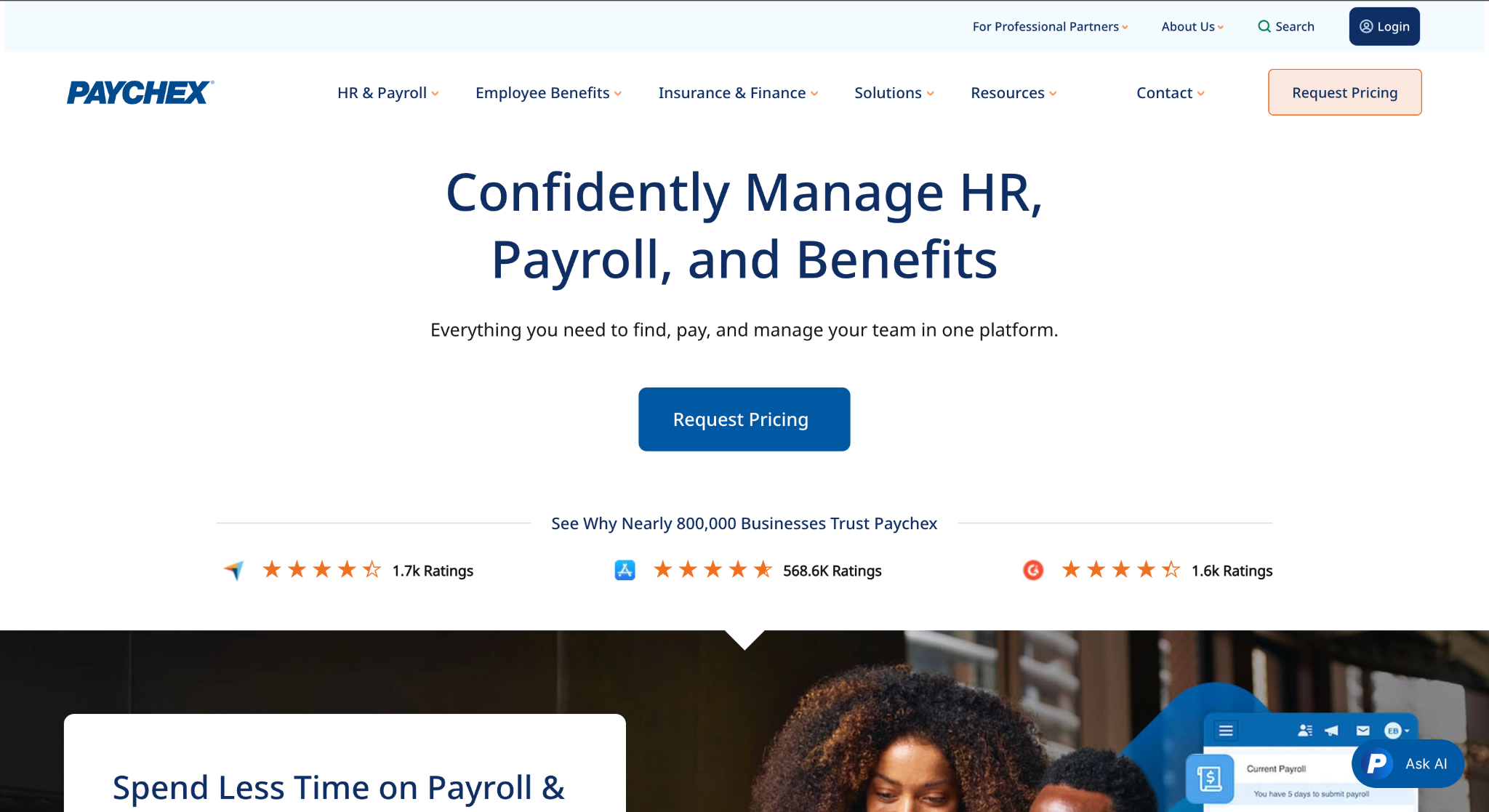
Paychex has been running payroll since 1971, which gives them a depth of regulatory experience that newer platforms are still building toward. They serve approximately 800,000 payroll clients across the U.S. and Europe, and their Paychex Flex platform covers payroll processing, HR management, talent acquisition, and workforce tools in a single cloud environment. They also hold the title of largest 401(k) recordkeeper in the U.S., which signals how deeply embedded they are in employee financial services. That kind of scale and track record is genuinely rare in this space.
Why Does Paychex Belong on This List for Payroll Software?
Paychex addresses the challenge of managing complex payroll at scale by combining over 50 years of industry depth with a modern platform built for small to mid-size businesses. Their consistent recognition across HR Tech Awards for five consecutive years reflects a platform that doesn’t just work at launch, but keeps pace with changing payroll requirements over time.
User Reviews, Summarised:
Paychex earns strong marks for reliability and compliance support in reviews. Enterprise-level credibility meets small business accessibility in their Flex platform. Some reviewers note that pricing can feel opaque until you’re in a sales conversation (not cheap, but the depth of features often justifies it).
Rippling – Best for Mid-Market to Enterprise Employee Management and Payroll Automation
What Role Does Rippling Play?
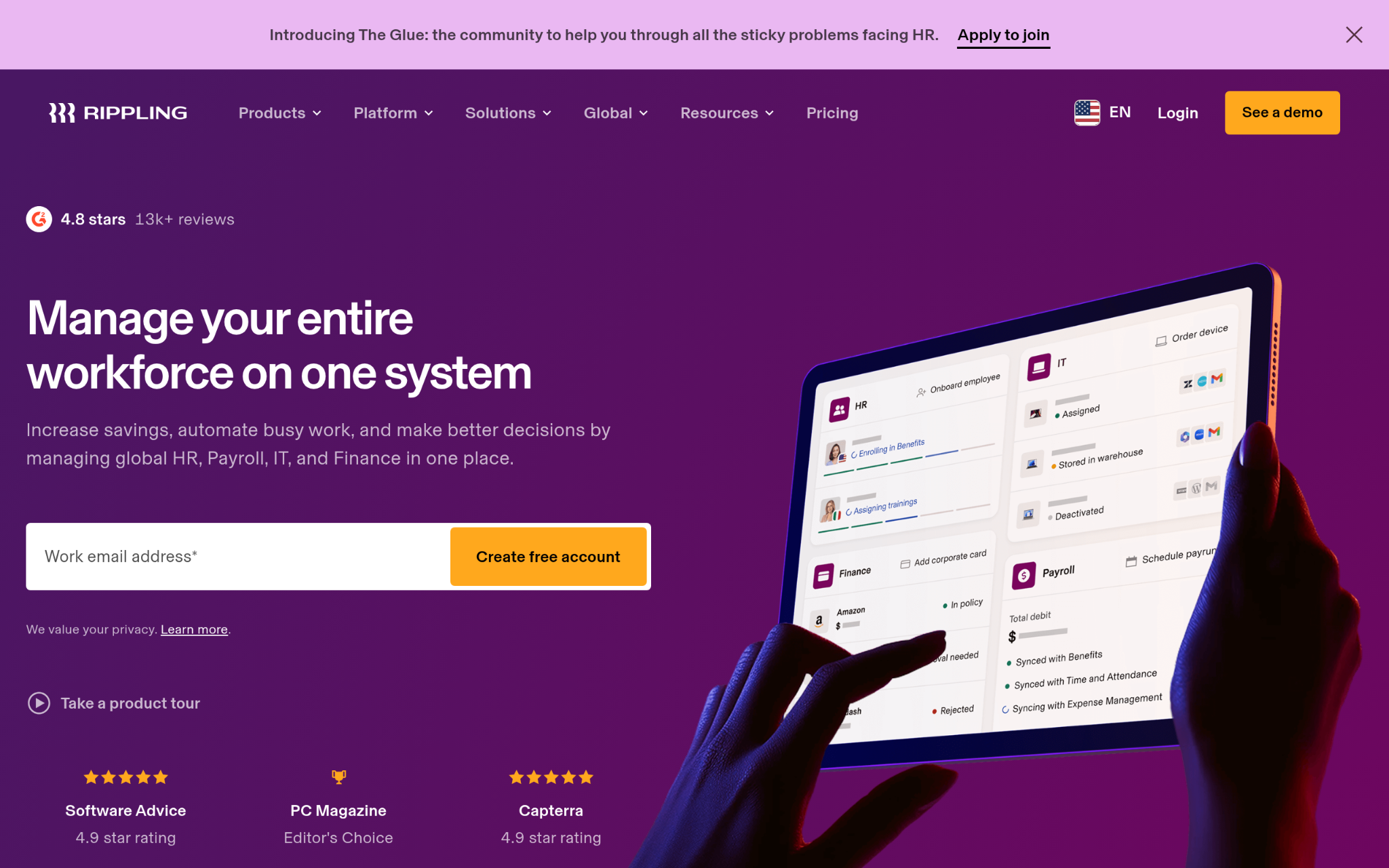
Rippling connects payroll to every other system employees touch, from their devices and apps to their benefits and corporate cards. The platform integrates over 500 applications and runs on a single employee data record, which means payroll changes flow across the whole system without manual updates. Their claim that a new employee can be fully onboarded, with payroll, computer, and benefits configured, within 90 seconds is the kind of benchmark that makes HR managers pay attention. With a $16.8 billion valuation and 40 awards, they’ve built real credibility fast.
Why Does Rippling Belong on This List for Payroll Software?
Rippling solves the fragmentation problem that mid-market businesses hit when payroll, HR, and IT run on separate systems with no shared data layer. Their #1 ranking for vendor satisfaction in payroll and benefits (based on Voice of the Customer awards) reflects how that integrated approach plays out for real users.
User Reviews, Summarised:
User sentiment for Rippling skews strongly positive, especially among companies managing distributed teams. The speed of setup and the breadth of integrations are the most commonly mentioned strengths. G2 ranked them #4 globally in their 2026 Software Awards, which tracks with the volume of positive feedback they receive (think enterprise pricing, but the capabilities match it).
BambooHR – Best for Small and Medium-Sized Businesses Seeking HR and Payroll Solutions
What Role Does BambooHR Play?
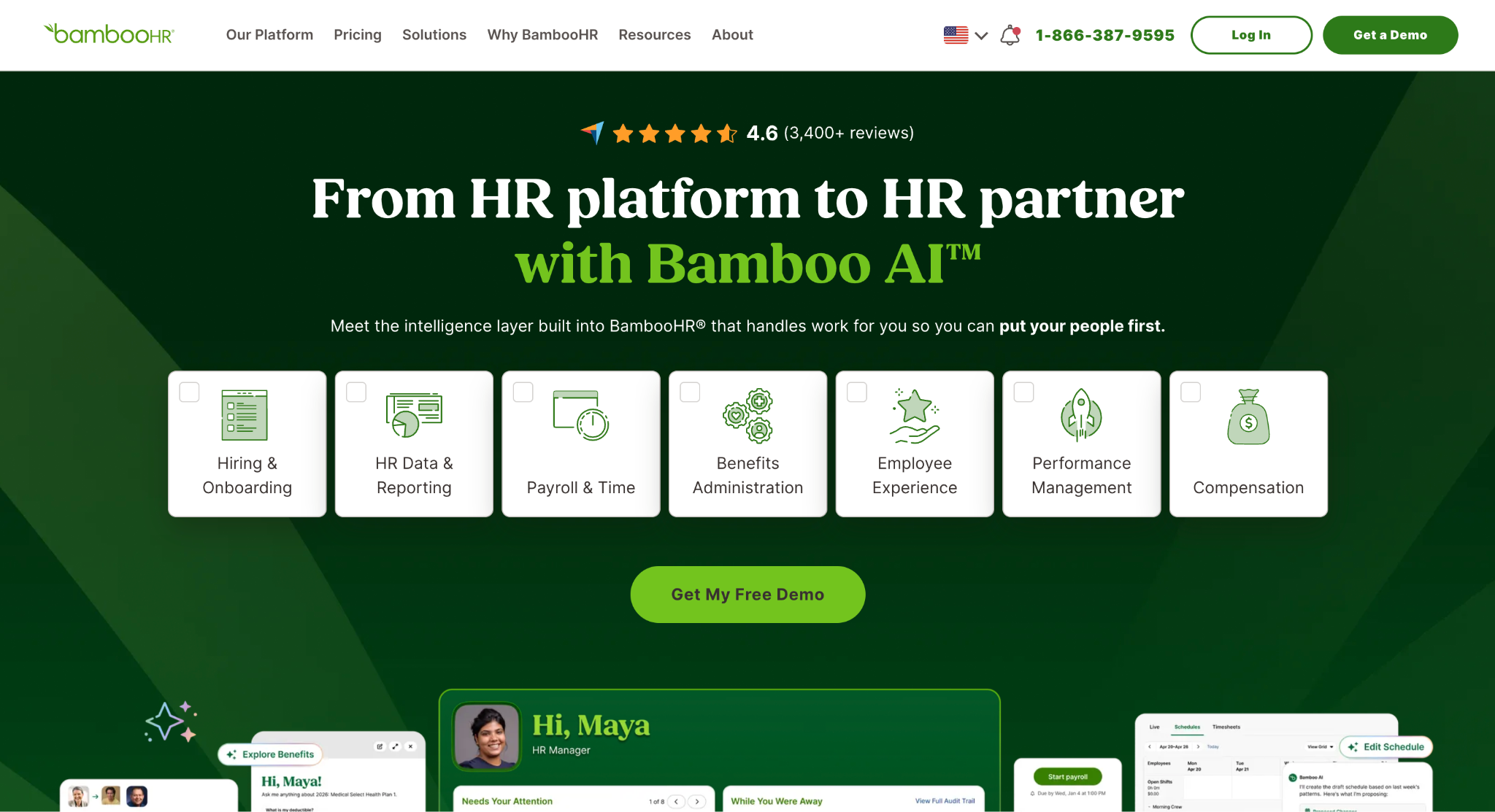
BambooHR brings HR and payroll together inside a native app architecture, meaning the two systems aren’t patched together but built to share the same data from the ground up. The platform covers applicant tracking, employee setup, payroll processing, benefits administration, and performance management, all in one place. They serve over 34,000 customers and 3 million employees across 190 countries, and their embedded AI capabilities add automation that smaller HR teams genuinely benefit from. Clients include Quora, MasterClass, and the New York City Ballet (quite the range).
Why Does BambooHR Belong on This List for Payroll Software?
BambooHR addresses the common problem of HR and payroll data living in separate places by building both into the same underlying system rather than connecting separate products through a connection layer. That native approach reduces the risk of payroll errors caused by syncing delays or data mismatches between disconnected platforms.
User Reviews, Summarised:
BambooHR users frequently point out how clean the HR-to-payroll handoff feels compared to platforms that treat the two as separate modules. The interface earns consistent praise for being accessible to HR generalists without a technical background. The 2025/26 Cloud Awards recognition for Best Cloud HR Solution reflects the broader positive sentiment in the market.
Vetting Process and Selection Criteria
Data Collection Fundamentals
The starting point for building this list was casting a wide net. A longlist of payroll software platforms was assembled by pulling data from business software directories, HR technology review sites, and professional forums where payroll administrators share firsthand experience. Each platform’s feature documentation, pricing structure where available, and customer case studies were reviewed to build a baseline picture of what the software actually does versus what the marketing materials claim it does.
Filtering Candidates by Important Criteria
Once the longlist was in place, platforms without verifiable evidence of real-world payroll processing capability were removed. Review patterns across multiple independent platforms were analyzed to identify consistent strengths and recurring complaints. Platforms with thin review volume or reviews concentrated on a single site, which can indicate selective reporting, were treated with extra scrutiny. Only those with consistent, multi-source feedback showing reliable payroll outcomes made it through this stage.
How Claims Stack Up Against Evidence
Every platform’s stated capabilities were cross-checked against what actual users report in verified reviews. Where a company claimed industry-leading accuracy or tax compliance, that claim was compared against actual pay cycle experiences described by users. When the two sources aligned, it added confidence. When they diverged significantly, that gap became a factor in the assessment. What the software says it does and what users say it actually does on a Monday morning payroll run are two different things.
Industry Reputation and Recognition
Third-party recognition was factored in as one signal among others. Awards from established technology review bodies, mentions in recognized HR and business publications, and placement on reputable software ranking lists were all noted. No single award was treated as definitive on its own. Patterns of consistent recognition over multiple years and across multiple sources carried more weight than a single high-profile mention.
Payroll Software-Specific Track Record Check
Each platform was evaluated for evidence of payroll software experience, not just general HR capability. This included checking for dedicated payroll service pages that went beyond surface-level descriptions, verified user reviews that spoke to payroll-specific experiences like tax filing accuracy and pay cycle speed, and case studies from businesses in payroll-heavy industries. Platforms that showed a long-standing focus on payroll rather than treating it as one feature among many scored higher in this final check.
What Matters When Selecting Payroll Software
Choosing payroll software comes down to fit, not just features. A platform with every feature imaginable won’t help if it doesn’t match how your business actually runs payroll.
- Industry/Domain Experience: Look for platforms with a clear track record in your type of business. Restaurant payroll, with tips and overtime, needs different handling than a standard office environment.
- Features and Service Options: Automated tax filing, multi-state payroll support, and garnishment handling are table stakes. Beyond those, consider whether benefits administration and HR tools are built in or added on afterward.
- Pricing Structure: Per-employee-per-month pricing is the most common model. Watch for add-on fees for tax filing, year-end W-2s, or dedicated support, because those can change the true cost significantly.
- Results Measurement: Good payroll software should give you clear reporting on processing accuracy, filing timeliness, and cost per employee. If a platform can’t show you those numbers easily, that’s a red flag.
- Industry Knowledge and Compliance: Platforms need to stay current with IRS regulations, FLSA overtime rules, ACA reporting requirements, and state-level payroll tax laws. Ask directly how each vendor handles regulatory updates.
What It Means for You
Restaurant payroll won’t get simpler on its own. Tipped wage rules, overtime thresholds, and multi-state tax requirements are only growing more complex. The platforms on this list each solve a piece of that problem in a different way, depending on your business size and structure. Gusto and BambooHR suit leaner operations well. Rippling and Paychex scale into larger teams. Hybrid Payroll stands out for hospitality-specific needs. Pick the one that matches where your restaurant is today and where it’s heading.