The short answer on bourbon vs rye: both are American whiskies made under the same federal rules, but bourbon must come from a mash of at least 51 percent corn and rye from at least 51 percent rye. Both are aged in new charred oak containers. Scotch is a different category altogether. It must be made and matured in Scotland, for at least three years, in oak casks that can be new or used.
Those legal lines explain most of what you taste. Corn tends to give bourbon a rounder, sweeter profile, rye grain gives a drier, spicier edge, and Scotch can range from fruity to heavily peated depending on where and how it was made.
Below you’ll find the rules for each, a side-by-side table, how to order each one at a bar and the classic cocktails that suit them.
Key takeaways
- Bourbon: at least 51% corn, aged in charred new oak, and made in the United States.
- Rye whisky: at least 51% rye, aged in charred new oak. Unlike bourbon, it can carry some added colouring or flavouring unless it’s labelled straight.
- Scotch: distilled and matured only in Scotland, for at least three years, in oak casks no larger than 700 litres.
- All three are bottled at a minimum of 40% alcohol by volume.
- Scotch has five protected regions, from fruity Speyside to heavily peated Islay.
In this guide
- The three side by side
- Bourbon: corn, new charred oak and made in the USA
- Rye: the same rules, a different grain
- Scotch: Scotland, three years and oak casks
- How the flavours differ
- How to order each at the bar
- Cocktails for each whisky
- FAQ
- Taste them side by side
The three side by side
| Bourbon | Rye whisky (US) | Scotch whisky | |
|---|---|---|---|
| Main grain | At least 51% corn | At least 51% rye | Malted barley for single malt; varies for grain whisky |
| Where it’s made | Must be distilled and aged in the US | No US-only rule in the standard | Distilled and matured only in Scotland |
| Barrel | Charred new oak | Charred new oak | Oak casks up to 700 litres, new or used |
| Minimum age | None, unless labelled straight (2 years) | None, unless labelled straight (2 years) | 3 years |
| Additives | No colouring or flavouring | Allowed unless labelled straight | Water and plain caramel colouring only |
| Minimum bottling strength | 40% ABV (80 proof) | 40% ABV (80 proof) | 40% ABV |
| Typical flavour | Sweeter, vanilla, caramel | Drier, spicier, peppery | Fruity to smoky, depending on style and region |
| Classic cocktail | Whiskey Sour, Old Fashioned | Manhattan | Rusty Nail |
The US rules come from the federal standards of identity; the Scotch rules come from UK law. Both are explained in the sections below.
Bourbon: corn, new charred oak and made in the USA
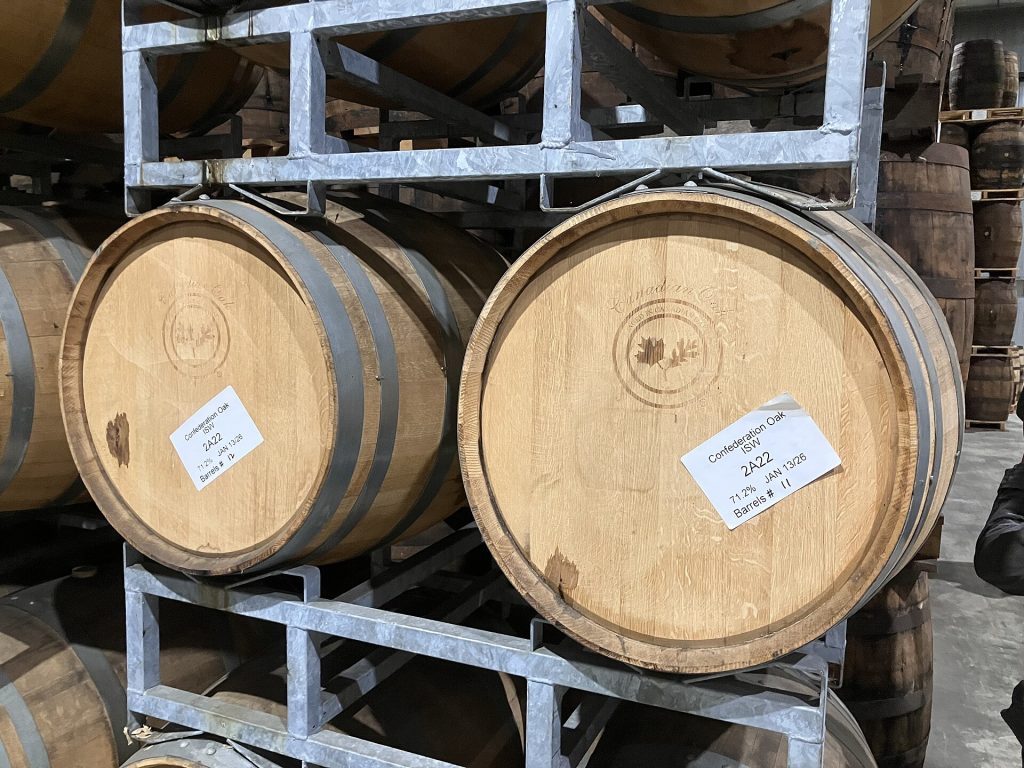
Bourbon’s definition sits in the US Code of Federal Regulations. The federal whisky standard, 27 CFR 5.143, requires a fermented mash of not less than 51 percent corn, distilled at 160 proof or less and stored in charred new oak barrels at 125 proof or less. All whisky must be bottled at not less than 80 proof.
Made in the USA
The same regulation says the word bourbon may not be used for any whisky not distilled and aged in the United States, and it lists bourbon as a distinctive product of the country. A bourbon from any US state qualifies.
No additives
This is the rule that surprises people. In the federal table of whisky types, colouring, flavouring and blending materials are permitted for several whisky types, with one exception written in: bourbon. What gives bourbon its colour and much of its vanilla and caramel character is time in charred new oak.
What straight means
Straight bourbon has spent at least two years in charred new oak, and the regulation allows no colouring, flavouring or blending materials in straight whiskies. You’ll see “straight” on many labels at the better end of the shelf.
Bourbon’s sweetness comes from corn and new oak, not from anything added to the bottle.
Rye: the same rules, a different grain
American rye whisky follows the same pattern as bourbon, with rye as the lead grain. Federal rules require at least 51 percent rye in the mash, distillation at 160 proof or less, and storage in charred new oak barrels at 125 proof or less.
Two differences from bourbon matter. First, the made-in-the-USA restriction applies to the word bourbon, not to rye. Second, rye whisky can contain permitted colouring, flavouring or blending materials, while bourbon can’t. If you want the purest expression, look for “straight rye whisky”, which follows the two-year minimum and the no-additives rule.
Because rye grain is less sweet than corn, rye whisky usually reads as drier and spicier, with a peppery finish. That’s why so many classic stirred cocktails were built on it.
Scotch: Scotland, three years and oak casks
Scotch is defined by the Scotch Whisky Regulations 2009. To use the name, a whisky must be distilled at a distillery in Scotland, matured only in Scotland for at least three years, and matured only in oak casks of no more than 700 litres. It must be distilled at less than 94.8 percent alcohol by volume and bottled at a minimum of 40 percent. The only things that may be added are water and plain caramel colouring.
The five categories
- Single Malt Scotch Whisky: from one distillery, made from water and malted barley only, in pot stills.
- Single Grain Scotch Whisky: from one distillery, but not qualifying as single malt.
- Blended Malt Scotch Whisky: a blend of single malts from more than one distillery.
- Blended Grain Scotch Whisky: a blend of single grains from more than one distillery.
- Blended Scotch Whisky: a blend of one or more single malts with one or more single grains.
Regions
The regulations also protect five place names, and a whisky may only use them on its label if it was distilled there: the regions of Highland, Lowland and Speyside, and the localities of Campbeltown and Islay. The Scotch Whisky Association describes Speyside as light on peat and full of fruit, with apple, pear, honey, vanilla and spice. Islay is famous for fiery, heavily peated whiskies. Campbeltown mixes salt, smoke, fruit, vanilla and toffee, while the Highlands range from lighter styles to salty coastal malts, and the Lowlands are diverse and growing.
How the flavours differ
Flavour depends on the distillery, the cask and the age, so treat these as starting points rather than rules.
- Bourbon usually leads with sweetness: vanilla, caramel and toasted oak from the new charred barrel, with a soft, round texture from the corn.
- Rye is drier and spicier, often with pepper, herbs and baking spice. Higher-rye bottlings push that further.
- Scotch has the widest range. A Speyside single malt can be all orchard fruit and honey, while an Islay malt can taste of peat smoke.
If you’re new to all three, try them neat with a few drops of water. It’s the easiest way to notice the grain and the cask.
How to order each at the bar
- Name the category first. Say “bourbon”, “rye” or “Scotch”, then describe what you like: sweet and smooth, spicy, fruity or smoky.
- Choose the serve. Neat means straight from the bottle into the glass. On the rocks means over ice. Many bars will add a splash of water on request.
- Ask for a recommendation within a range. Pointing at a price on the menu is a discreet way to set your budget.
- For Scotch, name a region. “Something from Speyside” or “something peaty from Islay” gets you closer than a brand name you’re unsure of.
- Try a flight. Many whisky bars offer small pours of several bottles, which is the best way to compare.
For more on nights out, browse our bars and nightlife guides and our pick of whisky bars worth a visit.
Cocktails for each whisky
Each whisky has a classic that shows it off. Recipes below follow the International Bartenders Association.
- Old Fashioned (bourbon or rye): the IBA Old Fashioned saturates a sugar cube with Angostura bitters and a few dashes of water, muddles it, then adds ice and 45 ml of bourbon or rye whiskey, stirred gently.
- Whiskey Sour (bourbon): the IBA version shakes 45 ml bourbon, 25 ml fresh lemon juice and 20 ml sugar syrup, with a few drops of egg white optional.
- Manhattan (rye): 50 ml rye whiskey, 20 ml sweet red vermouth and a dash of Angostura bitters, stirred and strained into a chilled glass.
- Rusty Nail (Scotch): 45 ml Scotch whisky and 25 ml Drambuie, stirred over ice in an old fashioned glass with a lemon zest.
Swapping bourbon for rye in an Old Fashioned is the quickest way to taste the grain difference in a cocktail.
FAQ
Is bourbon sweeter than rye?
Generally, yes. Bourbon’s mash is at least 51 percent corn, which tends to give a sweeter, rounder spirit, while rye’s lead grain gives a drier, spicier profile.
Does bourbon have to be made in Kentucky?
No. Federal rules require bourbon to be distilled and aged in the United States, but it can come from any state.
Can Scotch be aged in used barrels?
Yes. The Scotch Whisky Regulations 2009 require oak casks of up to 700 litres but don’t require them to be new, unlike bourbon and rye.
Is rye whisky the same as Canadian whisky?
Not necessarily. This guide covers US rye, which must be at least 51 percent rye under federal standards. Other countries set their own rules.
Taste them side by side
Next time you’re out, order three small pours: a bourbon, a straight rye and a Speyside or Islay Scotch. Taste them neat in that order, then add a drop of water to each. You’ll learn more in 20 minutes than from any label. Find a bar with a good whisky list in our restaurant directory, and read our guide to cocktail bitters before you make an Old Fashioned at home.
Featured photo: Chris Makrenos, Whiskey Glass, c. 1941, NGA 23265 by Chris Makrenos, CC0.