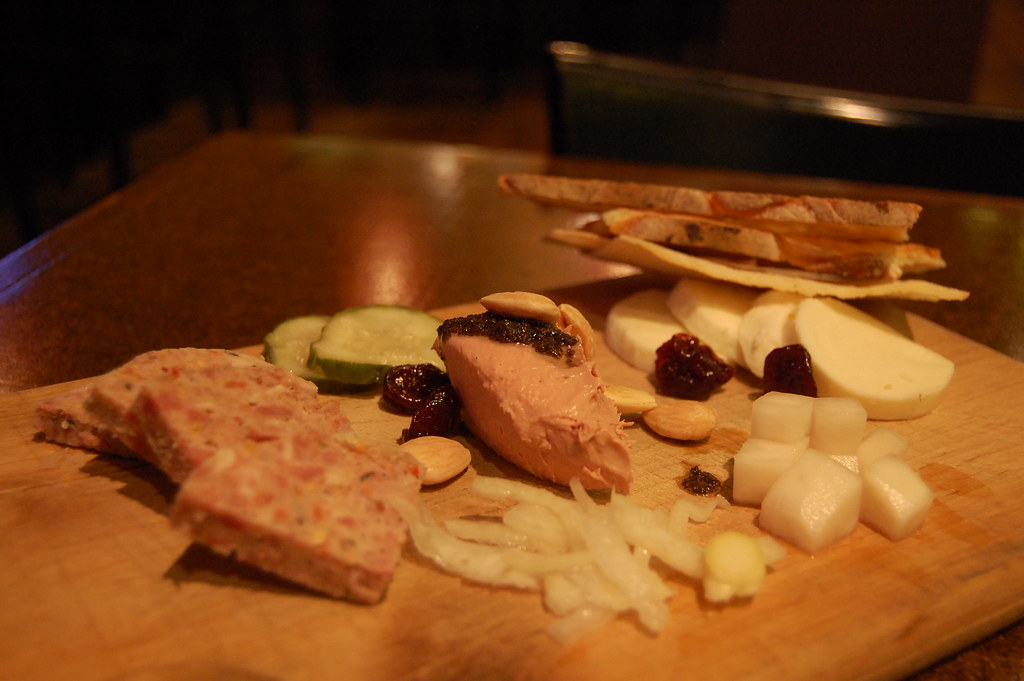
This charcuterie board guide comes down to three choices: the board, the size and the food. Pick a hard, close-grained wood or a cool stone slab, size it to your guest count, and plan about 2 to 3 ounces each of meat and cheese per person. Then keep perishables out no longer than two hours.
Everything else, from the jam to the rosemary sprig, is styling. The decisions below are the ones that change how the board looks, how long it lasts and whether the food is safe to eat at the end of the night.
We cover materials, sizes, budget tiers, what to put on it and food safety, with no product rankings and no shopping links. Just the criteria.
Key takeaways
- Hard, close-grained wood such as maple is a strong all-rounder; slate and marble look sharp but dull knives.
- Size the board to the guest count and whether it is a snack or the meal.
- Plan 2 to 3 ounces each of meat and cheese per person as a starting point.
- Follow the USDA two-hour rule for perishables; shelf-stable dry sausage and hard cheese are more forgiving.
Choosing a board material
The material decides how the board looks, how you clean it and how it treats your knives. The NC State Extension notes that the best wooden boards are made from hard maple or an equivalently hard, close-grained wood, and that solid wood, plastic, marble, ceramic and glass are all acceptable food-contact surfaces according to the USDA.
Wood
Wood is the classic choice. Hard maple and similar dense, close-grained hardwoods look warm, and wood is kinder to knives than stone, so you can slice cheese right on the board. Wash by hand with hot, soapy water and dry it fully; keep it out of the dishwasher and oil it now and then so it doesn’t dry out and crack.
Bamboo
Bamboo is light, affordable and, per NC State Extension, resists knife scarring and is less porous than many woods. The trade-off is that it can dull blades faster than softer woods.
Slate
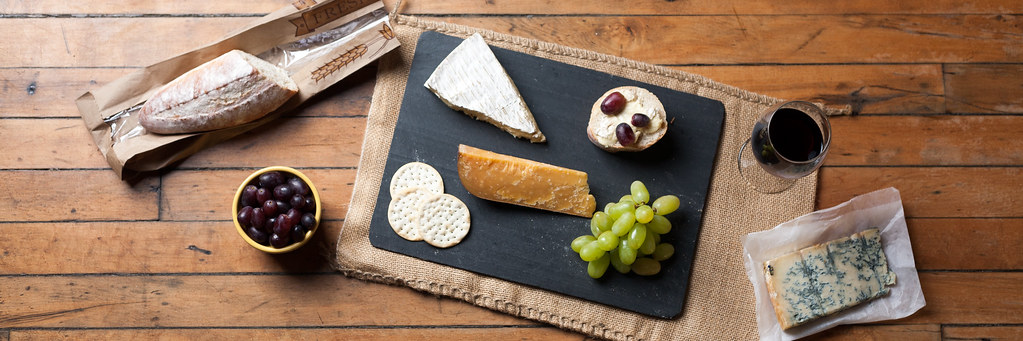
Slate gives a dark, dramatic backdrop and you can write labels on it in food-safe chalk. It is heavy, can chip at the edges, and, like other hard surfaces, blunts knives, so pre-slice on a cutting board.
Marble
Marble looks elegant and suits soft cheese, fruit and desserts. It is heavy, benefits from wiping up acidic juices quickly, and is hard on knives. Treat it as a serving surface, not a cutting one.
| Material | Look | Knife-friendly | Care | Best for |
|---|---|---|---|---|
| Hard maple or similar hardwood | Warm, classic | Yes | Hand wash, dry, oil occasionally | Everyday use, cutting at the table |
| Bamboo | Light, modern | Moderate | Hand wash, dry | Budget boards, frequent use |
| Slate | Dark, dramatic | No | Hand wash, avoid chipping | Labelled cheese boards |
| Marble | Pale, elegant | No | Hand wash, wipe acids quickly | Soft cheese, butter, desserts |
Picking the right size
A crowded board looks generous; a sparse one looks like you ran out. Match the surface to the crowd and to the role the board plays.
- Two to four people: a small cutting board or round platter is enough for a pre-dinner nibble.
- Six to eight people: a large rectangular board, or a small board plus a side plate for crackers.
- Ten or more: two boards, or a long paddle board with extras in bowls around it.
- As the meal: go a size up and add heartier items.
Think about the table too. A long, narrow board works down the middle of a dinner table; a round one sits better on a coffee table where people gather on all sides. And check it fits in your fridge if you plan to assemble ahead.
Budget tiers for boards
You don’t need a speciality board to start. Here is how the options stack up without naming brands.
Starter
Use what you own: a large chopping board, a baking sheet lined with parchment, or a big dinner plate. Bamboo boards sit at the lower end of the price range and are an easy first upgrade.
Mid-range
A solid hardwood board such as maple, or a mid-sized slate. This tier covers most home entertaining and should last for years with care.
Investment
A large end-grain hardwood board or a heavy marble slab. Worth it if you host often; less so if it lives in a cupboard most of the year.
Buy the board you’ll use every week, not the one that only looks good in photos.
What to put on it, per person
America’s Test Kitchen suggests these starting amounts per person: 2 to 3 ounces of meat, 2 to 3 ounces of cheese, 2 to 3 tablespoons of nuts, 4 to 6 ounces of crackers or bread, 4 to 8 ounces of vegetables or crudites and about half a cup of dips. Scale back when the board comes before a full meal and scale up if guests are grazing all evening.
A balanced mix
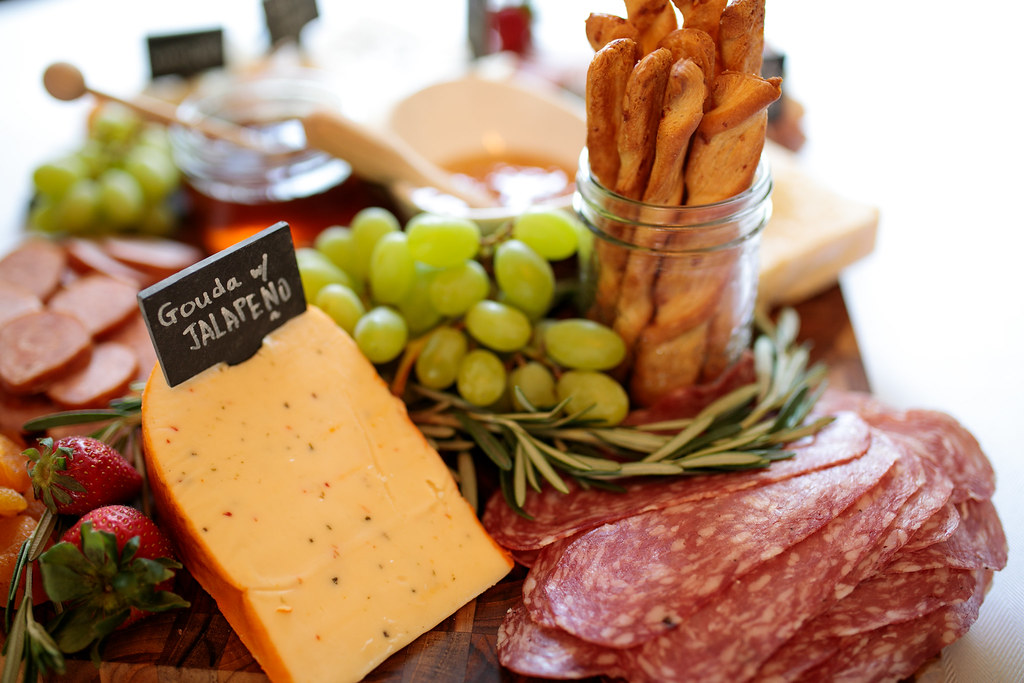
- Meats: one whole-muscle cured meat, one salami-style dry sausage, one milder cooked option.
- Cheeses: one hard, one semi-soft and one soft or blue, for contrast.
- Crunch: crackers, sliced baguette, breadsticks.
- Sweet: grapes, figs, dried apricots, honey or a fruit jam.
- Sharp: olives, cornichons, pickled onions, mustard.
- Green: sliced cucumber, radishes, snap peas.
Put the cheeses down first as anchors, fold or fan the meats around them, then fill every gap with crackers, fruit and nuts. Small bowls for dips and wet items stop juices spreading across the board.
Food safety at room temperature
Charcuterie tastes best a little warmer than fridge-cold, but room temperature has a limit. The USDA Food Safety and Inspection Service says perishable food should not be left out for more than two hours at room temperature, or one hour when it is above 90 °F, and that your fridge should be at 40 °F or below.
Some items are more forgiving. The USDA’s sausage guidance notes that some dry sausages are shelf stable and do not need to be refrigerated or frozen to be stored safely. Soft cheeses, cooked meats, cut fruit and dips are the items to watch.
- Start with clean hands and a washed board.
- Keep soft cheese, cooked meats and dips in the fridge until just before serving.
- Put out smaller amounts and refill from the fridge, rather than one big spread.
- Give each cheese and dip its own knife or spoon, and add picks for meats.
- Clear perishables once they reach the two-hour mark.
- Wash the board in hot, soapy water afterwards and dry it fully.
For more on this, browse our lifestyle guides or read how to pair cheese and wine.
Charcuterie board FAQ
What is the best wood for a charcuterie board?
A hard, close-grained wood such as maple is a reliable choice, according to NC State Extension. Replace any board that develops deep, hard-to-clean grooves.
How far ahead can I build a board?
Prep and slice earlier in the day, store components covered in the fridge, and assemble shortly before guests arrive so the two-hour clock starts as late as possible.
Can I put a charcuterie board in the fridge?
Yes, if it fits and is covered. That is often the easiest way to hold a board built ahead of time.
How much charcuterie do I need for 10 people?
Using the 2 to 3 ounce guide, that is roughly 20 to 30 ounces each of meat and cheese, plus crackers, fruit and extras. Adjust for whether dinner follows.
Build your first board
Pull out the biggest board or platter you already own, count your guests and write a quick shopping list using the per-person amounts above. Pick three cheeses and three meats, then fill in with crunch, fruit and pickles. For a party spread built around it, see more party platter ideas.
Featured photo: meat board by stu_spivack, BY-SA 2.0.