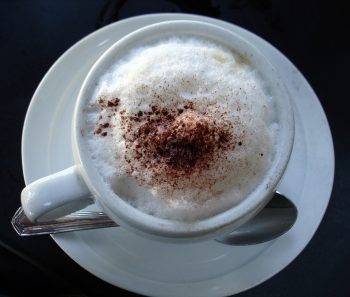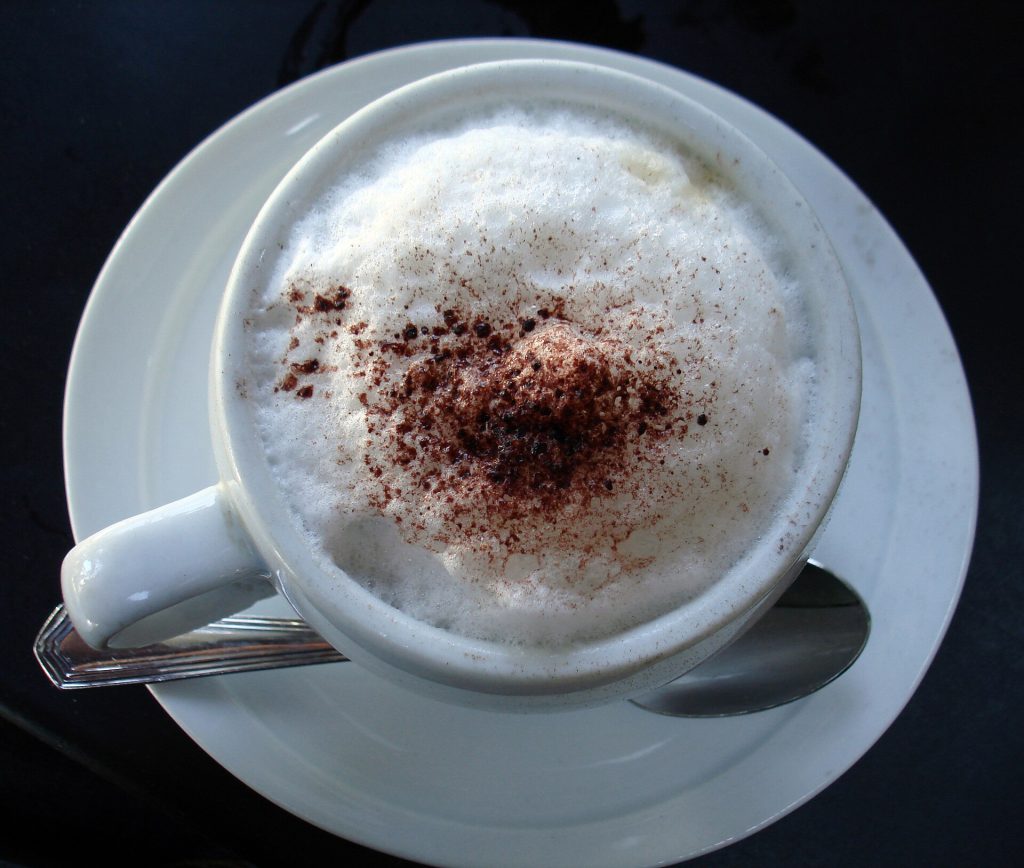
In the latte vs cappuccino question, the difference is milk. A cappuccino is a small drink with roughly equal parts espresso, hot milk and a thick cap of foam. A latte uses the same espresso with far more steamed milk and only a thin layer of froth, so it tastes milder and creamier. A flat white sits between them: a small cup, a stronger coffee flavour and a thin, velvety microfoam rather than a foam cap.
This comparison sets the three side by side on espresso-to-milk ratio, foam, typical cup size and origins, then covers the macchiato and cortado. The measurements come from coffee education sources and the Italian espresso standard, and we’ve noted where cafés differ, because sizes vary from one counter to the next.
Key takeaways
- A traditional cappuccino is about one-third espresso, one-third milk and one-third foam.
- A latte has about three times as much milk as espresso and only a short head of froth.
- A flat white uses thin, velvety microfoam and tastes more of the coffee than a latte.
- An espresso macchiato is espresso marked with a little frothed milk; a cortado is espresso with a roughly equal amount of steamed milk.
- Cup sizes vary between cafés, so the ratio matters more than the name on the menu.
The short answer
If you like to taste the coffee, start with a flat white or a cappuccino. If you prefer something mild, milky and long, order a latte. And if you want an espresso with just a softening touch of milk, a macchiato or cortado is the better fit.
All five drinks start from the same place: a shot or two of espresso. What changes is how much milk goes in, how it’s steamed, and how big the cup is. Those three variables explain almost every difference you’ll notice.
The three drinks side by side
Use this table as a quick guide. Ratios and sizes are typical descriptions from the sources linked below; individual cafés will pour their own versions.
| Drink | Espresso to milk | Foam | Typical cup | Taste |
|---|---|---|---|---|
| Cappuccino | About one-third espresso, one-third milk, one-third foam | Thick, rather stiff cap | About 150–160 ml (a 6-ounce cup) | Balanced, with a light, airy top |
| Latte | About three parts milk to one part espresso | A short head of froth | Bigger bowl or wide glass | Mild, milky, creamy |
| Flat white | Less milk than a latte | Thin layer of velvety microfoam | Small cup; one café serves 6 ounces with two shots | Stronger coffee flavour, silky texture |
| Espresso macchiato | Espresso with a small amount of frothed milk | A spoonful on top | Espresso demitasse | Espresso, slightly softened |
| Cortado | Espresso with a roughly equal amount of steamed milk | Varies by café | Small; varies by café | Smooth, coffee-forward |
Notice that the latte and the flat white can use the same shot. What separates them is how much milk you get and how airy it is.
Cappuccino: the Italian benchmark
Ratio and foam
The traditional cappuccino is the most precisely defined of the three. Coffee Review’s guide to traditional espresso drinks describes the classic version as about one-third espresso, one-third milk and one-third rather stiff foam in a heavy 6-ounce cup. That thick foam is what makes it feel lighter than its size suggests.
Italy goes further. As Il Sole 24 Ore reports, the Istituto Nazionale Espresso Italiano’s certified cappuccino uses 25 ml of espresso and 125 ml of steamed milk, starting from cold milk at 3–5 °C and brought to about 55 °C, poured into a 150–160 ml cup. It also specifies fresh cow’s milk with at least 3.2% protein and 3.5% fat.
Where the name comes from
Its origins are debated. Il Sole 24 Ore recounts two stories: one linking the name to the friar Marco da Aviano in Vienna in 1683 and the Viennese “Kapuziner”, the other to a Viennese drink of coffee, whipped cream and spices later adapted in the Trieste region. Neither is settled, which is typical of coffee history.
Every drink on the board starts with the same espresso; the milk decides which one you’re holding.
Latte: more milk, gentler coffee
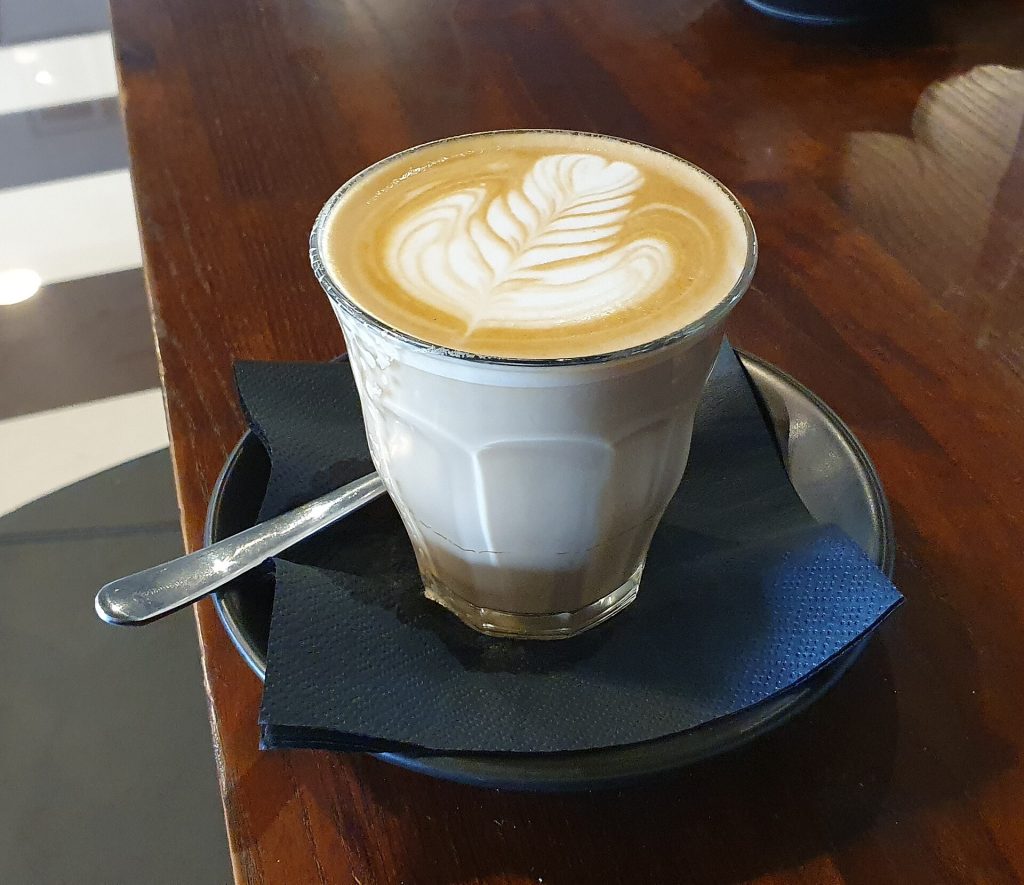
Coffee Review describes a caffè latte as one or two shots of espresso with about three times as much hot milk, served in a big bowl or wide-mouthed glass and topped with a short head of froth. With that much milk, it tastes weaker and milkier than a cappuccino.
That’s the latte’s appeal. The espresso is still there, but softened, which makes it the easiest of the three for people who find straight coffee too bitter.
Latte versus latte macchiato
A latte macchiato turns the order round. Coffee Review describes it as a glass filled with hot frothed milk into which espresso is slowly dribbled, creating visible layers. It’s the milk that’s “stained” by the coffee, rather than the other way round.
When to order a latte
- You want a longer drink to sip over a meal or a walk.
- You prefer a mild, creamy coffee.
- You’re adding a flavour or a plant-based milk and want it to carry through.
Flat white: thin, velvety microfoam
The flat white is the youngest of the three, and its birthplace is argued over. According to VinePair, the drink has been around in Australia since the 1980s, with claims that its modern form was perfected in Wellington, New Zealand, in the 1990s. Australian cafés later helped carry it abroad, reaching London in 2005.
What makes it different
The key is the milk. A flat white has a thin layer of steamed milk worked into microfoam with small bubbles, giving a velvety texture, whereas a latte has more milk and a thicker foam. With less milk overall, the espresso comes through more clearly.
Sizes vary by café. The one VinePair featured serves flat whites in 6-ounce ceramic mugs with two shots of espresso, and lattes with one shot in 8-ounce glasses. Don’t treat those numbers as a rule, but they show why a flat white tastes stronger: more coffee in less milk.
When to order a flat white
- You like milk coffee but want to taste the espresso.
- You prefer a smooth, silky texture to a foam cap.
- You want something smaller than a latte.
Macchiato and cortado: the smaller cousins
Espresso macchiato
Macchiato means “stained”. Coffee Review describes the espresso macchiato as a serving of espresso marked with a small quantity of hot, frothed milk, served in the usual espresso demitasse. It’s the choice when you want espresso with its edges rounded off.
Don’t confuse it with the latte macchiato described above, which is mostly milk. If you want the small, strong version, ask for an espresso macchiato.
Cortado
The cortado is espresso topped with an approximately equal amount of steamed milk. With only as much milk as coffee, it’s a small drink: more milk than a macchiato but far less than a latte, so it stays smooth and strongly coffee-flavoured. Foam and cup size vary from café to café.
- Most coffee-forward: espresso macchiato.
- Balanced and small: cortado or flat white.
- Foamy and light: cappuccino.
- Mild and long: latte.
For more on café culture, browse our lifestyle features or read about coffee and café culture.
FAQ
Which has more caffeine, a latte or a cappuccino?
It depends on the number of shots, not the drink. Ask how many shots go in each size.
Is a flat white just a small latte?
Not quite. It has less milk and a thinner, velvety microfoam, so the coffee tastes stronger.
Why does my cappuccino look different in every café?
Cup sizes and foam levels vary. The Italian standard uses a 150–160 ml cup, but many cafés serve larger.
What’s the difference between a macchiato and a cortado?
A macchiato adds only a little frothed milk; a cortado adds roughly as much steamed milk as espresso.
Order with confidence
Next time you’re at the counter, decide what you want more of: coffee flavour, foam or milk. Order a cortado or flat white for coffee, a cappuccino for foam and a latte for milk, and ask how many shots go into each size. Travelling and looking for a good café or brunch spot? Our restaurant directory is a good place to start, and our guide to breakfast spots worth the trip has more to try.
Featured photo: Cappuccino with foam by Johnny Lopez, BY-SA 2.0.