Growing microgreens is often described as one of the easiest ways to produce fresh greens at home. In practice, however, first attempts do not always go as planned – uneven germination, thin stems or mold on the substrate are common issues. Radish is a fast and resilient crop, but even here technical mistakes can affect the final result. If you invest in high-quality radish microgreens seeds, it is equally important to control sowing conditions and daily care. Details make the difference between a weak tray and a dense, healthy harvest.
Excess moisture and radish microgreens seeds
Overwatering is the most frequent mistake. Seeds need moisture to start germinating, but standing water limits oxygen access in the root zone. This creates ideal conditions for fungal growth and mold. To reduce the risk: moisten the growing medium before sowing, not after, use a spray bottle instead of pouring water directly, avoid covering the tray too tightly for too long. Good radish microgreens seeds have strong germination energy, so they do not require soaking or heavy watering. Stable, moderate moisture during the first few days is sufficient.
Uneven sowing and insufficient seed density
Another common issue is sowing too sparsely. Microgreens should form a compact, uniform mat. Large gaps between seedlings cause stems to stretch in search of light, which weakens their structure and appearance. When sowing:
- distribute the seeds evenly across the entire surface,
- do not cover them with a thick layer of soil,
- gently press them into the substrate to ensure contact with moisture.
Specialist radish microgreens seeds are usually calibrated, making it easier to achieve an even spread. Random garden seed batches often vary in size, which makes uniform sowing more difficult.
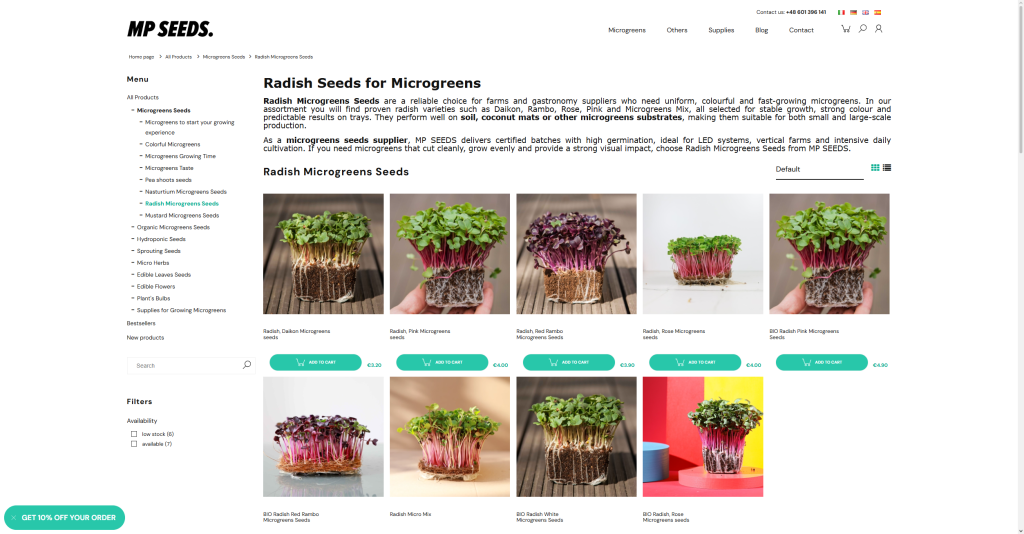
Fresh, spicy, and packed with vitamins. Order your untreated Radish Microgreens Seeds at mpseeds.eu/radish-microgreens-seeds and experience the MP Seeds quality difference.
Inappropriate growing medium and poor hygiene
The condition of trays and substrate is often overlooked. Leftover organic matter or insufficient cleaning increases the risk of contamination. In home cultivation, coconut coir, jute mats or dedicated microgreen mixes work well. Before starting a new batch wash the tray with warm water, dry it thoroughly, use fresh, clean growing medium. Even the best seeds cannot compensate for poor hygiene or contaminated conditions.
Lack of light and insufficient ventilation
After germination, light becomes essential. If the tray is placed in a dark location, seedlings will elongate excessively and lose color intensity. At the same time, high humidity combined with poor air circulation increases the likelihood of fungal problems. Optimal conditions include:
- a bright location without harsh direct sunlight,
- room temperature between 18–22°C,
- regular air exchange in the room.
Radish does not require fertilization or complex maintenance. Stable environmental conditions together with reliable radish microgreens seeds are enough to achieve a ready-to-harvest crop within 6–8 days.
Choose quality – rely on proven radish microgreens seeds
Most cultivation failures are not caused by lack of experience but by neglecting basic principles: too much water, uneven sowing or low-quality seed material. Growing microgreens is straightforward, yet it requires attention to detail. If you want consistent and repeatable results, choose trusted microgreens seeds and maintain clean, stable growing conditions. Simple adjustments can significantly improve yield density, plant health and overall harvest quality within just a few days.