-
by Resto Guy
- July 28, 2026
Outdoor pizza ovens suit Australian backyards, courtyards and alfresco kitchens, but there is no single best model for every home. The right choice depends on your space, climate, cooking habits and the local rules that apply where you live.
Use this guide as a practical filter rather than a top ten list. It focuses on bushfire restrictions, coastal corrosion, and gas or electrical compliance, so you can choose an oven you can use safely and often.
The 60-second checklist
Before comparing models, run through these six questions:
- Space and clearances: Is there a level, non-combustible surface with room around walls, eaves and fences?
- Fuel fit with fire rules: Will you cook during summer restrictions? Solid-fuel ovens are not allowed outdoors on Total Fire Ban days in some states.
- Corrosion exposure: Are you within a few kilometres of the surf?
- Power or gas access: Is there nearby power, a gas connection or space for LPG cylinders?
- Capacity and hosting: Are you cooking for two, or feeding a crowd?
- Budget: Portable gas units and large masonry ovens sit at very different price points.
Fuel types explained
Fuel choice affects flavour, convenience and, on high-risk fire days, whether you can cook at all.
Wood-fired
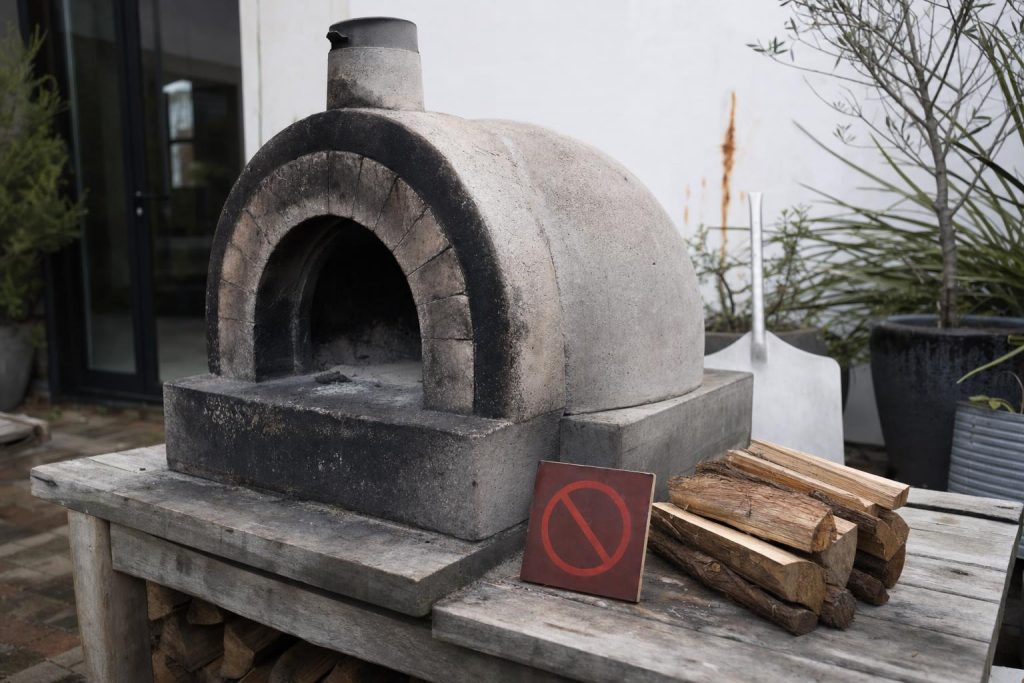
Wood gives the smoky character many people associate with traditional pizza. The trade-off is longer preheating, closer fire management and stricter rules. In NSW, the Rural Fire Service says solid-fuel barbecues and wood-fired pizza ovens cannot be used outside during a Total Fire Ban. In Victoria, the CFA advises that solid-fuel outdoor cookers are illegal on Total Fire Ban days.
Gas (LPG or natural)
Gas ovens heat quickly and offer steady control, which suits weeknight cooking. In Victoria, the CFA notes that gas or electric outdoor cookers may be used on Total Fire Ban days only if specific conditions are met. Always check the current rules before lighting any outdoor cooker.
Hybrid
Hybrid ovens accept both wood and gas, giving you a flavour option when conditions allow and the convenience of gas when you want a faster setup.
Electric
Electric ovens plug into a standard power point and avoid open flame. Some models are rated for indoor and outdoor use, which helps on balconies and apartments where flame cooking is not allowed.
Space, placement and safety
Every oven needs a stable, level, non-combustible bench that can take its weight. Face the opening away from prevailing wind where possible to hold heat and keep smoke clear of the house.
Follow manufacturer clearances exactly. As one example, Gozney’s manual specifies 30 cm side and back clearances and 100 cm at the front for its Dome model. Treat published figures as product-specific minimums, not general rules.
If you plan to build an oven into an alfresco kitchen or partially enclose a gas appliance, get professional advice first. Applying kitchen design principles to outdoor cooking spaces helps you think through movement, workflow, and integration with your existing home layout. NSW guidance advises against enclosing external gas appliances and recommends using a licensed gasfitter to help prevent carbon monoxide hazards and compliance issues.
Capacity and format
Most portable ovens take a single 12-inch pizza, which is enough for couples and small families. Larger 16-inch decks and masonry domes suit bigger gatherings but need more bench space and stronger support.
Heat performance basics
Consumer group CHOICE advises that a crisp, browned base needs intense heat of around 400 degrees Celsius, which many dedicated pizza ovens can reach. That is the main reason a purpose-built unit cooks so differently from a standard domestic oven.
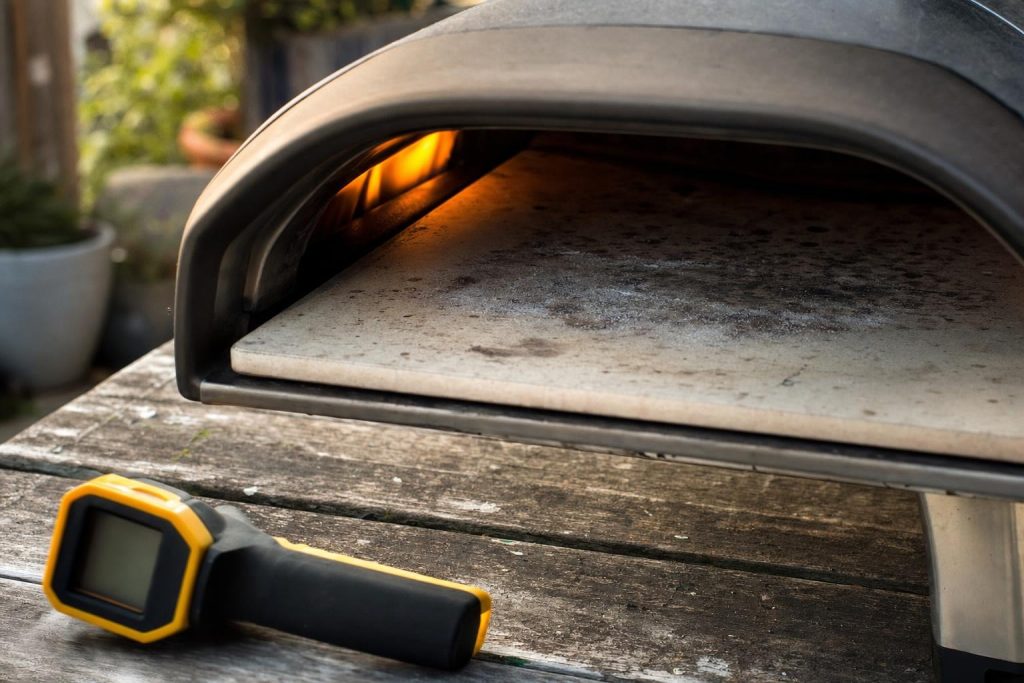
Preheat times vary with size and fuel. CHOICE lab testing notes that smaller ovens often preheat in 10 to 20 minutes, while larger wood-fired types may need 15 to 40 minutes. Thicker stones hold heat well, and rotation features can help cook pizzas more evenly. Follow the manufacturer’s guidance rather than pushing past stated limits.
Materials and weather
Coastal air is hard on metal. The Australian Stainless Steel Development Association recommends grade 316 stainless steel, or an equivalent material, within five kilometres of the surf to reduce tea staining. Tea staining is the light brown discolouration that can appear on stainless steel in marine environments. Grades 304 and 430 are more prone to it near the coast.
Power and gas compliance
Gas appliances must be certified for use in Australia. Energy Safe Victoria advises looking for recognised certification marks such as AGA, SAI Global, IAPMO, Global-Mark or BSI, along with a compliance plate. The Australian Gas Association also notes that certified products display Gas Compliance Marks and AGA badges or labels.
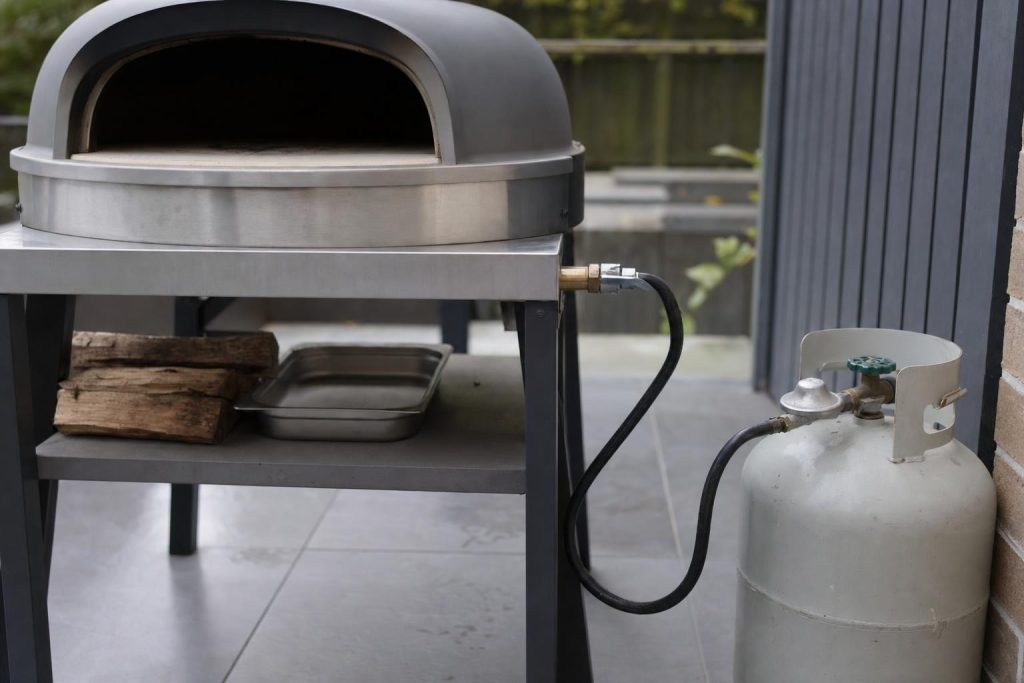
LPG suits homes without a gas line and gives you portability, while natural gas offers a fixed supply. For any permanent installation or enclosure work, use a licensed gasfitter. Keep LPG cylinders upright, ventilated and away from ignition sources.
Electric models are useful where open flame is not permitted. The Ooni Volt 12, for instance, is designed for indoor and outdoor use and draws about 1600 W at 220 to 240 V, so a standard power point is usually enough.
Budget and price examples
Prices vary widely by fuel, size and build. Australian retailer listings show rotating gas ovens from about $449, electric rotating models from about $749, and Italian wood or hybrid ovens around the $4,000 mark. Treat these as examples only, and confirm current pricing before you buy.
Where to buy and compare
Compare several Australian retailers so you can weigh fuel, size, materials and warranty support against real prices. For a current snapshot of wood-fired, gas and electric models in Australia, including portable and built-in options, a retailer’s outdoor pizza oven sale australia collection can be a useful starting point for comparing sizes, fuels and features.
Setup essentials and maintenance
A few accessories make cooking easier and safer. A standard peel helps you launch pizzas, and a turning peel helps you rotate them mid-cook. An infrared thermometer confirms stone temperature, a brush keeps the deck clean, and a cover protects the oven between uses. Store portable units somewhere dry.