18+ Gaming content is for adults of legal age where they live. Gambling involves risk; please play responsibly.
Card room history in California runs from Gold Rush saloon tables to licensed clubs regulated by the state. The short version: draw poker slipped through the gaps of the state’s early anti-gambling laws, cities such as Gardena licensed card clubs in the 1930s, and today’s card rooms operate under state licences, with games played against other players rather than against the house.
That last point is what makes a card room different from a casino, and it shapes everything from the dealer’s role to the house rules. This explainer covers the history, the key differences, the etiquette regulars expect and why so many card rooms keep a kitchen open late. It is a history and hospitality piece, not a recommendation to gamble.
Key takeaways
- Draw poker was left out of California’s 1879 constitutional gambling ban, which let card clubs grow in its shadow.
- Gardena licensed its first club in 1938 and was ratified as a poker town by voters in 1946.
- California card rooms need state licences, and every game they offer must be approved by the Bureau of Gambling Control.
- The house doesn’t bank the games. Players compete with each other, which is why rules on the player-dealer position matter.
- Etiquette rests on acting in turn, protecting your hand and treating dealers and servers well.
From Gold Rush tables to legal loopholes
Poker came west with riverboat gamblers and found a home in the mining camps after 1849. The PBS SoCal series Lost LA, in its history of poker in Los Angeles, quotes the historian Hubert Howe Bancroft saying California was the place where poker had been most favourably received and industriously cultivated as a science.
The law took a curious turn. When California’s 1879 constitution outlawed gambling, it conspicuously left draw poker off the list. The legislature named prohibited games again in 1891 and once more omitted draw poker. In 1911, Attorney General U.S. Webb issued an opinion that draw poker was not a game of chance of the kind the constitution prohibited.
That opinion became the foundation for public card clubs, though not without pushback. In 1937 and 1938 a wave of local reforms closed poker clubs in several cities, and Webb later said he’d only meant friendly games among players who knew each other.
Gardena and the licensed card club
Gardena, a small city south of downtown Los Angeles, became the name most associated with California card clubs. According to Lost LA, Ernie Primm moved his card room to Vermont Avenue in Gardena in 1937, and his Monterey Club was licensed by the city council in 1938 after a successful legal defence. In 1946, Gardena voters ratified the city’s status as California’s poker capital.
By 1951 and 1952, the city had authorised five card rooms of up to 36 tables each, and gambling produced about a third of city revenue. The era didn’t last forever. Bell became the second Los Angeles County city to allow legal poker in 1980, the Monterey Club closed that December, and other long-running Gardena clubs closed in the years that followed.
| Year | Milestone |
|---|---|
| 1849 onward | Poker spreads through Gold Rush camps |
| 1879 | State constitution bans gambling but omits draw poker |
| 1891 | Legislature names banned games, again without draw poker |
| 1911 | Attorney General’s opinion treats draw poker as legal |
| 1938 | Gardena licenses the Monterey Club |
| 1946 | Gardena voters back the city’s card-club status |
| 1980 | Bell becomes the second LA County city to allow poker |
| Late 1980s | Texas hold’em arrives and tournaments take off |
How a card room differs from a casino
Today, the state’s Department of Justice runs the licensing side. Its cardroom licensing page explains that every owner, lessee and employee of a gambling establishment must hold a valid state licence, that owners apply through the Bureau of Gambling Control and the California Gambling Control Commission, and that all controlled games, from poker to pai gow, must be approved by the Bureau.
The core difference from a casino is who sits across the table. In a card room, players compete against each other, and the house earns its money by charging to play rather than by taking the other side of every bet. California law prohibits banking games under Penal Code section 330 and the state constitution. Under Proposition 1A, passed in 2000, tribal casinos gained the exclusive right to offer house-banked card games and slot machines.
The player-dealer question
Some California card room games use a rotating player-dealer position, and whether those games stay on the right side of the banking ban has been argued for years. In early 2026 the state announced new regulations restricting blackjack-style games and requiring the player-dealer position to rotate. Capitol Weekly reported on 30 June 2026 that a San Francisco judge struck down those regulations, ruling the Bureau had exceeded its authority; the Attorney General’s office said it was reviewing its options. Expect the rules to keep shifting.
A card room is a room where players play each other. Almost every rule on the wall follows from that one fact.
House rules and table etiquette
Card room etiquette is less about formality than about keeping a shared game moving and fair. House rules are posted, and the floor staff have the final word. A few customs are near universal.
- Act in turn. Folding or betting before it’s your turn gives information to other players and slows the table.
- One player to a hand. Don’t advise a friend mid-hand, and don’t show your cards to a neighbour.
- Keep your cards and chips on the table and in view. Protect your hand with a chip or your fingers.
- Don’t slow-roll. If you know you’ve won, show your hand promptly.
- Phones away during a hand. Some rooms restrict phone use at the table, so check the posted rules.
- Be polite to the dealer. The dealer runs the game and doesn’t choose the cards.
- Call the floor for disputes. Arguing with other players rarely ends well.
New visitors often worry about getting a rule wrong. Tell the dealer it’s your first time, watch a few hands before sitting down and ask questions between hands. Set a firm limit on what you’re willing to spend before you arrive and stop when you reach it.
Food, drink and the all-night kitchen
Card room games can run for hours, so food and drink have always been part of the business. The state’s licensing page lists servers among the employee categories that need a licence or permit, alongside dealers and floor staff, which says a lot about how closely hospitality and play sit together in these rooms.
From a hospitality point of view, the table itself sets the rules. Food served to a seated player has to fit around the cards: something eaten with one hand, kept clear of the felt, and cleared quickly so the next hand isn’t delayed. If you’re curious about the dining side, check the venue’s own site for whether its restaurant is open to non-players and what its age limit is before you go.
Tip your server as you would anywhere else, and keep drinks off the playing surface. A spilled glass can stop a game while the table is cleaned and the cards are replaced.
For more history and hospitality, see our gaming features and our look at hosting a card game night at home.
FAQ
Why was draw poker treated differently in California?
The 1879 constitution and the 1891 statute banned named games but omitted draw poker, and a 1911 Attorney General’s opinion treated it as a game of skill.
Who regulates California card rooms?
The Department of Justice’s Bureau of Gambling Control and the California Gambling Control Commission license owners and staff and approve the games.
Does the house play against you in a card room?
No. Banking games are prohibited under Penal Code section 330, so players compete against each other.
Where can someone get help with problem gambling?
Call 1-800-GAMBLER or text SUPPORT to 53342. The state lists these and other responsible gambling resources.
Before you visit
If you’re curious about the history, read the Lost LA piece and then visit your local historical society, which may hold photos of long-closed clubs. If you do go to a card room, go for the food and the atmosphere, set a spending limit first, and know that help is available around the clock at 1-800-GAMBLER. You might also enjoy our guide to board game cafés.
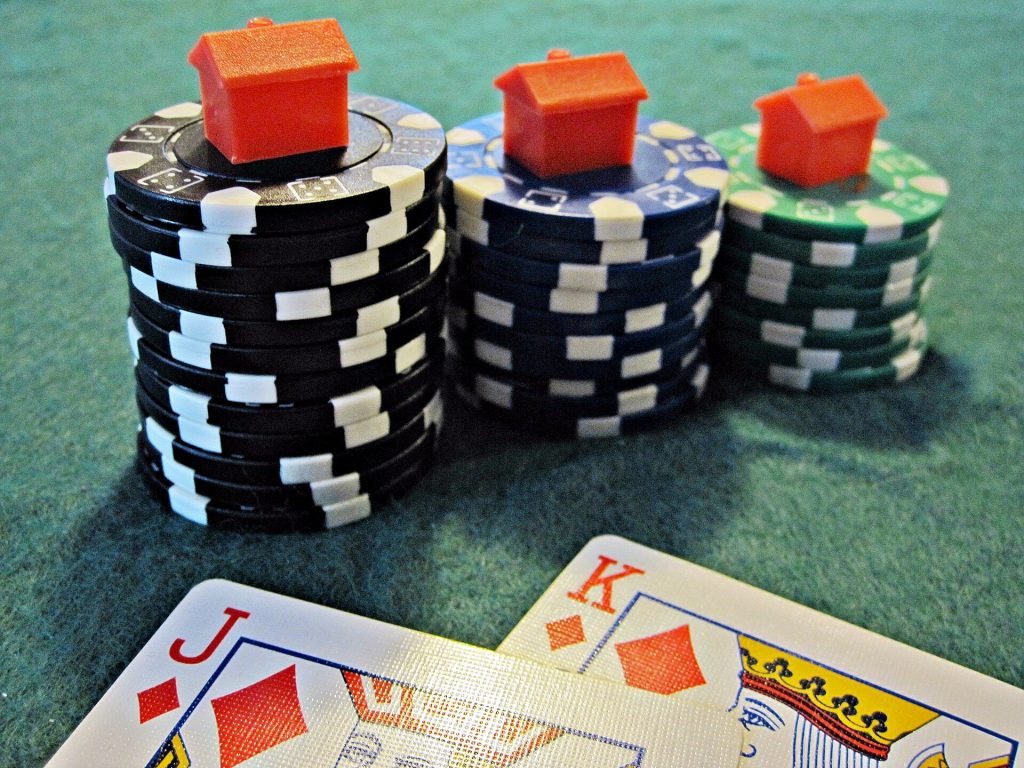
Featured photo: UCB Playing Cards by ÅñtóñSûsî (Ð), BY 3.0 DE.