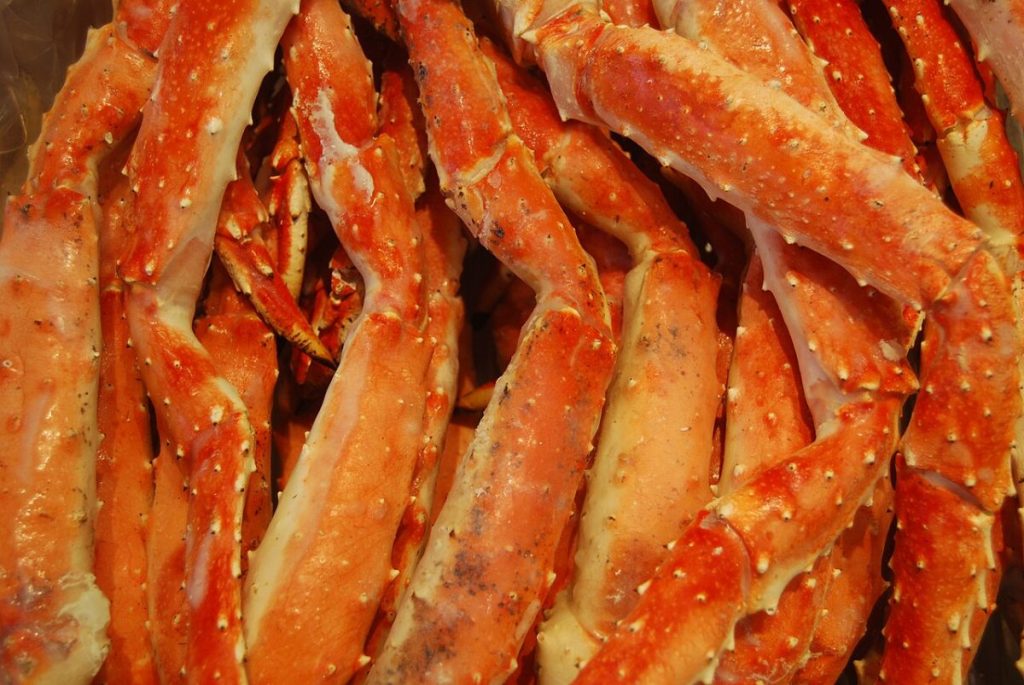
The quickest way to learn how to eat crab legs: snap each leg at the joints, cut along the softer side of the shell with kitchen shears (or crack it gently with a cracker), then pull the meat out in one piece and dip it in melted butter or lemon. Use a pick for the small pieces in the knuckles. With the right tools, it’s far less messy than it looks.
Below: the tools, step-by-step technique for each type of crab, what’s on the menu and how to reheat cooked legs at home.
Key facts
- Useful tools: kitchen shears, a shell cracker, a seafood pick or fork, napkins and a bowl for shells.
- King crab legs are large and spiny; shears work best. Snow crab legs are thinner; they often snap open by hand.
- NOAA Fisheries describes Alaska red king crab as rich and sweet, wild-caught mainly in Bristol Bay and harvested from about October to January.
- Florida stone crab season runs from October 15 to May 1, and only the claws are harvested.
- Crab legs sold in stores and many restaurants are usually precooked and frozen, so at home you only need to reheat them.
What tools do you need to eat crab legs?
- Kitchen shears or seafood scissors. The cleanest way to open king crab and the thicker sections of snow crab.
- A cracker. Looks like a nutcracker. Squeeze gently; you want to crack the shell, not crush the meat.
- A pick or small fork. For meat in the knuckles and narrow tips.
- A shell bowl, napkins and a wet towel. Restaurants often provide bibs, finger bowls with lemon water or warm towels. Use them.
How do you crack crab legs, step by step?
- Separate the sections. Bend each leg at the joints until it snaps. You’ll end up with long straight sections and smaller knuckle pieces.
- Find the soft side. Each section has a paler, smoother side where the shell is thinner.
- Cut or crack. Run shears along the soft side from one end to the other, or squeeze once in the middle with a cracker.
- Open and lift. Peel the shell apart and pull out the meat. On a long section, it often comes out in a single piece.
- Pull the tendon. When you snap a joint, a thin, white cartilage may come with it. Pull it out and set it aside.
- Finish the knuckles. Crack them and use the pick. There’s sweet meat inside.
Dip in melted butter, a squeeze of lemon or cocktail sauce. At a raw bar or seafood house, crab often shares the table with oysters; our guide to how to eat oysters covers the other half of the platter.
Which types of crab will you see on the menu?
| Type | How it’s served | Shell | Best way in |
|---|---|---|---|
| King crab | Large legs and claws, usually split or whole sections | Thick and spiny | Shears along the soft side |
| Snow crab | Clusters of thinner legs attached to a body section | Thinner, smoother | Snap at joints, pull; shears for thicker parts |
| Dungeness crab | Usually the whole crab, West Coast favorite | Medium-hard | Remove the back, break into halves, then crack legs |
| Stone crab | Claws only, served chilled, Florida specialty | Very hard | Crack with a mallet or the back of a spoon, often done for you |
NOAA Fisheries’ red king crab profile describes it as rich and sweet with a delicate texture, white meat with pink accents, wild-caught in Alaska mainly in Bristol Bay. It’s available year-round but generally harvested from October to January, which is part of why crab feels like a winter treat.
Stone crab works differently. The Florida Fish and Wildlife Conservation Commission sets the season from October 15 through May 1, with a minimum claw size and rules to remove claws carefully so the crab isn’t permanently injured. That’s why you’re served claws rather than whole crabs.
How do you reheat crab legs at home?
Most crab legs you buy are already cooked and frozen, so the goal is to warm them, not cook them again. Thaw them overnight in the fridge, then steam over boiling water for a few minutes until hot all the way through. Overheating dries the meat out. Keep raw or thawed seafood refrigerated; the FDA’s seafood safety guidance says to keep it at 40°F or below and use it within two days, or freeze it. If you buy live crab to cook yourself, the FDA advises choosing only crabs that are alive and moving.
Is it OK to eat crab legs with your hands at a restaurant?
Yes. Crab is a hands-on food everywhere from seafood shacks to steakhouses. Use the tools provided, put shells in the bowl rather than on the tablecloth and wipe your fingers before picking up your glass. If you’d rather avoid the work, ask whether the kitchen can serve the legs split, which many places do. Our list of restaurant etiquette myths has more rules you can relax.
Frequently asked questions
What is the easiest way to open crab legs?
Snap the leg at the joints, then cut along the smoother side of each section with kitchen shears and lift out the meat.
What’s the difference between king crab and snow crab?
King crab legs are larger, with thick, spiny shells and big pieces of meat. Snow crab legs are thinner and easier to open by hand.
Are crab legs already cooked?
Usually. Most crab legs sold frozen are precooked, so you only need to thaw and reheat them. Check the label.
When is stone crab season?
In Florida, from October 15 through May 1, according to the state’s Fish and Wildlife Conservation Commission.
What do you dip crab legs in?
Melted butter and lemon are the classics. Stone crab claws are traditionally served with a mustard sauce.
The short version
Snap at the joints, cut the soft side with shears, lift out the meat and pick the knuckles. Choose king crab for big pieces, snow crab for easy cracking and stone crab claws when you’re in Florida in season. For more seafood and dining guides, browse our Eat Out section or our food lover’s guide to New Orleans.
Featured photo: Alaskan King Crab Legs by missbossy from Singapore, CC BY 2.0.