18+ Gaming content is for adults of legal age where they live. Gambling involves risk; please play responsibly.
The best board game night food can be eaten with one hand, leaves no grease on your fingers and never needs a knife and fork. Think skewers, wraps cut into bites and crackers rather than wings, nachos or anything saucy. Put drinks on a separate surface, serve the main food during a planned break, and your cards and boards will survive the evening.
This checklist covers what to serve, where to put it, how to time it around play and how to keep a long, grazing spread safe to eat.
Key takeaways
- Pick food that is bite-sized, dry to the touch and eaten without cutlery.
- Keep drinks on a side table or a surface lower than the game, and sleeve the cards that get handled most.
- Ask about allergies when you send the invite, and label every dish.
- Serve the main food before play or during a planned break, and keep only snacks near the table.
- Perishable food shouldn’t sit out longer than two hours, or one hour above 90°F.
Choose table-safe food
The test for any dish is simple: could someone eat it, then shuffle a deck, without wiping their hands? If the answer is no, save it for the break or leave it off the menu.
Say yes to
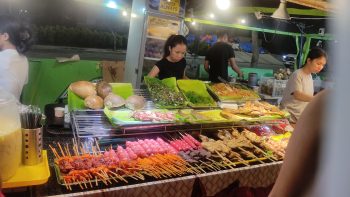
- ☐ Skewers: caprese, chicken, grilled vegetables or fruit.
- ☐ Wraps or sandwiches cut into two-bite pieces.
- ☐ Dumplings or sliders served before play, not during.
- ☐ Crackers, pretzels and plain popcorn in small individual bowls.
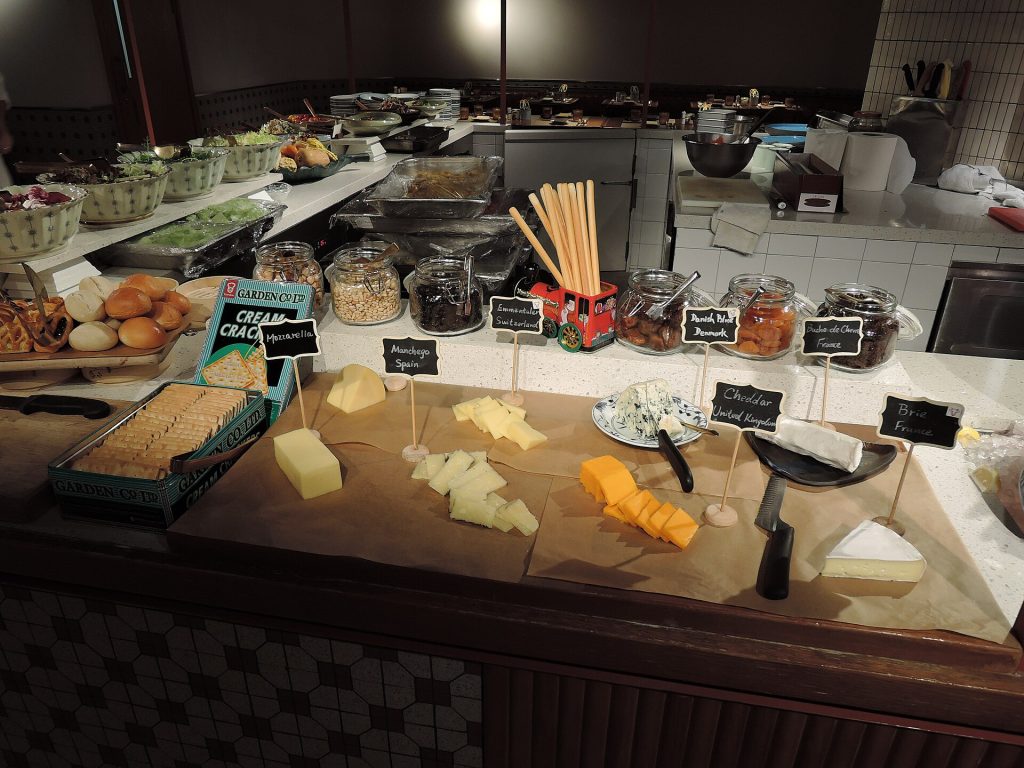
- ☐ Cheese cubes and firm fruit like grapes or apple slices.
- ☐ Mini muffins or cookies that don’t crumble much.
Think twice about
- ☐ Wings, ribs and anything with a sticky glaze.
- ☐ Nachos, dips that drip and anything that needs a spoon.
- ☐ Cheese-dusted crisps and puffs that leave orange fingertips.
- ☐ Powdered doughnuts and flaky pastry.
| Food | Mess risk | Best moment to serve |
|---|---|---|
| Skewers | Low | Anytime |
| Cut wraps | Low | Anytime |
| Plain popcorn or pretzels | Low to medium | Anytime, in small bowls |
| Pizza | Medium to high | During a break, away from the table |
| Wings or ribs | High | Before play, with hand-washing after |
| Chips and dip | High | At the drinks station only |
If it needs a napkin after every bite, it doesn’t belong within arm’s reach of the cards.
Protect the cards and the board
Food choices do most of the work, but the layout of the room does the rest. Grease and sugar transfer from fingers to card faces, where they build up over many plays and make cards sticky, marked or hard to shuffle. Liquids are worse, because paper and card stock swell as they absorb moisture and rarely dry flat again.
The fix is to separate the eating zone from the playing zone as much as the room allows, then add cheap protection for the pieces that get handled most.
Drinks station
Spills cause more ruined games than crumbs do. A single knocked glass can warp a board and bleed through a stack of cards in seconds, so drinks need their own space.
- ☐ Set up a drinks station on a counter or side table a few steps from the game.
- ☐ If drinks must be at the table, give each player a small side stool or tray below table height.
- ☐ Use cups with lids or bottles with caps for anything sugary.
- ☐ Put out coasters and a stack of napkins at the station, not at the board.
- ☐ Keep a clean dry towel within reach for emergencies.
Components and table
Even with careful food choices, a little prevention goes a long way, especially with games that have lots of cards handled every turn.
- ☐ Sleeve cards in games you care about or that get played often.
- ☐ Put a playmat or tablecloth under the board to catch crumbs and absorb small drips.
- ☐ Keep game boxes, rulebooks and spare pieces off the table and away from the food.
- ☐ Have a pack of wet wipes or a hand-washing reminder before play starts.
- ☐ Wipe down the table before setting up the next game.
Plan around allergies and diets
Ask about allergies and diets in the invitation, not at the door. The FDA names nine major food allergens: milk, eggs, fish, crustacean shellfish, tree nuts, peanuts, wheat, soybeans and sesame. Shared snack bowls make cross-contact easy, so plan for it.
- ☐ Ask each guest about allergies and dietary choices when you invite them.
- ☐ Label every dish with its main ingredients and any major allergens.
- ☐ Give allergy-friendly food its own serving utensils and its own spot.
- ☐ Use individual bowls instead of one communal bowl everyone reaches into.
- ☐ Keep packaging from shop-bought snacks so guests can read the label.
Time the food around the game
Long games and big meals fight each other. Plan the evening so the main food happens when nobody is holding cards.
- Arrival: Serve the most substantial food first, while you teach the rules or wait for latecomers.
- First game: Only low-mess snacks at the table.
- Break: Everyone steps away, washes hands and refills plates at the kitchen counter.
- Second game: Back to snacks, plus dessert that can be eaten with fingers.
A heavy-euro game that runs three hours needs a different plan from a night of quick party games. For long games, feed people properly before the box opens, then rely on light snacks. For a string of short games, the natural gaps between rounds give you several easy moments to refill plates without stopping play.
If you’re matching food to a specific title, our game night ideas collection pairs well with this list, and there’s more in our gaming guides.
Keep the spread food-safe
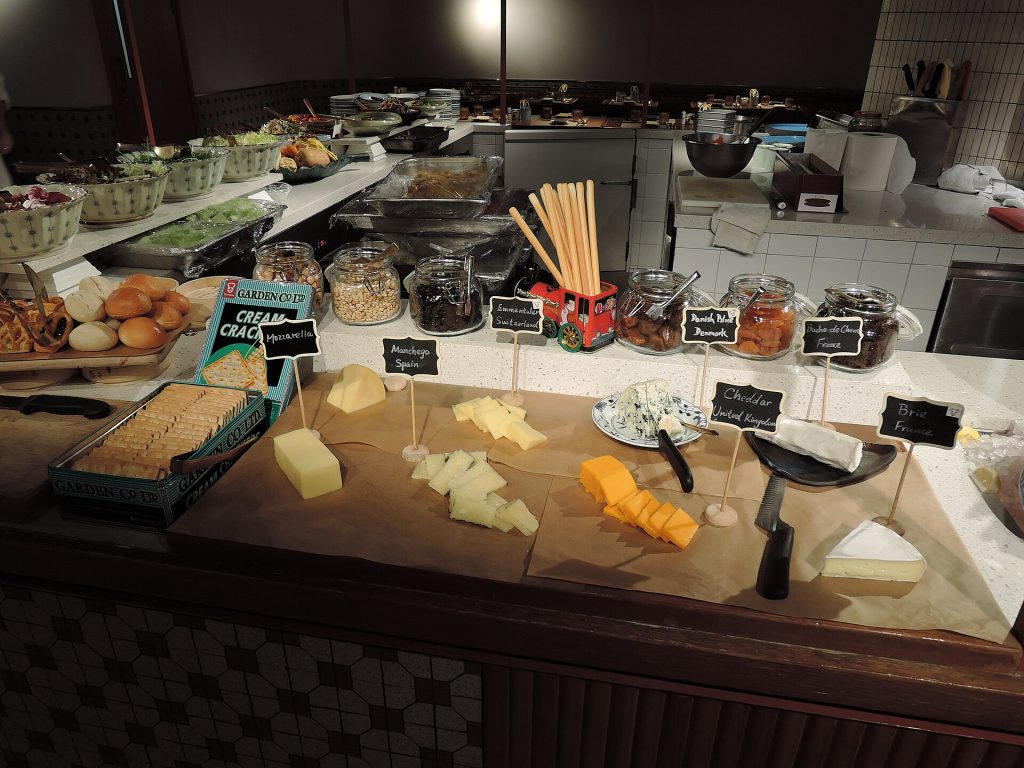
Game nights often run for hours, and a grazing spread can easily sit out much longer than it should. The FDA’s guidance on buffets says to discard perishables left at room temperature for more than two hours unless they are kept hot or cold, and to cut that to one hour if the room is above 90°F.
- ☐ Keep hot food at 140°F or warmer and cold food at 40°F or colder, as the FDA advises.
- ☐ Put out small platters and swap in fresh ones from the fridge, rather than one big platter all night.
- ☐ Note the time each perishable dish goes out, and bin it once the two-hour mark passes.
- ☐ Refrigerate leftovers promptly instead of leaving them on the counter until everyone goes home.
The CDC notes that bacteria multiply rapidly between 40°F and 140°F, and recommends washing your hands for at least 20 seconds before eating. At a game night, that reminder does double duty: it protects your guests and your cards.
FAQ
What is the best food for a board game night?
Bite-sized, non-greasy food you can eat without cutlery: skewers, cut wraps, cheese cubes, grapes and plain popcorn in small bowls.
Should I sleeve my cards if I’m serving food?
For games you value or play often, yes. Sleeves protect cards from greasy fingers and small spills, and they are far cheaper than replacing a deck.
How long can snacks sit out during a long game?
Perishable food should be discarded after two hours at room temperature, or one hour above 90°F, unless it’s kept hot or cold. Dry snacks like pretzels are less of a concern.
Is pizza a bad idea for game night?
Not at all. Just serve it during a break, away from the table, and ask everyone to wash up before the next game.
Before your next game night
Pick three table-safe snacks, set up a drinks station away from the board, and plan one proper food break. If you’d rather eat out before the games start, our restaurant directory can help you find somewhere nearby, and our easy party snacks ideas cover the rest.
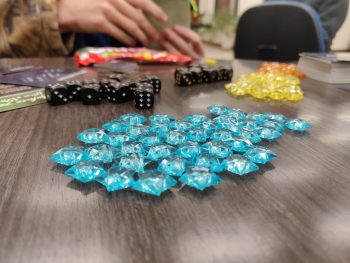
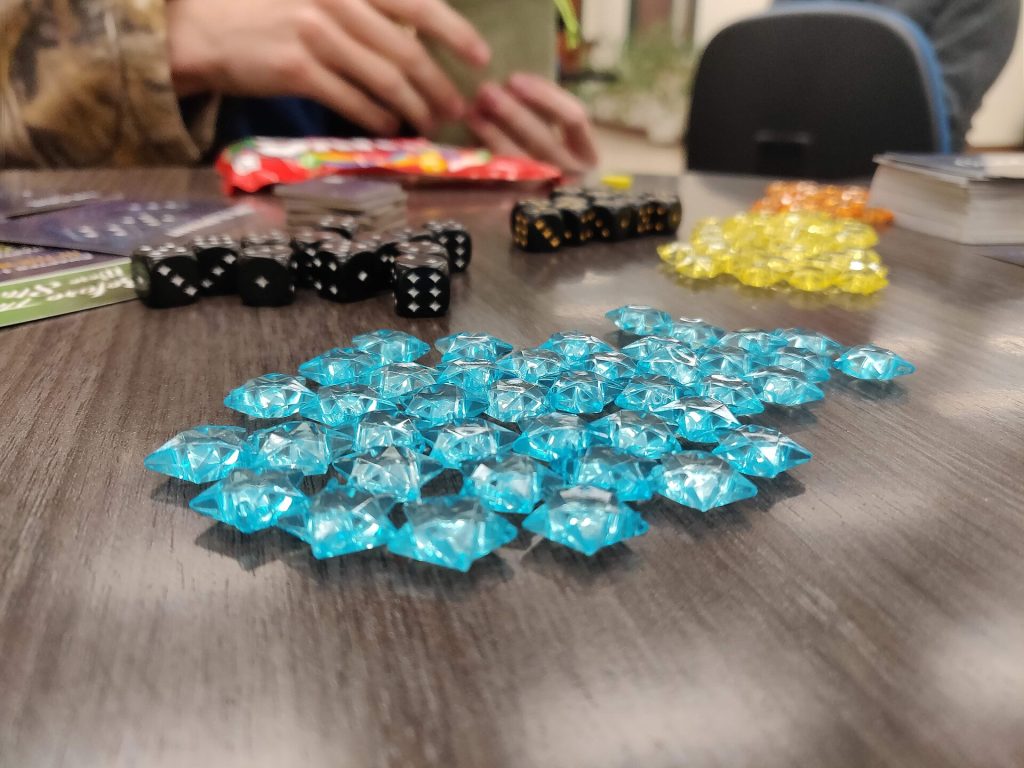
Featured photo: Board game pieces by Mshuang2, CC0.