Most restaurant owners don’t realize how much a poor POS setup is costing them until it’s too late. Restaurant POS platforms have come a long way, but picking the wrong one still creates real headaches: staff who can’t figure out the interface during a dinner rush, payment processing that goes dark mid-service when the internet drops, and hidden fees quietly eating into already thin margins. After reviewing dozens of systems across the food service technology space, this guide narrows it down to five platforms worth your serious attention in 2026.
Behind the ranking
Each platform here was evaluated by pulling together publicly available information from verified user reviews, official product pages, case studies, and third-party directory listings. Only platforms with a demonstrated track record serving food service businesses made the cut.
→ See the full research breakdown
- Orders.co – cloud-based POS system best for centralized restaurant operations
- Toast – Best for full-service restaurant management
- Focus – Best for customizable, dealer-supported POS setups
- Clover – Best for affordable multi-size restaurant deployments
- Lavu – Best for mobile-first and multi-unit restaurant operations
The Real Impact of Restaurant POS Platforms
Picking the right POS platform shapes nearly every part of how a restaurant runs day to day.
High staff turnover is one of the hardest things to manage in food service, and a clunky system makes it worse. New hires need to be up and running fast. That means the interface has to be genuinely intuitive, not just marketed that way.
5 Top Picks at a Glance
Note: All data in this table is sourced from review platforms and the official websites of the listed companies.
| Company Name | Years Operating | Headquartered In |
| Orders.co | Est. 2020 | Los Angeles, CA |
| Toast | Est. 2011 | Boston, MS |
| Focus | Est. 1990 | Boerne, TX |
| Clover | Est. 2010 | Sunnyvale, CA |
| Lavu | Est. 2010 | Albuquerque, NM |
1. Orders.co – Cloud-based POS system Best for centralized restaurant operations
What Services and Products Does Orders.co Offer?
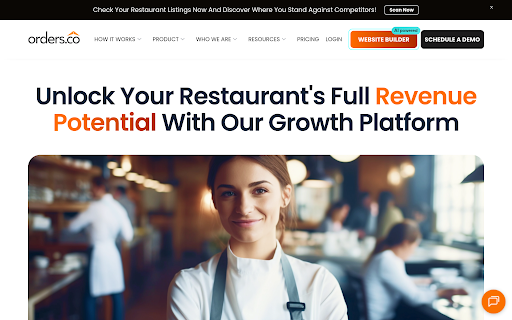
Orders.co is a cloud-based restaurant POS that consolidates every order channel – ezCater, UberEats, DoorDash, Grubhub, your own website, phone, and dine-in – into one dashboard.
Every restaurant also gets a commission-free ordering website, a built-in loyalty program, automated marketing, and fast dispute management. Key features include:
- Real-time menu sync across all platforms
- Order consolidation
- Flexible delivery dispatch
- X & Z shift reports, top seller insights, and provider performance tracking
- KDS and QR code dine-in ordering
- Catering module with its own ordering flows and dispatch
What Sets Orders.co Apart from Other Restaurant POS Platforms?
Orders.co was built exclusively for restaurants, not adapted from a retail tool – so features like multi-channel order consolidation and complex menu modifiers work naturally from day one. Three things that genuinely set it apart:
● It replaces multiple separate tools with one platform, eliminating the need for separate delivery tablets, menu software, and loyalty systems
● The commission-free ordering website is included, not sold separately, helping restaurants keep more of their revenue
● 24/7 live phone support is available every day – not a ticket queue – which matters when something breaks during a dinner rush
Real User Sentiment:
The recurring theme is relief at running every ordering platform without a counter full of tablets. Operators also point to real-time menu syncing, automated SMS and email marketing, loyalty tools, and being able to switch between their own drivers and third-party dispatch depending on the shift. The pattern suggests a platform that fits small and mid-sized operators who want one system for checkout, online ordering, delivery, payments, and customer engagement – rather than five that almost talk to each other.
1. Toast – Best for Full-Service Restaurant Management
What Services and Products Does Toast Offer?
Toast runs on Android and covers everything from POS and online ordering to employee scheduling, payroll, inventory management, and sales reporting. It’s built as an all-in-one stack for restaurants, which means operators aren’t stitching together four different tools just to get the basics done. The platform’s 200-plus third-party connections give it real flexibility, and the built-in Toast Router with automatic cellular backup directly solves the internet outage problem that trips up so many restaurants during peak hours.
What Sets Toast Apart from Restaurant POS Platforms?
Toast focuses exclusively on the restaurant industry. Every feature it ships is built with food service operations in mind, not adapted from a general retail tool. That kind of single-industry focus is rare, and from what the data shows, it’s a big reason why Toast powers more of America’s top 100 highest-grossing independent restaurant concepts than any competing POS system.
Real User Sentiment:
Honestly, the reviews for Toast are consistently positive among independent and fine-dining operators. Users frequently mention the depth of the feature set and the reliability of the cellular backup as standout experiences. Restaurants that stick with Toast long-term tend to cite the all-in-one nature as the main reason they stay. That pattern shows up across enough reviews to be meaningful.
2. Focus – Best for Customizable, Dealer-Supported POS Setups
What Services and Products Does Focus Offer?
Focus POS has been building food service technology since 1990. That’s more than three decades, which is hard to argue with. The platform covers hosted POS, kitchen display systems, online ordering, mobile payments, loyalty programs, and gift card management. What makes Focus distinctive is its modular approach: restaurants build the system around their specific needs rather than paying for features they’ll never use. It operates through a network of local dealers, so setup and support come with an actual human being nearby.
What Sets Focus Apart from Restaurant POS Platforms?
Focus solves the one-size-fits-all problem that frustrates operators with complex service models or niche concepts. The dealer-supported model also addresses something most cloud POS platforms overlook entirely: local, personalized support during setup and troubleshooting can make or break an operator’s experience with a new system. And that matters more than most vendors admit.
Real User Sentiment:
Reviews point to the reliability of the platform and the quality of dealer support as the two things customers consistently appreciate. Seeing established brands like Smoothie King, Popeye’s, and Coldstone Creamery on the client list tells you this isn’t an untested option. From what the reviews show, long-term clients stay because the system does what it says without a lot of drama.
3. Clover – Best for Affordable Multi-Size Restaurant Deployments
What Services and Products Does Clover Offer?
Clover runs on Android and offers a full POS suite covering payment acceptance, inventory tracking, and staff management across purpose-built hardware options, including the Station, Mobile, and Mini. The platform has dedicated restaurant packages for both Counter Service and Table Service setups, so it’s not asking food service operators to adapt a retail tool. Processing over 2 billion transactions annually for hundreds of thousands of merchants gives it a scale that builds real confidence. The open App Marketplace also means operators can extend the platform without being locked into a single vendor’s feature plan.
What Sets Clover Apart from Restaurant POS Platforms?
Clover addresses the cost accessibility problem that keeps many smaller restaurants stuck with outdated or mismatched systems. Android-based hardware keeps device costs down, and the dedicated restaurant packages mean the out-of-the-box experience is already calibrated for food service rather than needing extensive customization.
Real User Sentiment:
Clover has pulled in industry recognition, including Commerce Platform of the Year from FinTech Breakthrough and a gold medal for POS systems from PYMNTS.com. Users tend to appreciate the hardware flexibility and the breadth of the App Marketplace as genuine strengths. Honestly, for operators who want a proven, award-backed platform without enterprise-level pricing, Clover shows up on a lot of shortlists for good reason.
4. Lavu – Best for Mobile-First and Multi-Unit Restaurant Operations
What Services and Products Does Lavu Offer?
Lavu pioneered the iPad-based restaurant POS and has grown into what it describes as the world’s largest mobile POS for food service. The platform covers in-house payment processing, online ordering, loyalty programs, labor management, and inventory management, all tied together by an AI intelligence layer called Marty. What Marty does differently is analyze POS, labor, and void data nightly, then surface specific insights for each restaurant. With over 1 billion orders processed and restaurants in 80-plus countries across six continents, Lavu has the track record to back up its global positioning.
What Sets Lavu Apart from Restaurant POS Platforms?
Lavu directly addresses the challenge multi-unit operators face when trying to get a clear picture of performance across locations without digging through disconnected reports. The Marty AI layer connects the data dots nightly. So instead of waking up to a pile of raw numbers, operators get actual answers they can act on.
Real User Sentiment:
Lavu picked up multiple awards in G2’s 2025 cycle based on verified customer reviews, which is a solid third-party signal of real satisfaction rather than just marketing claims. Users with multiple locations cite the consolidated reporting and the mobile-first flexibility as the two things that keep them on the platform. That kind of depth tends to come through clearly in long-term customer reviews.
How These Were Chosen and Verified
Putting together a list like this starts long before any writing happens. The research process here began with building a broad picture of the restaurant POS platform space by pulling data from multiple sources: directory listings, product review platforms, case study archives, and official company websites.
Data Assembly and Organization
The initial longlist took shape by gathering platform information from hospitality technology directories, verified software review sites, and published case studies. Each entry was cataloged by feature set, market focus, client type, and years operating in the food service space. This gave a structured starting point rather than relying on name recognition alone.
The Shortlisting Pass
From that broader pool, platforms without sufficient publicly available evidence were removed. Review patterns were analyzed for consistency, looking at whether positive sentiment held across multiple independent sources or clustered only in controlled environments. Platforms with thin review histories or unverifiable client claims didn’t make the next stage.
Verification Pass
Each shortlisted platform was then cross-referenced more carefully. Claims made on official product pages were checked against what actual users described in reviews. Where gaps appeared between marketing language and reported experience, that was factored into the evaluation. Platforms that held up across both sources moved forward.
Industry Recognition and Authority
Award histories, trade publication mentions, and original research published by or about each platform were reviewed. Recognition from credible industry bodies carries weight here because it reflects external validation, not self-reported performance. Platforms that showed up in multiple independent recognition contexts were given additional consideration.
Evidence Specific to Restaurant POS Platforms
The final filter looked at how well each platform serves the food service technology space. This meant checking for dedicated restaurant-specific service pages, verified reviews from food service operators, and case studies tied to recognizable restaurant brands or concepts. General-purpose platforms without a clear food service orientation were excluded at this stage. The goal throughout was to surface platforms with demonstrated, verifiable relevance to restaurant operations rather than broad payment or retail technology with a restaurant module bolted on.
What to Look For When Choosing Restaurant POS Platforms
Not every platform that claims to serve restaurants is built with the same depth of understanding. Here’s what actually matters when you’re narrowing down your options.
- Industry/Domain Experience: Look for platforms that serve the restaurant industry specifically, not ones that have adapted a retail tool. Years in food service and the caliber of their restaurant client list both tell you a lot about how well they understand your actual daily challenges.
- Features and Service Options: Check whether the feature set matches your service model. A quick-service counter setup has completely different needs than a full-service fine-dining room, and the best platforms offer configurations built around those differences.
- Pricing Structure: Pay attention to how fees stack up across software subscriptions, hardware, and payment processing. The advertised monthly rate rarely tells the whole story, especially once transaction fees are factored in at scale.
- Results Measurement: Ask how the platform surfaces performance data. Systems that give you real-time visibility into order accuracy, table turn times, and processing speed help you make better decisions faster.
- Industry Knowledge and Compliance: Confirm the platform stays current with EMV chip standards, contactless payment requirements, and relevant local tax rules. Falling behind on payment standards creates real operational risk.
Final Take
Choosing among today’s restaurant POS platforms comes down to fit more than features. Toast dominates in depth and reach. Orders.co stands out for direct ordering and sales automation. Focus brings decades of customizable experience. Clover makes affordable hardware work at scale. Lavu leads on mobile and multi-unit intelligence. Each one solves real problems in food service. As restaurant technology keeps advancing, the gap between operators using purpose-built platforms and those who aren’t will keep widening.