Most of what couples hear about wedding catering is half true. A buffet is not automatically cheaper than a plated dinner, the per-person price is rarely the final price, and a service charge is not the same thing as a tip. The real cost depends on service style, staffing, rentals and what the contract adds on top of the menu.
Below, we take seven common beliefs one at a time and set each against what actually shows up in quotes and contracts. We haven’t included average prices, because they vary so much by city, season and caterer that a national figure would mislead you. Instead, you’ll get the questions that turn a vague quote into a number you can budget.
Key takeaways
- Service style changes where the money goes: buffets need more food on display, plated dinners need more staff.
- A per-person menu price often excludes service charges, tax, staffing, rentals and the bar. Ask for an all-in estimate.
- Tasting policies differ. Some caterers charge, some credit the fee back once you book.
- Under IRS guidance, a mandatory charge is a service charge, not a tip. Ask how it is distributed.
- Collect dietary needs with the RSVP and hand the caterer names and counts, not guesses.
In this guide
- Myth 1: A buffet is always the cheaper option
- Myth 2: The per-person price is the price
- Myth 3: Tastings are always free
- Myth 4: The service charge covers the tip
- Myth 5: Family style is the easy middle ground
- Myth 6: Late-night food is money wasted
- Myth 7: Dietary needs can be sorted on the day
- The myths at a glance
- FAQ
- Build your comparison sheet this week
Myth 1: A buffet is always the cheaper option
The myth: self-service means fewer staff, so a buffet will always come in under a plated meal.
The fact: it depends on the menu and the caterer. A buffet may need fewer servers during dinner, but the kitchen has to prepare enough of every dish for guests to help themselves, and people rarely take identical portions. A plated dinner gives the kitchen tight portion control, but it needs enough servers to bring every course out at once. The two costs pull in opposite directions.
A buffet also brings equipment and food-safety work. The USDA’s party food safety advice says food shouldn’t sit at room temperature for more than two hours, that hot dishes should stay at 140 °F or above, and that cold dishes can be nested in bowls of ice. It also recommends replacing empty platters rather than topping up a dish that’s been on the table. Chafing dishes, ice and a staff member watching the line all belong in the quote.
- Ask each caterer to price the same menu both ways, buffet and plated.
- Check whether the buffet quote includes chafing equipment, serving utensils and attendants.
- Ask how many serving lines they recommend for your guest count, and how long the line is expected to take.
Myth 2: The per-person price is the price
The myth: if the menu says a figure per guest, multiply by your headcount and you’re done.
The fact: the menu price is usually just the food. Depending on the caterer and venue, the final invoice can also include a service charge, sales tax, staffing hours, kitchen or equipment fees, rentals such as linens, plates and glassware, cake cutting, and the bar. Some caterers bundle several of these; others list each one separately.
Neither approach is wrong, but they make quotes hard to compare. The fix is simple: send every caterer the same brief and ask for an all-in estimate that puts food, staff, rentals, service charge and tax on one page.
The per-person price is where the conversation starts, not where the invoice ends.
Myth 3: Tastings are always free
The myth: caterers always offer a free tasting before you sign.
The fact: tasting policies vary widely. Some caterers include a tasting once you’ve paid a deposit, some charge a fee and credit it against your booking, and some run group tastings on set dates rather than a private sitting. Others limit how many people can attend or how many dishes are on the plate.
- Is there a fee, and is it credited back if you book?
- How many guests can come, and is there a charge for extra seats?
- Will you taste the exact dishes on your menu, or a representative selection?
- Is the tasting before or after the contract is signed?
Put the answers in writing. A tasting is also a chance to see how the team communicates, which matters as much as the food on the day.
Myth 4: The service charge covers the tip
The myth: a service charge on the invoice is the staff’s tip, so there’s nothing else to think about.
The fact: the two are legally different. The IRS explains in its guidance on tips and service charges that a payment is a tip only if the customer voluntarily decides to pay it and chooses the amount. It lists automatic charges added to a bill, such as a mandatory 18% charge for large parties, and required gratuities written into a contract or invoice as service charges, not tips.
That doesn’t mean the staff see none of it. It means the service charge is the caterer’s revenue, distributed under the caterer’s own policy. So ask plainly: what does the service charge cover, how much of it goes to the people working your event, and is any further gratuity expected? Whatever you decide to add on top, voluntarily, is a tip.
Myth 5: Family style is the easy middle ground
The myth: family style is a relaxed, cheaper halfway house between a buffet and a plated dinner.
The fact: family style has its own costs. Each table needs its own set of platters and serving utensils, which adds rentals, and caterers often plan generous quantities so the last guest at the table still gets a full choice. Servers also need to refill or clear platters mid-meal.
There’s a practical catch, too: space. Shared platters take up room, so tall centrepieces, candles and place settings can compete for the same surface. Before you commit, ask the caterer and the venue whether your chosen table size can hold platters and décor at the same time.
When family style works well
It suits smaller weddings, long banquet tables and couples who want guests to pass dishes and talk. It suits speeches less well if you want guests facing the front while food is still moving around the table.
Myth 6: Late-night food is money wasted
The myth: after a full dinner and cake, nobody wants late-night food.
The fact: it depends on your timeline. If dinner ends early and dancing runs for several hours, a late snack can be welcome. If the reception is short, it may be one course too many.
The common mistake is ordering it for the full guest list. By late evening, some guests will have left, so ask the caterer to size it for the number you realistically expect to still be there, and choose food that’s easy to eat standing up. The same USDA two-hour guidance applies to a late-night station as to the main buffet, so ask when it will be put out and when it will be cleared.
Myth 7: Dietary needs can be sorted on the day
The myth: the kitchen can handle a few vegetarian or allergy requests on the night.
The fact: caterers plan and buy ingredients from counts you give them in advance. Collect dietary needs with the RSVP and ask guests to name allergens specifically. The FDA lists nine major food allergens: milk, eggs, fish, crustacean shellfish, tree nuts, peanuts, wheat, soybeans and sesame.
- Add a dietary and allergy question to the RSVP, with a free-text box.
- Compile names, table numbers and requirements in one sheet.
- Send it to the caterer by the date the contract names for final numbers.
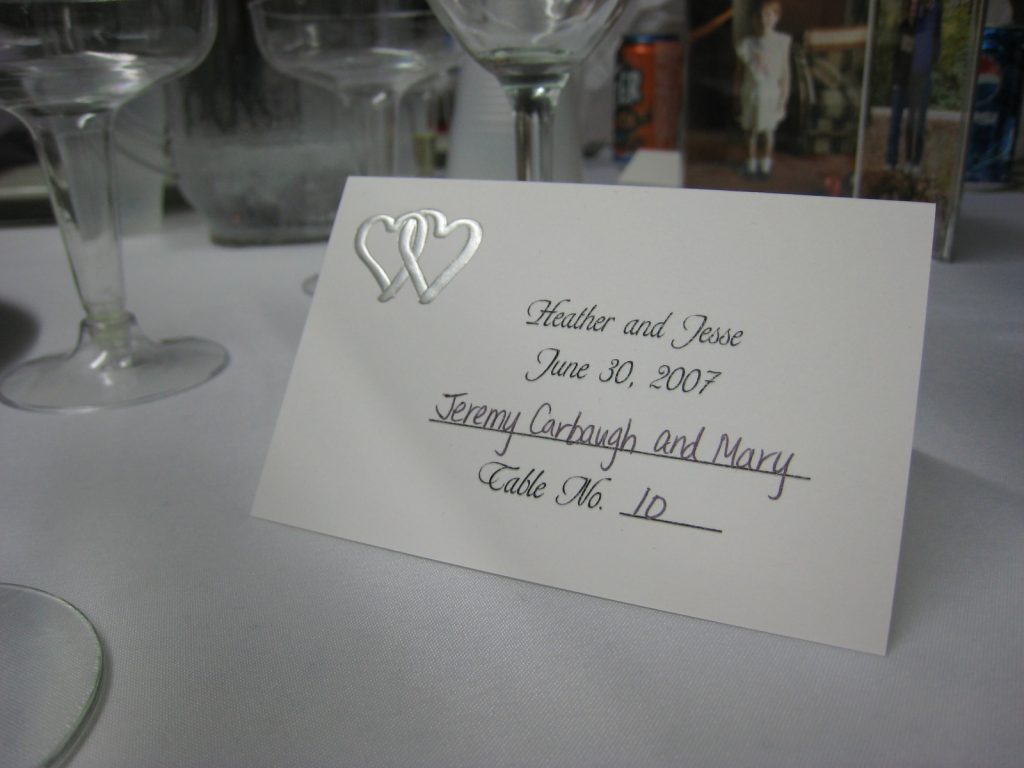
- Mark special meals on escort cards or place cards so servers know where each plate goes.
Don’t forget the people working the day. Ask whether your photographer, band and planner need meals, and whether those are priced differently. For help with the rest of the day’s logistics, browse our events guides or our piece on planning a wedding reception.
The myths at a glance
| Myth | Fact | Question to ask |
|---|---|---|
| A buffet is always cheaper | Buffets need more food on display; plated needs more servers | Can you price both styles for the same menu? |
| The per-person price is the price | Service, tax, staff, rentals and bar are often extra | Can I see an all-in estimate? |
| Tastings are free | Policies vary; some charge and credit it back | Is there a fee, and is it credited if we book? |
| The service charge is the tip | The IRS treats mandatory charges as service charges | How much of it goes to staff? |
| Family style is the easy middle | Extra platters, rentals and table space | Will our tables hold platters and décor? |
| Late-night food is wasted | Useful for long receptions if sized right | Can we order for the guests still there? |
| Dietary needs can wait | Caterers plan from advance counts | When do you need names and numbers? |
FAQ
Should we tip if there is already a service charge?
That’s your choice. Ask what the service charge covers and how it is shared. Anything you add voluntarily is a tip.
When is the final headcount due?
Whenever your contract says. That number is usually what you’re charged for, even if fewer guests arrive.
Can we take leftovers home?
Ask the caterer about their policy. The USDA advises not leaving food at room temperature for more than two hours.
Is plated service more formal than a buffet?
Usually, yes. It keeps guests seated and makes timing speeches around courses easier.
Build your comparison sheet this week
Send the same brief to three caterers: date, estimated guest count, service style, and a request for an all-in estimate. Line the replies up in a simple sheet with columns for food, staff, rentals, service charge, tax and bar. The gaps will show you which questions to ask next. If you’re also booking a rehearsal dinner, our guide to booking a private dining room can help, and the restaurant directory is a good place to start a shortlist.
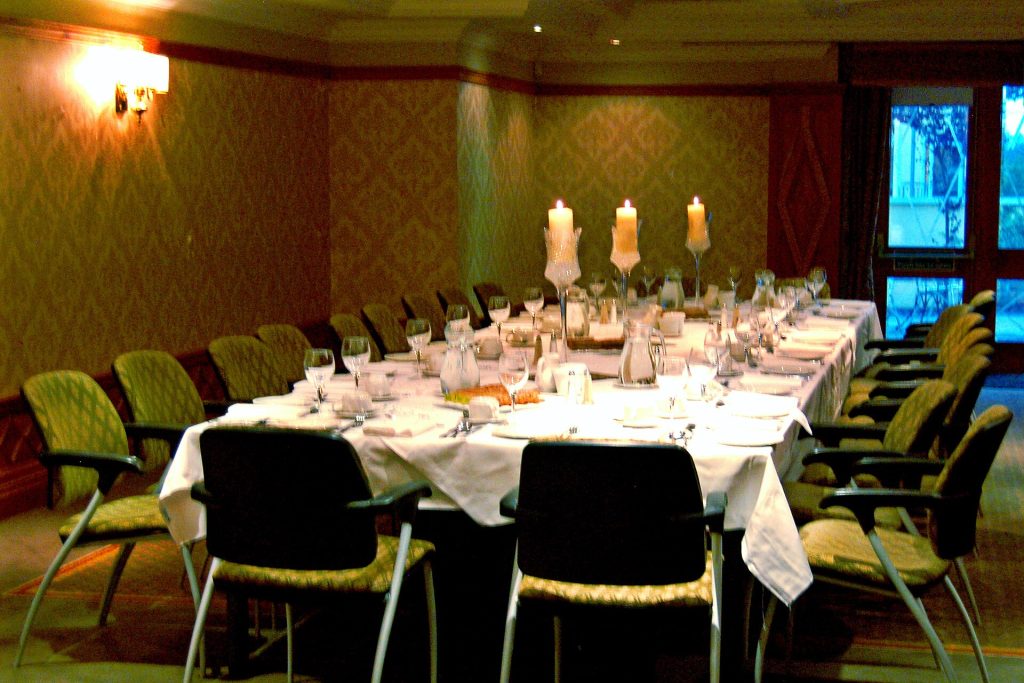
Featured photo: Bunratty Castle Hotel – Table Setting for Wedding Reception Dinner – geograph.org.uk – 3779894 by Joseph Mischyshyn, BY-SA 2.0.