A good cookie swap checklist comes down to six jobs: send invites three to four weeks ahead, set the number of cookies each guest brings, label every batch with its ingredients and allergens, keep raw dough out of reach, pack sturdy containers for the trip home, and give people clear storage advice. Get those right and the party runs itself.
The idea is simple. Everyone bakes one kind of cookie in bulk and goes home with a mixed box of everyone else’s. The logistics are where it can wobble: too few guests, one person bringing a single plate, an unlabelled tray of peanut butter cookies, or crumbs rattling around a flimsy bag.
Print this and tick it off as you go. Each section has its own checklist, from the first invite to the last tin out of the door.
Key takeaways
- Invite 8 to 12 bakers three to four weeks ahead and state the cookie count, packaging and allergen rule in the invite.
- Ask each guest for one dozen cookies per guest, plus a dozen for tasting on the day.
- Label every batch with its ingredients and flag the FDA’s nine major allergens, including sesame.
- The FDA and CDC say never to eat or taste raw flour, dough or batter, and not to let children play with raw dough.
- Cool cookies completely before packing, and freeze tightly wrapped cookies if they need to last into the holidays.
Four weeks out: the invite checklist
The invite does most of the organising for you. Put the rules in it and you won’t need to repeat them.
- ☐ Pick a date and time in early December, before diaries fill up. A weekend afternoon works well.
- ☐ Invite 8 to 12 bakers. Fewer and the boxes feel thin; more and the maths gets heavy.
- ☐ Ask guests to reply with the cookie they plan to bring so you can avoid three batches of the same thing.
- ☐ State how many cookies each person brings (see the next section).
- ☐ Ask everyone to bring a container for their haul, or tell them you’ll supply one.
- ☐ Ask for a recipe card or ingredients list with each batch.
- ☐ Mention any guest allergies you know about, and ask others to tell you privately.
A shared online sign-up sheet makes the duplicate check easy and lets people see what’s coming.
How many cookies each: the swap maths
A common formula is one dozen cookies for every guest, plus one extra dozen for tasting at the party. Drop to half a dozen per guest, still plus a tasting dozen, if the group is large or the cookies are big.
| Guests (bakers) | Cookies each baker brings | Cookies each guest takes home | Total cookies at the swap |
|---|---|---|---|
| 6 | 7 dozen (84) | 6 dozen (72) | 42 dozen (504) |
| 8 | 9 dozen (108) | 8 dozen (96) | 72 dozen (864) |
| 10 | 11 dozen (132) | 10 dozen (120) | 110 dozen (1,320) |
| 12, half-dozen rule | 7 dozen (84) | 6 dozen (72) | 84 dozen (1,008) |
Look at the numbers before you invite twelve people. Eleven dozen is a big bake for one person, which is why the half-dozen rule exists.
- ☐ Confirm final numbers a week before and send each baker their exact count.
- ☐ Choose cookies that bake in large batches and travel well: drop cookies, shortbread, biscotti, crinkles.
- ☐ Save delicate or cream-filled cookies for the tasting table rather than the take-home boxes.
One week out: baking and the raw dough rule
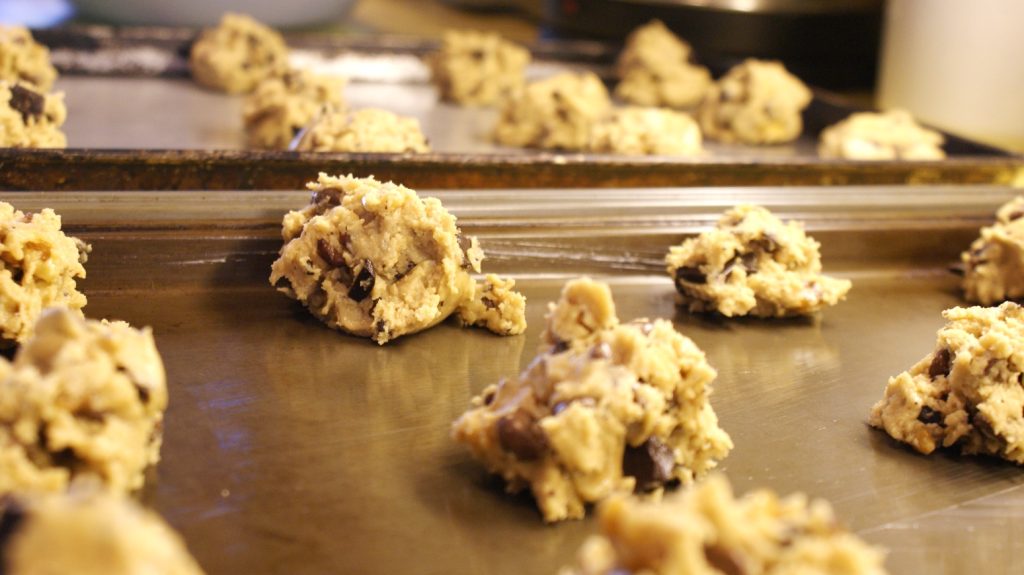
Baking in bulk means a lot of raw dough on the counter, and that is where the food-safety rules matter. The FDA’s guidance on handling flour is direct: never eat or taste raw flour, dough or batter. Grain is grown outdoors and can be exposed to bacteria such as Salmonella and pathogenic E. coli.
The CDC adds that most flour is raw, that grinding grain and bleaching flour don’t kill harmful germs, and that raw or lightly cooked eggs can contain Salmonella. Tasting or eating unbaked dough or batter puts you at risk of food poisoning.
- ☐ No tasting the dough, even with an egg-free recipe. The flour alone is raw.
- ☐ Don’t let children use raw dough for crafts or play clay; the FDA specifically advises against it.
- ☐ Don’t try to heat-treat flour at home. The FDA says home methods may not kill all bacteria.
- ☐ Keep flour and raw eggs away from ready-to-eat food on the counter.
- ☐ Wash hands with soap and water after handling flour, raw eggs or surfaces they touched.
- ☐ Bake at the temperature and for the time the recipe gives.
- ☐ Want an edible dough treat for the party? The CDC notes some store-bought edible cookie dough is made with heat-treated flour and pasteurised eggs or no eggs.
A cookie swap is a party about sharing. Share the finished cookies, not the dough.
The allergen label checklist
When cookies from ten kitchens end up in one box, nobody can see what went into them. A label on every batch fixes that. The FDA lists nine major food allergens: milk, eggs, fish, crustacean shellfish, tree nuts, peanuts, wheat, soybeans and sesame. Sesame became the ninth on January 1, 2023, so older label templates may miss it.
- ☐ Name of the cookie and the baker.
- ☐ Full ingredient list, including decorations, sprinkles and fillings.
- ☐ A clear “Contains:” line for any of the nine major allergens.
- ☐ A note if the kitchen also handles nuts or other allergens, even if this recipe doesn’t.
- ☐ Bake date.
- ☐ Separate bags for each variety so nut cookies don’t sit against nut-free ones.
Put a stack of blank labels and a pen by the door for anyone who forgets. It takes a minute and spares guests with allergies a guessing game.
Packaging and take-home tins
- ☐ Sturdy tins, boxes or lidded containers for each guest, big enough for their full count.
- ☐ Parchment or waxed paper to separate layers.
- ☐ Small paper or cellophane bags for each variety inside the box.
- ☐ Stickers or tags to carry each batch’s label into the box.
- ☐ A table set up by variety, so guests move down the line and take their share.
- ☐ A spare box or two for guests who forget theirs.
- ☐ Plates, napkins and something to drink for the tasting table.
Pack sticky or iced cookies separately from crisp ones, which will soften if they share a container. For the rest of the party, our holiday party planning guide covers food, drinks and timings, and there’s more in our lifestyle section.
Storing, freezing and shipping
Most guests will eat their haul within a week or two, but cookies for gifts or holiday guests often need to last longer. K-State food scientist Karen Blakeslee’s advice on freezing baked goods is to bake first, let cookies cool completely, wrap them tightly and freeze, then let them thaw in the wrapping before using.
- ☐ Cool every batch completely before packing; warm cookies trap moisture.
- ☐ Need a hostess gift to go with the tin? See our food gift ideas.
- ☐ Store crisp and soft cookies in separate airtight containers.
- ☐ Freeze extras tightly wrapped, and label the bag with the variety and date.
- ☐ To freeze dough rather than cookies, scoop it onto a tray, freeze, then move the balls into freezer packaging for baking later.
- ☐ For shipping, choose sturdy bar and drop cookies, pack them snugly with no room to rattle, and send them early in the week.
- ☐ Cream-filled or cream cheese-frosted treats are perishable and don’t belong in the post.
FAQ
How many cookies should each person bring to a cookie swap?
One dozen per guest, plus a dozen for tasting. With a large group, switch to half a dozen per guest so the bake stays manageable.
How many people should I invite?
Eight to twelve bakers gives a varied box without an impossible baking list. Fewer than six can feel thin.
Do I need to label allergens?
It’s a courtesy rather than a legal requirement at a home party, but it matters. List the ingredients and flag any of the FDA’s nine major allergens.
Is it safe to taste cookie dough if the recipe has no eggs?
No. The FDA and CDC advise against eating raw dough because raw flour itself can carry harmful bacteria.
Send the invite today
Pick your date, choose a cookie count from the table above, and send the invite with the rules included: count, container, recipe card and allergen label. Then decide what you’re baking. You’re the host, so make it something that travels well and stands out on the table.
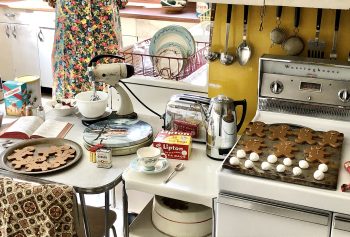
Featured photo: Sandburg Home kitchen at Christmas (8b3aeabe-6d13-4cd6-81fd-9b55059375b7) by NPS Photo, CC0.