The right holiday party venue depends mostly on headcount and how much you want to organise yourself. A restaurant private room is the simplest choice for a seated dinner of a few dozen people. A hotel suits larger groups, a full evening with dancing, and guests who would rather sleep upstairs than drive. A dedicated event space gives you the most freedom, but you bring in the caterer, the bar and often the furniture.
This comparison sets the three side by side on capacity, food and drink minimums, catering flexibility, AV, transport, overnight options, how the bill is built and how far ahead to book. We’ve left out prices on purpose: they swing so much by city, night of the week and date in December that any figure would mislead. What stays constant is how each type of venue charges you, and that’s what decides which quote is really the cheapest.
Key takeaways
- Restaurants are simplest for seated dinners; the kitchen, staff and bar come included.
- Hotels handle big numbers, AV and overnight stays, but usually require their own catering.
- Event spaces offer the most freedom and the most work: caterer, bar, rentals and cleanup are often on you.
- Compare quotes on the full bill, including food and drink minimums, service charges and tax.
- Plan transport home before the invitations go out, not on the night.
In this guide
- Which venue suits which party
- Restaurants: private rooms and buyouts
- Hotels: ballrooms, function rooms and beds upstairs
- Event spaces: a blank canvas with more to organise
- The three venue types side by side
- Minimums, service charges and the fine print
- FAQ
- Build your shortlist this week
Which venue suits which party
Start with two numbers: how many people you expect, and how long you want the night to run. They narrow the field faster than anything else.
- A team dinner or small client thank-you: a restaurant private dining room or semi-private area. You get a set menu, one bill and staff who already know the room.
- A mid-sized party with drinks and a few speeches: a restaurant buyout, a hotel function room, or a smaller event space, depending on whether you want a seated meal or a standing reception.
- A large company party with dinner, a band and guests travelling in: a hotel ballroom, where catering, AV, cloakroom and rooms sit under one contract.
- A themed party or something that needs to look unlike a restaurant: an event space, a gallery or a converted industrial room, as long as you have time to manage suppliers.
Stuck between two? The more you want handled for you, the more you should lean towards a restaurant or a hotel.
Restaurants: private rooms and buyouts
Restaurants usually offer three levels of privacy: a reserved area of the main dining room, a private or semi-private room, or a full buyout of the venue. The kitchen, service staff, glassware and bar are already there, so there’s little to hire in.
Where restaurants shine
- Food is the point, and it’s cooked by the team that cooks it every night.
- Set menus keep the ordering and the bill simple.
- Central locations tend to be close to public transport and taxi ranks.
- Smaller groups don’t feel lost in an oversized room.
Where they fall short
Capacity is fixed by the room, and in December a restaurant still has regular diners to feed, so private rooms get booked early and buyouts on Fridays and Saturdays are the hardest dates of the year to secure. Catering flexibility is limited to the restaurant’s own menu, with some room to adapt for dietary needs. AV is often basic: background music and perhaps a screen, rarely a stage or a full sound system. There are no beds, so everyone needs a way home.
The cheapest venue on paper is the one whose minimum you can actually reach without buying food nobody eats.
Hotels: ballrooms, function rooms and beds upstairs
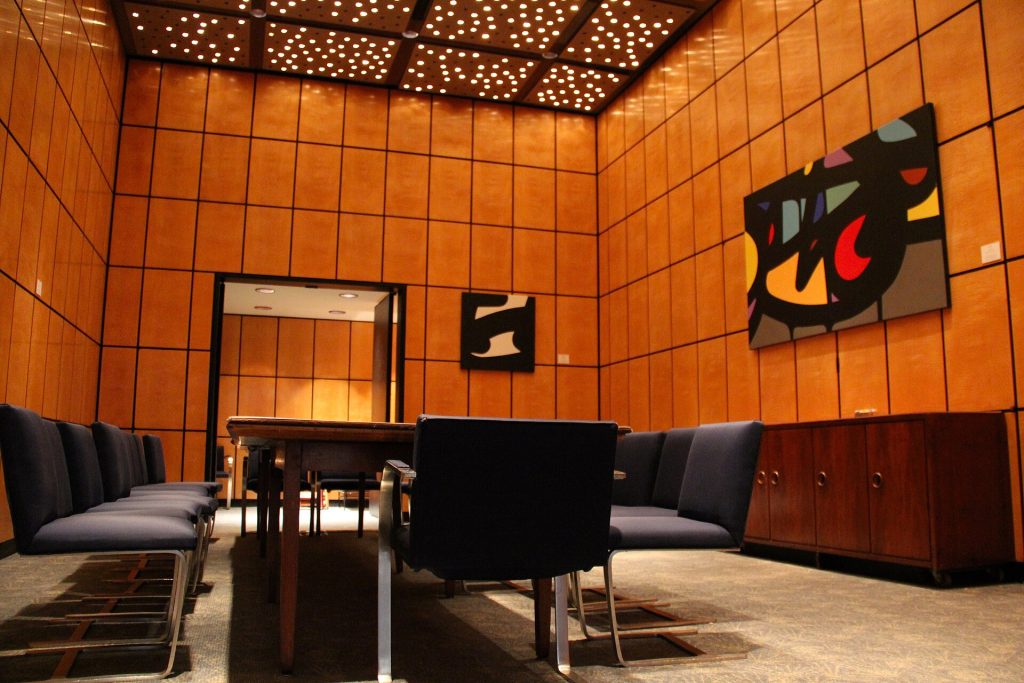
Hotels are built for events. A ballroom or function room typically comes with an events coordinator, in-house banqueting staff, tables and linen, a stage or dance floor, and technical support, all on one contract. For larger parties that single point of contact is worth a lot.
Strengths
- Capacity ranges from boardroom-sized rooms to ballrooms, often with breakout spaces for a drinks reception.
- AV, lighting and staging are usually available in-house or through a preferred supplier.
- Guests can book rooms upstairs, and many hotels will hold a block of rooms for your group.
- Cloakrooms, accessible bathrooms and step-free routes are more likely to be in place already.
Trade-offs
Hotels usually insist on their own catering and bar, so you choose from banqueting menus rather than bringing in a favourite caterer. Parking may be charged, and a city-centre hotel may have little of it. If you take a room block, read the terms on how many rooms you must fill and by when you can release the rest without a penalty.
Event spaces: a blank canvas with more to organise
Dedicated event spaces range from lofts and galleries to warehouses, rooftops and historic halls. Many rent the room as a shell: walls, power, bathrooms and a set number of hours. Everything else comes from suppliers you choose, sometimes from an approved list.
Strengths
- Maximum flexibility on caterer, cuisine, bar, décor and layout.
- A room that doesn’t look like a restaurant or a hotel, which helps a themed party.
What you take on
You may need to hire tables, chairs, linen, glassware, a bar and bar staff, lighting, sound, and even a generator or heaters. Check whether the caterer will have a working kitchen or needs to bring mobile equipment. For buffet-style service, food safety becomes your caterer’s job on an unfamiliar site: the USDA’s buffet food safety advice says food shouldn’t sit at room temperature for more than two hours and hot dishes should be held at 140 °F or above. Setup and teardown hours are often billed too.
The three venue types side by side
Use this table as a first filter. It describes the typical pattern for each venue type; individual venues will differ, so confirm each point in writing.
| Factor | Restaurant | Hotel | Event space |
|---|---|---|---|
| Capacity | Small to mid-sized; fixed by rooms | Small rooms up to large ballrooms | Varies widely; often mid to large |
| F&B minimum | Common for private rooms and buyouts | Common, often tied to banqueting menus | Sometimes; more often a flat room hire fee |
| Catering flexibility | Restaurant’s own menu, adapted | In-house banqueting, rarely outside caterers | High; own or approved caterers |
| AV | Basic; music and maybe a screen | Usually full in-house or preferred supplier | Bring your own or hire in |
| Parking and transport | Often central, near transit | On-site parking, sometimes charged | Depends on location; check late-night access |
| Overnight options | None | Rooms on site, room blocks possible | None; book nearby hotels separately |
| How the bill is built | Minimum spend plus service charge and tax | Per-person packages plus room hire, AV, service charge and tax | Room hire plus separate caterer, bar and rental bills |
| Booking lead time | Weekend dates go early | Longest for peak December weekends | Popular spaces book well ahead; supplier lead times too |
| Your workload | Low | Low to medium | High |
Notice where the work sits. A restaurant or hotel bill looks larger at first glance because it bundles everything. An event space quote looks smaller until the caterer, bar and rental invoices land on top of it.
Minimums, service charges and the fine print
Food and beverage minimums
A food and beverage minimum is the least you agree to spend on food and drink. If your group spends less, you usually pay the difference anyway, sometimes as a room fee. Ask whether the minimum is counted before or after service charge and tax, and whether room hire, AV or a cake fee count towards it. A minimum that looked reasonable for 60 people can be hard to reach if only 40 turn up.
Service charges are not tips
Many venues add a service charge to event bills. The IRS explains in its guidance on tips and service charges that a payment counts as a tip only if the customer voluntarily decides to pay it and chooses the amount. It lists automatic charges added to a bill, such as a mandatory 18% charge for large parties, and required gratuities in a contract or invoice as service charges, not tips. So ask what the charge covers, how much goes to the staff working your event, and whether any further gratuity is expected.
Other lines to check
- Deposit amount and when it becomes non-refundable.
- The date the final headcount is due, which is usually the number you pay for.
- Cancellation terms, including for severe weather.
- Overtime rates if the party runs past the agreed finish.
- Corkage or cake-cutting fees if you bring your own wine or dessert.
Getting everyone home
Transport deserves a line in the budget, not a mention on the night. NHTSA reports in its December drive-sober guidance that in December 2023, the most recent data year available, 1,038 people died in drunk-driving crashes. Its advice is to plan a sober ride home in advance, whether that is a sober friend, a rideshare, a taxi or public transit. For hosts, that might mean choosing a venue near transit, arranging a shuttle, sharing taxi numbers with the invitation, booking a hotel room block, or serving appealing alcohol-free drinks all night.
For more ideas on seasonal gatherings, browse our events guides or read our guide to booking a private dining room.
FAQ
How far ahead should I book a holiday party venue?
As early as you can. Friday and Saturday dates in December are the first to go, so weeknights or early January give you more choice.
Is a weeknight party cheaper?
Often, yes. Many venues set lower minimums on quieter nights, so ask for quotes on two or three dates.
Can I bring my own caterer to a hotel?
Usually not. Most hotels require their in-house banqueting team, so check before you fall for the room.
What should I ask about accessibility?
Ask about step-free entry, lifts, accessible bathrooms and seating, and how far guests walk from the drop-off point.
Build your shortlist this week
Write a one-page brief: preferred dates, expected headcount, seated or standing, the budget ceiling, and must-haves such as a screen for speeches or rooms for out-of-town guests. Send the same brief to one restaurant, one hotel and one event space, and ask each for an all-in estimate with minimums, service charge and tax on the same page. Compare those, not the headline figures. To find restaurants with private rooms near you, start with our restaurant directory, and see tips for group dining for dinner-party inspiration.
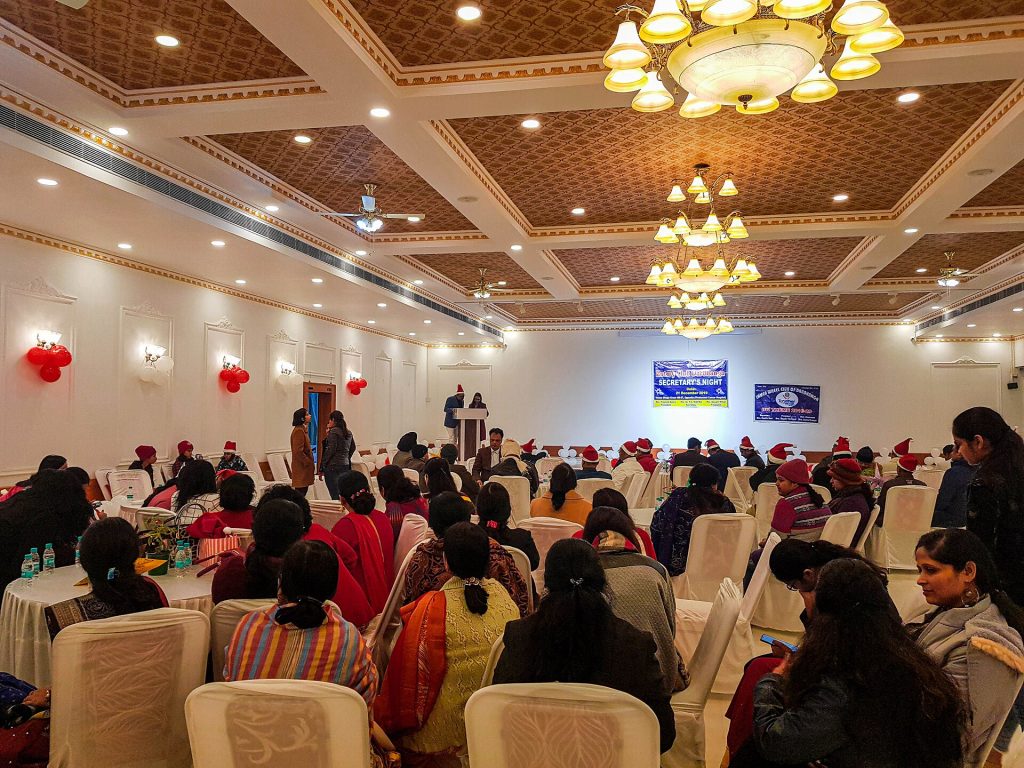
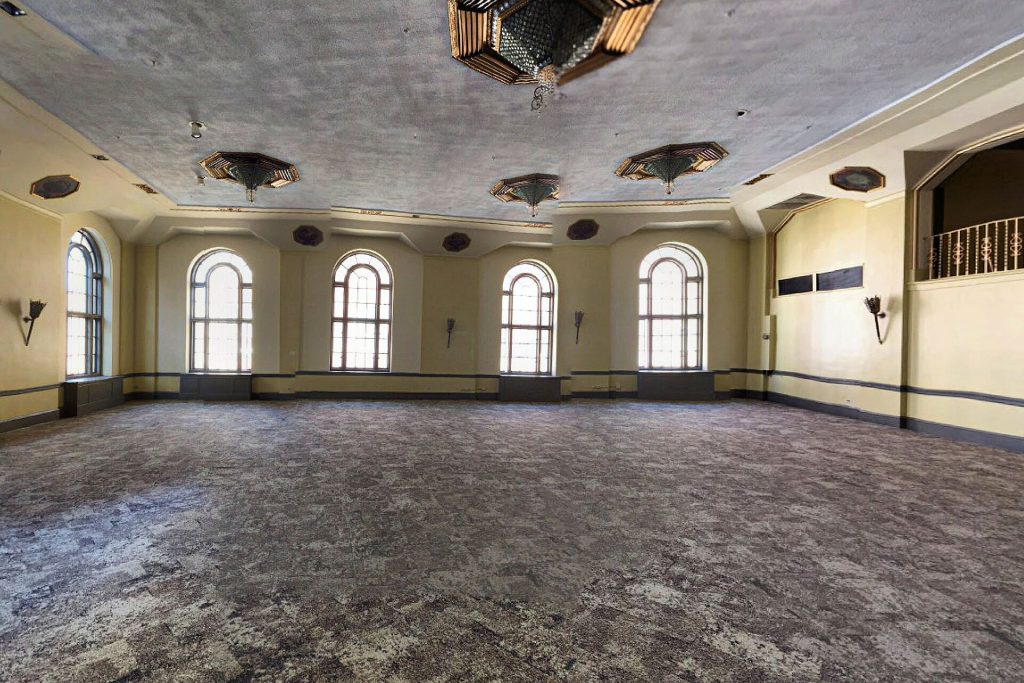
Featured photo: Meeting cum banquet hall in Darbhanga, Bihar by Bikramksingh, BY-SA 4.0.