18+ Gaming content is for adults of legal age where they live. Gambling involves risk; please play responsibly.
To host a trivia night at home, you need four things: a clear format of five or six short rounds, teams of three to five people, questions that reward knowledge rather than guesswork, and a simple way to show questions and collect answers. Add food that’s easy to eat with one hand and a timetable with breaks built in, and you have a night that runs itself.
This how-to walks through each step in order, from choosing rounds to setting up a screen. It’s about hosting and having fun with friends, so the prizes are small and nobody plays for money. The steps work whether you have eight guests around a coffee table or twenty spread across two rooms.
Key takeaways
- Keep it to five or six rounds of eight to ten questions, with a break at the halfway point.
- Teams of three to five mix knowledge and keep everyone talking.
- Test every question on someone who isn’t playing, and keep one clearly correct answer.
- Mark each round before the next starts and read scores aloud to keep the tension up.
- Serve one-hand food, set out water and alcohol-free drinks, and never rely on colour alone on screen.
Step 1: Set the format, rounds and teams
Decide the shape of the night before you write a single question. A tight format keeps energy up and stops the evening drifting past midnight.
- Choose the number of rounds. Five or six rounds of eight to ten questions fills about two hours with breaks. Fewer rounds suit a weeknight.
- Mix round types. Alternate straight general-knowledge rounds with a picture round, a music round and a themed round so different people get their moment.
- Add a wildcard. Let each team play a “double points” card on one round of its choosing, handed in before that round starts. It adds strategy without adding questions.
- Set team size. Three to five players per team works well. Smaller teams leave people stuck; larger ones leave quieter guests out.
- Build the teams. Mix couples and close friends across teams, or draw names from a bowl. Balanced teams make for closer scores.
- Name the teams. Give each team a minute to pick a name at the start. It’s an easy icebreaker.
Prepare an answer sheet per team per round, numbered and with a space for the team name. If you’re using phones instead, see Step 5.
Step 2: Write questions that feel fair
Nothing sinks a trivia night faster than a question with two right answers or one nobody could know. The University of Waterloo’s Centre for Teaching Excellence has tips for writing multiple-choice questions that translate neatly to a living room:
- Make the question complete on its own, so a player could answer without seeing the options.
- Cut excess wording and irrelevant detail.
- Offer three to five options, with one best answer.
- Make the wrong options plausible and roughly the same length as the right one.
- Avoid “all of the above”, “none of the above” and absolutes such as always or never.
- If you must use a negative, put the key word in capitals.
Check every answer twice
- Write the answer and where you confirmed it next to each question.
- Watch for facts that change: record holders, current office-holders, the tallest building.
- Ask someone who isn’t playing to read each question aloud and point out anything ambiguous.
- Decide in advance whether you’ll accept close spellings or partial answers.
Categories that include everyone
Spread topics so no single expert runs away with it. Balance pop culture with history, sport with science, and recent years with older decades so different ages can contribute. Food and drink, geography, local knowledge and “name the year” rounds tend to involve everyone. Avoid questions that rely on one country’s school curriculum if your guests grew up in different places, and skip anything that mocks a group of people.
A good trivia question makes the room groan when the answer is read out, not argue.
Step 3: Decide on scoring and prizes
- Keep scoring simple. One point per correct answer. Picture and music rounds can offer half points for partial answers if you announce that first.
- Mark as you go. Collect sheets at the end of each round and swap them between teams to mark while you read out answers, or mark them yourself during the next round.
- Post the scores. Keep a running tally on a whiteboard, a sheet of paper taped to the wall or a slide. Read the standings aloud after each round.
- Prepare a tiebreaker. Use a numerical question, such as a year or a distance, where the closest answer wins.
- Keep prizes small and fun. Bragging rights, a homemade trophy, a box of chocolates, first pick of the leftovers, or choosing next time’s theme.
Leave money out of it. There’s no entry fee, no betting on the outcome and no cash prize. A good quiz is competitive enough on its own, and it keeps the focus on the fun.
Step 4: Plan food, drink and timing
Guests will be writing, thinking and passing sheets around, so choose food that doesn’t need a knife and fork or leave greasy fingerprints on answer sheets.
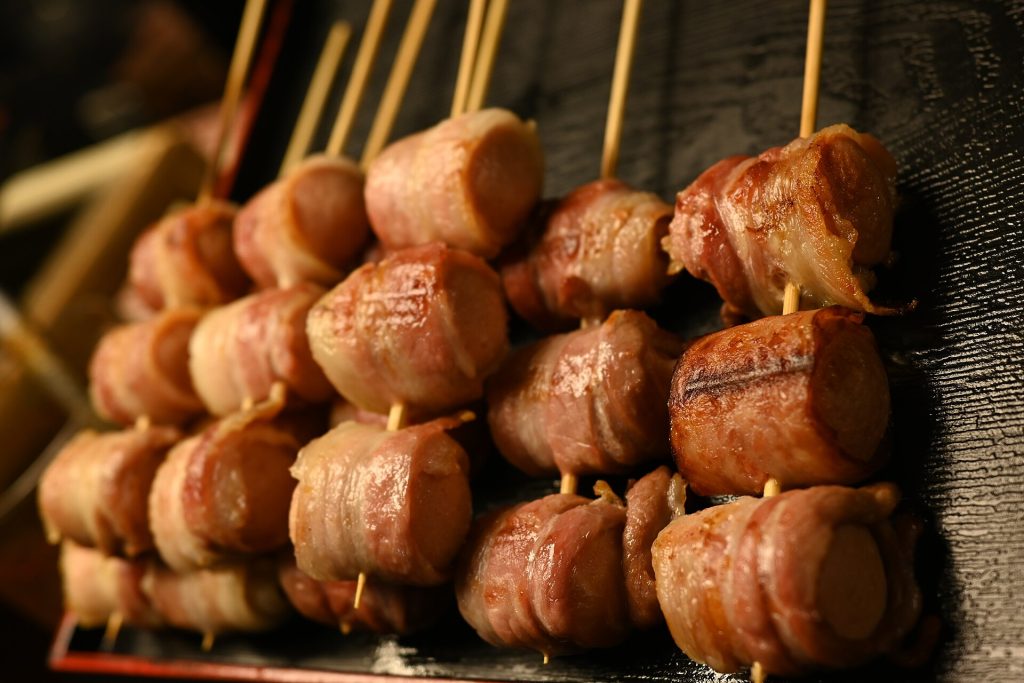
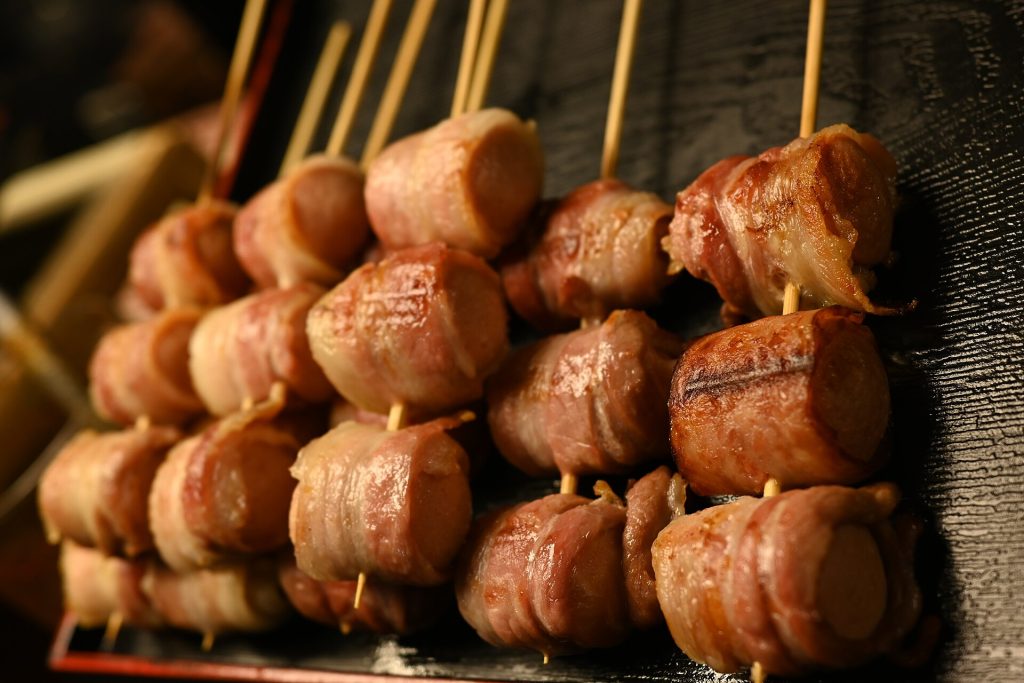
- Sliders, skewers, flatbread slices and filled mini pastries.
- Crudités with dips in small bowls on each team’s table.
- Popcorn, pretzels and nuts, with a note of any common allergens.
- One sweet thing at the break, such as brownies cut into small squares.
Put the main spread on a separate counter so tables stay clear. The USDA’s party food safety advice says food shouldn’t sit at room temperature for more than two hours, and recommends replacing empty platters rather than adding fresh food to them. Bring out smaller platters and refresh them at the break. Set out water, sodas and at least one alcohol-free drink that feels like a treat.
A sample timetable
| Time | What happens |
|---|---|
| 7:00 | Guests arrive, get a drink, form teams and pick names |
| 7:20 | Round 1: general knowledge |
| 7:35 | Round 2: picture round |
| 7:50 | Round 3: themed round, scores read out |
| 8:05 | Break: food refreshed, standings posted |
| 8:25 | Round 4: music round |
| 8:40 | Round 5: general knowledge |
| 8:55 | Round 6: wildcard or final round |
| 9:10 | Tiebreaker, final scores and prizes |
Allow about fifteen minutes per round including marking. If your group talks a lot, drop to five rounds rather than rushing.
Step 5: Sort the tech
You can run a great quiz with paper and a loud voice, but a screen makes picture rounds and music rounds much easier.
- Display. Cast slides from a laptop to a TV, or use a projector against a plain wall. Test it in the room at the time of day you’ll play, since daylight washes out projected images.
- Slides. One question per slide, large type, high contrast. Number each slide so teams can check they haven’t missed one.
- Colour. Don’t mark options or teams by colour alone. The National Eye Institute notes that red-green colour vision deficiency is the most common type, which can make red and green hard to tell apart. Add letters, numbers or shapes.
- Sound. For music rounds, test the speaker volume from the back of the room and queue clips in advance.
- Phones. Either ban them during rounds and collect them in a basket, or use a free quiz app for answers and ask teams to keep other apps closed.
- Backup. Print the questions and answers in case the laptop or Wi-Fi fails.
Planning more nights in? Browse our gaming features or see our guide to hosting a game night.
FAQ
How many questions do I need for a trivia night at home?
Around 40 to 60 questions, split into five or six rounds, fills about two hours with a break.
How do I stop people using their phones?
Collect phones in a basket before each round, or make any team caught looking lose that round’s points.
What if one team is far ahead?
A double-points wildcard round and a final round worth more points keep other teams in the running.
Can children join in?
Yes. Add a round they can shine in, such as cartoons or animals, and put them on mixed-age teams.
Pick a date and draft round one
Choose a date, send the invitation with a start time and team size, and write your first round tonight. Test it on one person, fix what confuses them, then write the rest. Once you’ve hosted one, you’ll have a template to reuse, and our easy party snacks has more ideas for relaxed evenings at home.
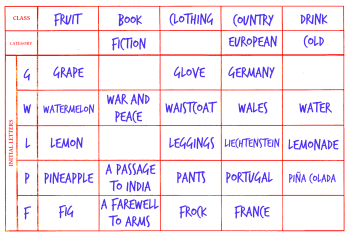
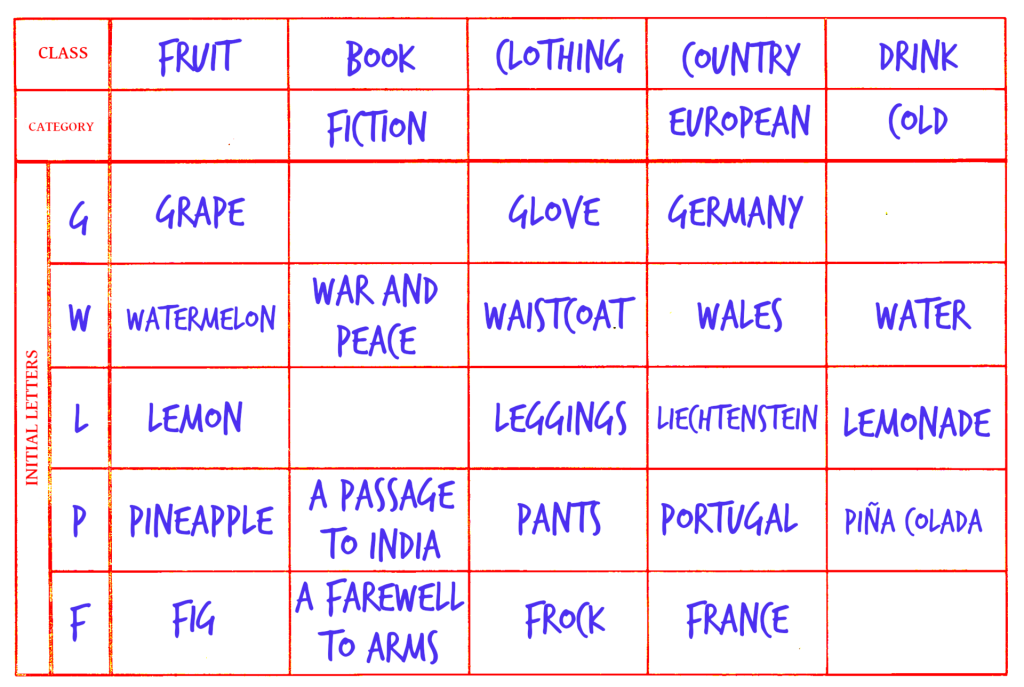
Featured photo: Facts in Five answer sheet by Belbury, BY-SA 4.0.