A relaxed holiday brunch comes down to three things: a menu built around one or two make-ahead bakes, a self-serve coffee and drinks station, and a timeline that has most of the work done the day before. Get those right and you’ll be sitting down with your guests instead of standing at the stove.
This checklist runs from planning the menu to the moment guests arrive, with tick boxes you can work through. It includes the food-safety points that matter for egg dishes, taken from USDA guidance, and ideas for drinks that don’t rely on alcohol. Print it, cross things off and adapt it to your kitchen.
Key takeaways
- Anchor the menu with one savoury make-ahead bake, one sweet dish, fruit and something fresh.
- Assemble the strata or overnight bake the evening before and bake it in the morning.
- Cook egg dishes to 160 °F and don’t leave them out for more than two hours.
- A self-serve coffee, tea and juice station frees you from refilling cups.
- Set the table the night before and work to a written timeline on the day.
Plan a balanced menu
Brunch menus fall apart when every dish needs last-minute attention. Balance what’s baked, what’s assembled and what’s simply sliced, and balance sweet with savoury so the table doesn’t feel heavy.
- ☐ One savoury centrepiece that bakes in a single dish, such as a strata, frittata or breakfast casserole.
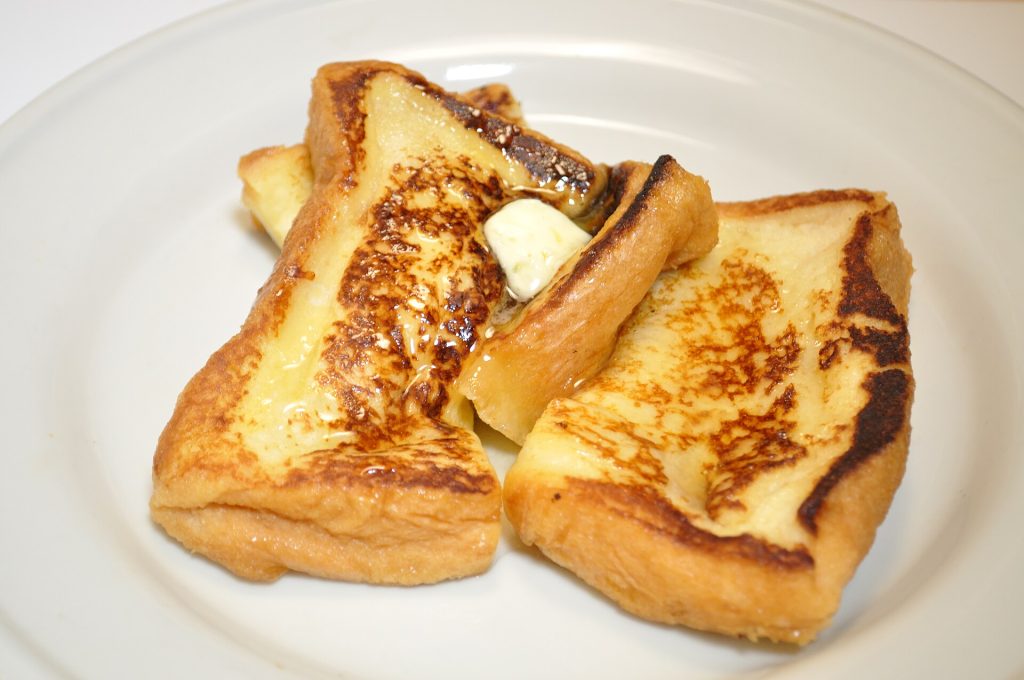
- ☐ One sweet option: an overnight French toast bake, a coffee cake or a tray of pastries.
- ☐ A vegetarian main, or a savoury bake that’s meat-free, so nobody fills up on toast.
- ☐ Fresh fruit, cut the morning of, or a fruit salad dressed at the last minute.
- ☐ Something green or crisp: a simple salad, roasted tomatoes or sliced cucumber.
- ☐ Bread, bagels or biscuits with butter and a couple of spreads.
- ☐ A protein on the side if your bake doesn’t include one, such as smoked fish or oven-baked bacon.
- ☐ Ask guests about dietary needs and allergies with the invitation.
Count on dishes that can be served warm or at room temperature. That takes the pressure off timing the oven.
Make-ahead dishes and the night before
The strata is the host’s best friend: bread, eggs, milk, cheese and fillings layered in a dish, left to soak overnight in the fridge and baked in the morning. An overnight French toast bake works the same way on the sweet side. Both free up the stove and your hands for the hour before guests arrive.
Two days before
- ☐ Shop for everything except delicate herbs and fruit.
- ☐ Bake anything that keeps, such as coffee cake or muffins.
- ☐ Check you have enough mugs, cups, glasses and serving spoons.
- ☐ Make any dips or spreads that keep well in the fridge.
The evening before
- ☐ Assemble the strata and French toast bake, cover and refrigerate.
- ☐ Prep fillings and toppings: sautéed vegetables, grated cheese, chopped herbs.
- ☐ Juice citrus or mix any drink bases and chill them.
- ☐ Set up the coffee station, minus the milk.
- ☐ Write the timeline on a sheet of paper and tape it inside a cupboard door.
The best brunch hosts do their cooking the night before and their hosting in the morning.
Egg safety for brunch dishes
Egg dishes are the heart of most brunches, so this part is worth getting right. The USDA’s Food Safety and Inspection Service sets out the key points in its guide to shell eggs from farm to table:
- ☐ Buy Grade A or AA eggs with clean, uncracked shells from a refrigerated case.
- ☐ Store eggs in their carton in the coldest part of the fridge, not the door, at 40 °F or below.
- ☐ Wash utensils, equipment and work surfaces with hot, soapy water before and after contact with eggs.
- ☐ Cook casseroles and other egg dishes to 160 °F, checked with a food thermometer.
- ☐ Scramble eggs until they are no longer runny.
- ☐ Don’t leave refrigerated eggs out for more than two hours.
- ☐ Refrigerate leftover egg dishes and use them within 3 to 4 days, reheating to 165 °F.
A thermometer settles the question of whether a thick strata is cooked in the middle. Probe the centre, not the edge, and give it a few more minutes if it’s short of 160 °F.
The two-hour limit applies to the whole spread. The USDA’s party food safety advice also recommends replacing empty platters rather than topping them up with fresh food. For a long, lingering brunch, bring out a second, smaller dish of strata from the oven instead of leaving the first one out all morning.
Set up a coffee, tea and drinks station
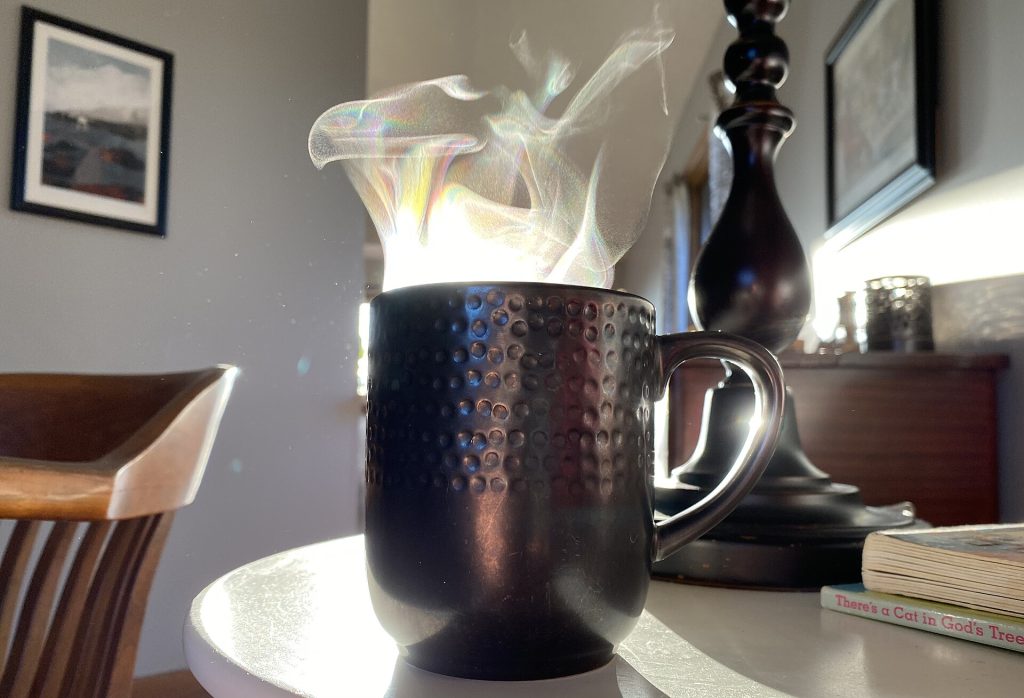
A self-serve station stops you from spending the morning refilling cups. Put it away from the kitchen so guests don’t gather where you’re working.
- ☐ Coffee: a large brewer, a thermal carafe or two, plus a pot of decaf.
- ☐ Tea: a kettle or hot-water dispenser, a few black, green and herbal choices, lemon slices.
- ☐ Milk and a plant-based option in a small jug over ice, sugar and a sweetener.
- ☐ Stirrers, napkins and a small bowl for used tea bags.
- ☐ Chilled water with sliced citrus or cucumber.
- ☐ Juice, or a sparkling juice spritz topped with soda water.
- ☐ One alcohol-free special, such as a cranberry and ginger fizz or a spiced apple punch.
- ☐ A labelled decaf pot for anyone avoiding caffeine.
Decaf deserves a clear label. The FDA notes in its guidance on caffeine that 400 milligrams a day, about two to three 12-ounce cups of coffee, is not generally associated with negative effects for healthy adults, but that sensitivity varies. It also points out that decaf still contains some caffeine, typically 2 to 15 milligrams per 8-ounce cup.
Set the table and the room
- ☐ Set the table the night before: cloth, plates, cutlery, napkins and glasses.
- ☐ Keep centrepieces low so people can talk across the table.
- ☐ Use seasonal greenery, clementines or pinecones instead of anything scented near food.
- ☐ Put trivets or boards where hot dishes will land.
- ☐ Label dishes that contain common allergens or meat.
- ☐ Clear a spot for coats and a place for guests to leave gifts.
- ☐ Queue a quiet playlist and set the lights.
- ☐ Empty the dishwasher so it’s ready for the first load.
If the table can’t seat everyone, serve buffet-style from the kitchen counter and set smaller tables or a sofa-side spread. People care far more about the food and company than a formal seating plan.
The brunch-day timeline
Here’s a sample for an 11 a.m. brunch. Adjust the baking times to your recipes and your oven.
| Time | Task |
|---|---|
| 8:30 | Take the strata and French toast bake out of the fridge while the oven heats |
| 9:00 | Strata into the oven; set up fruit and cut bread |
| 9:45 | French toast bake into the oven; start the coffee |
| 10:15 | Check the strata reaches 160 °F in the centre; rest it, covered |
| 10:30 | Fill the drinks station, milk on ice, kettle on |
| 10:45 | Last bake out; dress the salad; light candles; change clothes |
| 11:00 | Guests arrive; serve |
| 13:00 | Food out for two hours: refrigerate or discard what’s left |
For more ideas on seasonal hosting, browse our lifestyle features or read about planning a holiday dinner. If you’d rather let a kitchen do the work this year, our restaurant directory lists places serving weekend brunch.
FAQ
Can I assemble a strata two days ahead?
It’s best assembled the evening before, so the bread soaks without going mushy. Prep the fillings earlier.
How long can a holiday brunch spread sit out?
The USDA says no more than two hours at room temperature. Refrigerate leftovers promptly.
How much coffee should I make?
Plan on at least two cups per coffee drinker, and keep a pot of decaf clearly labelled.
What’s a good alcohol-free brunch drink?
A sparkling juice spritz or a spiced apple punch feels festive and suits all ages.
Print the list and pick your date
Pick your date, send invitations with a question about dietary needs, and choose one savoury and one sweet make-ahead bake. Then print this checklist, tape it to the fridge and start ticking boxes two days before. By the time the doorbell rings, the hardest work will be pouring the coffee. For the dishes themselves, see our make-ahead breakfast ideas.
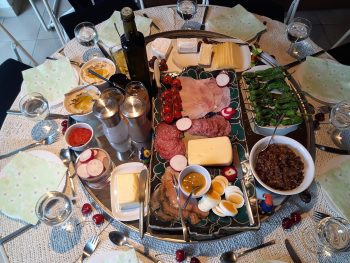
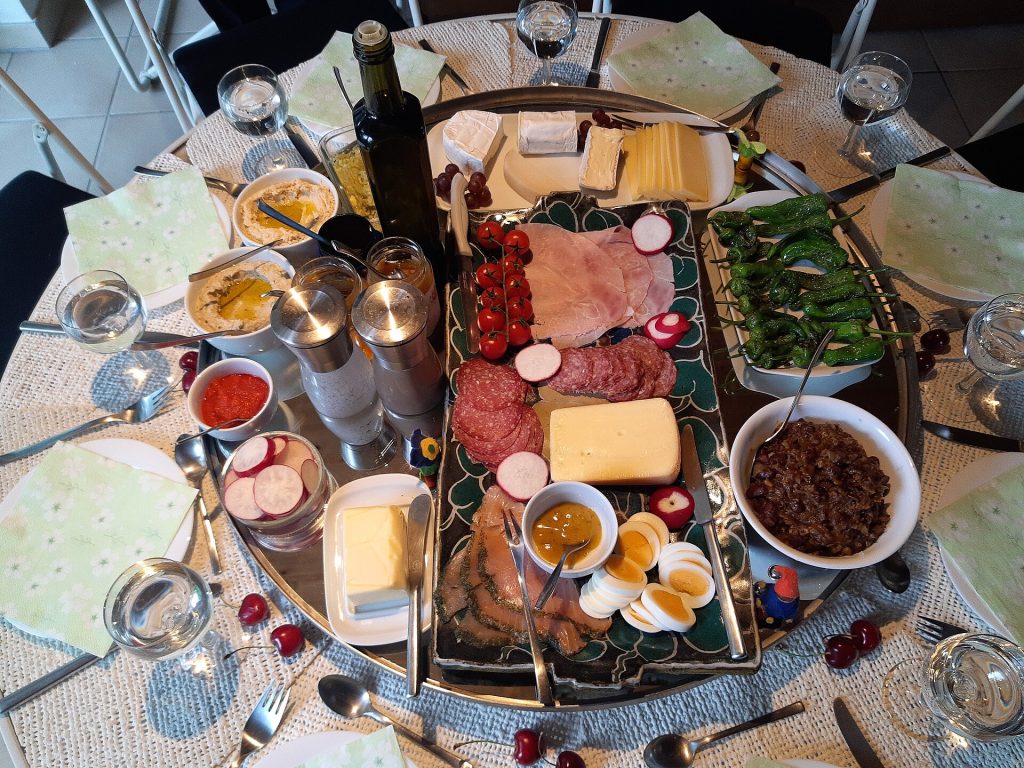
Featured photo: Brunch table, Ehrenbach by Gerda Arendt, CC0.