All the main types of tea, from green and black to white, oolong and pu-erh, come from the same plant, Camellia sinensis. What separates them is processing, above all how much the leaves are allowed to oxidise after picking. Herbal drinks such as chamomile or peppermint are made from other plants, so strictly speaking they are infusions, not tea.
This explainer covers how processing creates each style, what sets the rarer yellow and dark teas apart, how caffeine compares, and the water temperatures that suit each one. Short answers to common questions sit in the FAQ at the end.
Key takeaways
- Green, black, oolong, white and pu-erh teas all come from Camellia sinensis; processing makes the difference.
- Black tea is fully oxidised, oolong partly, and green and white very little.
- Yellow tea adds a sealed yellowing step; pu-erh can involve fungus-led fermentation.
- Herbal infusions come from other plants and are not true tea.
- Green tea suits steaming water around 170 °F; black tea wants a full boil.
One plant behind every true tea
Oregon State University’s Linus Pauling Institute puts it simply in its overview of tea: all teas are derived from the leaves of Camellia sinensis, but different processing methods produce different types. The same bush could, in principle, give you a green tea or a black tea, depending on what happens after the leaves are picked.
That doesn’t mean every leaf is interchangeable. Growing region, plant variety and leaf size shape flavour too. The institute notes, for example, that most pu-erh is produced in China’s Yunnan province from the larger leaves of the assamica variety. But processing is the clearest way to sort teas into families.
Black tea dominates in the United States. The same overview reports that in 2014 Americans consumed 3.6 billion gallons of tea, of which 84% was black tea and 15% green, with white, oolong and dark tea making up the rest.
Oxidation, the dial that sets the style
Freshly picked tea leaves contain an enzyme, polyphenol oxidase, that starts reacting with the leaf’s natural compounds once the cells are damaged. Tea makers control that reaction. Heat stops it; rolling, bruising and breaking the leaf speed it up. Where the maker stops the process sets the style of tea.
- Stop it early with heat, and the leaves stay green and fresh-tasting.
- Let it run part way after bruising the leaves, and you get oolong.
- Let it run fully after rolling or breaking the leaves, and you get black tea.
In most teas the change is driven by the leaf’s own enzyme, not by microbes. Pu-erh is the exception, discussed below.
Every true tea starts as the same green leaf. The kettle only meets it after the tea maker has chosen what it becomes.
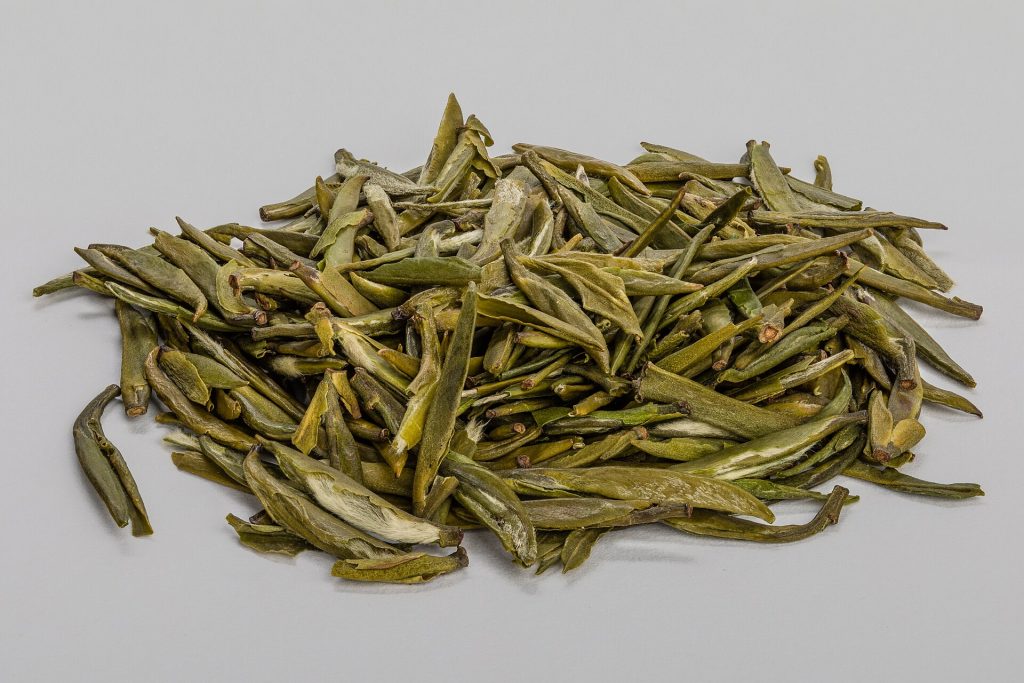
The main types of tea
Here is how the Linus Pauling Institute describes the processing of each type, alongside yellow tea, which it doesn’t cover.
| Type | Key processing step | Oxidation |
|---|---|---|
| White | Steamed or fired to inactivate the oxidising enzyme | Minimal |
| Green | Withered, then steamed or fired, rolled and dried | Very low |
| Yellow | Green-style processing plus a sealed yellowing step | Low |
| Oolong | Leaves bruised and partly oxidised | Partial, between green and black |
| Black | Fully rolled or broken to maximise oxidation | Full |
| Pu-erh (dark) | Enzymatic oxidation plus fungus-led fermentation | Varies |
White tea
White tea is steamed or fired to switch off the oxidising enzyme with as little other handling as possible. The result is a pale, delicate cup.
Green tea
Green tea is withered, then steamed or fired to stop oxidation, and finally rolled and dried. That early heat is why green teas keep their fresh, vegetal character.
Yellow tea
Yellow tea is rare outside China. A 2025 study of yellow tea processing in the journal Food Chemistry: X describes it as one of China’s six major tea types, made mainly in provinces including Hunan, Anhui, Zhejiang and Sichuan. Its defining step is sealed yellowing, in which the warm, processed leaves are kept enclosed so heat-driven chemical reactions can take place. The researchers describe the result as sweeter and mellower than other teas.
Oolong tea
Oolong leaves are bruised and allowed to oxidise part of the way, landing somewhere between green and black. Because makers can stop anywhere in that range, oolongs vary more than any other family, from light and floral to dark and roasty.
Black tea
For black tea, leaves are fully rolled or broken to maximise contact between the leaf compounds and the enzyme, so oxidation runs its course. That produces the dark colour and brisk, malty flavour of a breakfast cup.
Pu-erh and other dark teas
Pu-erh processing may include both enzymatic oxidation and fungus-led fermentation, according to the Linus Pauling Institute. That microbial stage is what makes it genuinely fermented, and what gives it its earthy depth.
Herbal tisanes are not tea
Chamomile, peppermint, rooibos, hibiscus and ginger drinks are all sold as tea, but they don’t contain Camellia sinensis. The Linus Pauling Institute describes herbal teas as infusions of herbs or plants other than the tea plant, and many tea specialists call them tisanes.
The distinction matters most for caffeine. A tisane doesn’t get caffeine from tea leaves, but some blends mix herbs with green or black tea, so read the ingredient list if you’re avoiding it.
Caffeine by type
All true teas contain caffeine unless they’ve been deliberately decaffeinated, and the Linus Pauling Institute says a mug of tea generally holds about half the caffeine of a mug of coffee. It gives ranges of 9 to 63 mg per 8 ounces for green tea and 42 to 79 mg for black. The Mayo Clinic caffeine chart lists typical 8-ounce figures:
- Brewed black tea: 48 mg
- Brewed green tea: 29 mg
- Bottled ready-to-drink black tea: 26 mg
- Decaf brewed black tea: 2 mg
Mayo adds that how a tea is grown and how long it’s brewed both affect the caffeine level, which explains those wide ranges. Neither source gives reliable figures for white, oolong or pu-erh, so treat any single number you see for those with caution.
Brewing temperatures and times
Water that’s too hot can make delicate teas taste bitter. Lynne Rossetto Kasper of public radio’s The Splendid Table offers simple visual cues for water temperature if you don’t have a thermometer kettle:
- Green tea: when the water starts to steam, around 170 °F. Steep 2 to 3 minutes.
- Oolong: when the water barely begins to bubble, around 185 °F. Steep 2 to 3 minutes.
- Black tea: a full boil. Steep 4 to 6 minutes.
- Herbal infusions: the same water as green tea, steeped 3 to 4 minutes.
White and yellow teas are delicate too, so start gently and taste as you go. The packet or your tea shop can tell you what that particular leaf prefers.
FAQ
Is white tea caffeine-free?
No. The Linus Pauling Institute notes that all teas contain caffeine unless they are deliberately decaffeinated.
Does green tea have less caffeine than black?
Usually. Mayo lists 29 mg for an 8-ounce cup of green and 48 mg for black, though brewing time changes both.
Is rooibos a tea?
Not strictly. It doesn’t come from Camellia sinensis, so it’s an herbal infusion.
Why does my green tea taste bitter?
The water is often too hot or the steep too long. Try water that’s just steaming and a 2 to 3 minute steep.
Start a three-cup tasting at home
Buy a small amount of one green, one oolong and one black tea, brew each at its own temperature and taste them side by side. You’ll see the oxidation scale in the cup. For more, browse our lifestyle features, read our coffee myths and facts, or plan a trip around a proper afternoon tea.
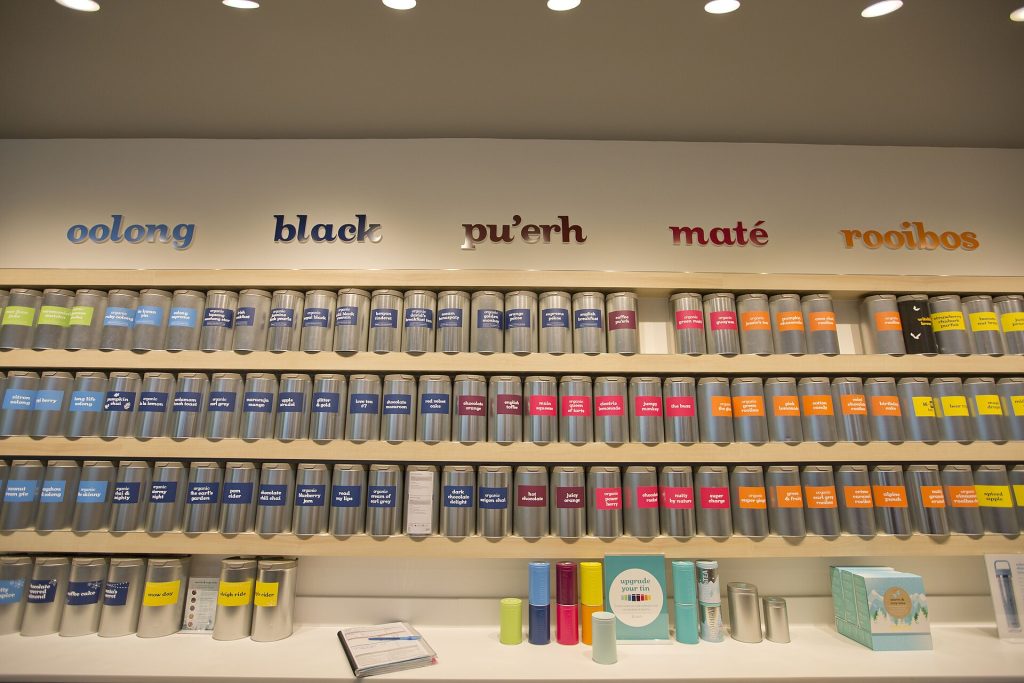
Featured photo: DAVIDsTEA Tsawwassen Mills loose leaf tea tins behind counter by GoToVan from Vancouver, Canada, BY 2.0.